The question of European Union enlargement is increasingly being abused, and this is entirely contrary to the basic principles for becoming a new member, namely the Copenhagen criteria.
Brussels’ silence and acceptance of such blockades go beyond what the rule of law, the fight against corruption, democracy and respect for human rights mean, and Macedonia felt this most sharply. Two neighbouring EU member states (Greece and Bulgaria), two major disputes.
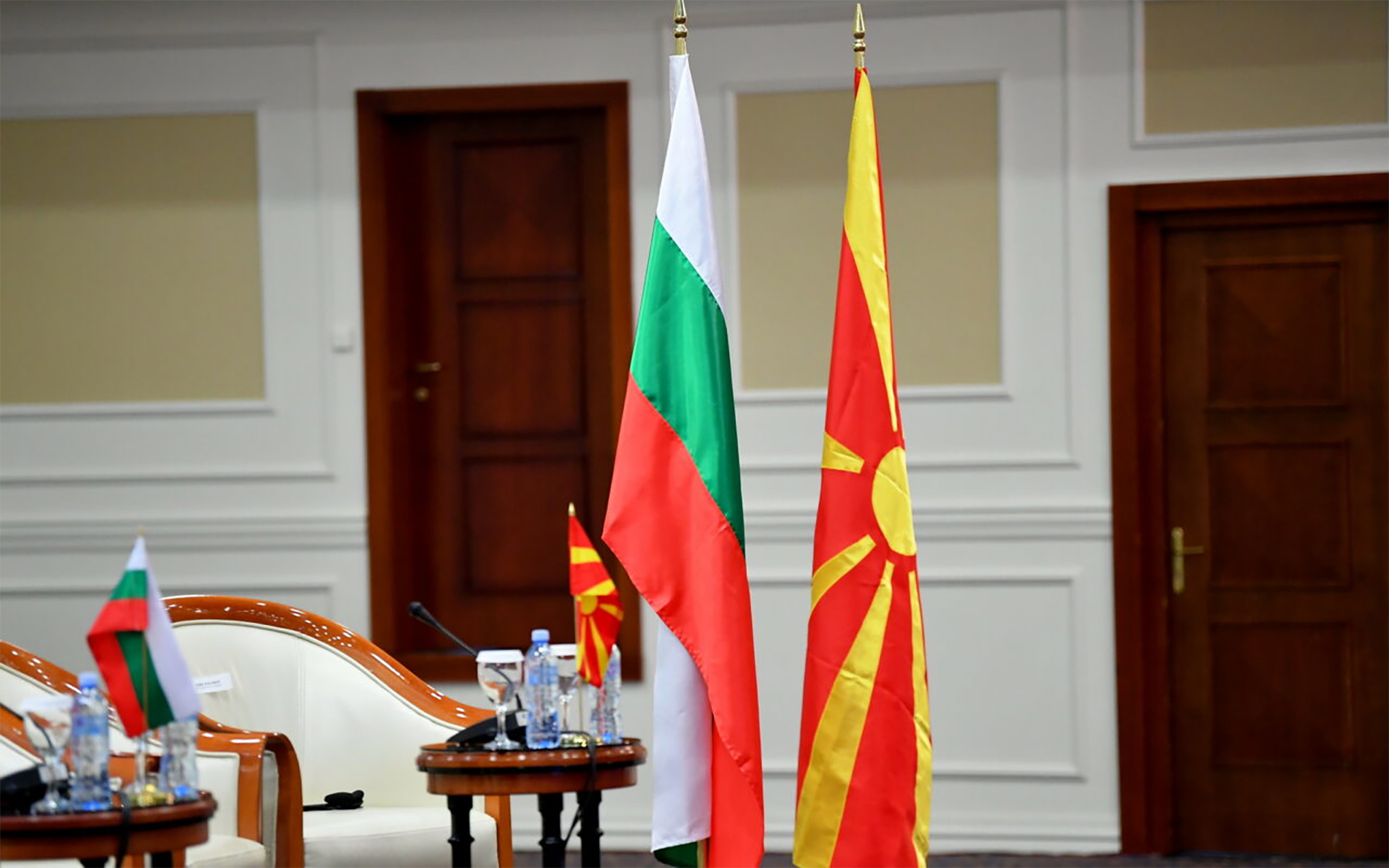
The latest protocol, signed between Macedonia and Bulgaria on 17 July 2022, is a criminal abuse of the position of an EU member state (Bulgaria).
This was supposed to mean the start of Macedonia’s accession negotiations with the EU, but it turned into a complete blockade. This protocol, signed by the government of the Social Democrats coalition, became a grave betrayal of the fundamental interests of the Macedonian people.
This protocol, according to which Macedonia undertook to enter Bulgarians as a constituent people (alongside the Macedonian, Albanian, Turkish, Serbian, Vlach, Bosnian and Roma) into its Constitution, clearly showed that the then leadership of Macedonia was playing to Bulgarian notes with no concern for the national interests of the Macedonian people. All this — in the name of Macedonia’s integration into the EU. The same was done with Greece’s demand to change the name from the Republic of Macedonia to North Macedonia (Prespa Agreement, 17 June 2018).
Then the entire current EU leadership came to Skopje and persuaded Macedonian citizens that after this Macedonia would enter NATO and the EU. And… we joined NATO, but for the EU the conditions of Bulgaria stood in the way, which have nothing to do with meeting the criteria, but are related to Bulgaria’s historical frustrations regarding the history of Macedonia. For Bulgaria’s official policy the problem remains the existence of the Macedonian people, Macedonian identity and the Macedonian language.
Bulgaria does not give up the revision of history in Macedonia toward a “common history that links the two states and their peoples,” which in translation means the Bulgarization of everything that is Macedonian. For them a common history means one people — the Bulgarian people.
A joint expert commission has been formed for that so-called common history which is to meet eight to ten times a year, which is absurd, because such commissions work for decades… And Sofia is in a hurry, so the commission becomes one of their main arguments for the disintegration of the Macedonians and for the alleged turning away of Macedonia from euro-integration.
Which is a complete falsehood and represents an attempt by Sofia in Brussels to present Skopje as the uncooperative party in this process. And the new right-wing government of VMRO-DPMNE in Macedonia persistently repeats that the processes of European integration are a priority for them, but not under these conditions. And for them the inclusion of the Bulgarians in the Constitution is acceptable, but only after minority issues for Macedonians in Bulgaria are resolved and if a guarantee is obtained that this will be the last veto.
As a condition for the start of the negotiations Macedonia is obliged to include the Bulgarian people in its Constitution. This is demanded by Bulgaria, a state that for decades has not recognized the existence of the Macedonian minority in Bulgaria, a state that does not allow the teaching of the Macedonian language, that forbids the registration of any Macedonian organization or party in Bulgaria. There individual and collective human rights are not respected, such as the shared ethnic Macedonian identity, language and history.
All these cases of representatives of the Macedonian minority in Bulgaria were brought to the European Court of Human Rights in Strasbourg and to date 14 cases have been won. Bulgaria has not implemented any of the judgments of that court.
Although it was obliged to do so. But even this is not enough for Brussels to drop such conditions and to begin normal accession negotiations.
In Macedonia the idea of submitting a formal legal request to exclude Bulgaria from the Council of Europe has already begun to be discussed. The issue of Bulgaria’s non-compliance with the European Convention on Human Rights is also being raised, by virtue of its non-recognition of the decisions of the European Court of Human Rights. Such a request for exclusion would open new pages in the entire process in which Macedonia now stands before both the Council of Europe and the European Union. This is yet another argument that Bulgaria is in fact blackmailing Macedonia and not demanding the fulfilment of some accession conditions. True integration means more than the euro or Schengen. That integration means the unwavering defence of the values that unite Europe. And in this case we have neither that from Brussels, and even less so from Sofia.
Bulgaria reminds Macedonia of its obligation not to interfere in Bulgaria’s internal affairs regarding the open issues of the Macedonians, but it easily resorts to the diktat that we must change our Constitution for the Bulgarians in Macedonia, who after the latest census number fewer than 3,500.
Bulgarian politicians often like to say that in Macedonia there is hate speech against Bulgarians, while they themselves do not recognize that we exist as a people, a language, a history… For them this is not hate speech, but they assume that these are Macedonians who are reacting inappropriately to their contemptuous historical claims.
One can conclude that no one should have negotiated like this, regardless of the political constellation at home or before the Brussels administration. Macedonia should simply withdraw this protocol, and the EU should understand and accept this, after which the EU negotiating framework should be changed.
In all the political chaos on Bulgaria’s political scene, unfortunately the Macedonian question is the only one for which there is no opposition, no resistance, no alternative position…
And the EU’s silence on this issue could endanger the EU itself!
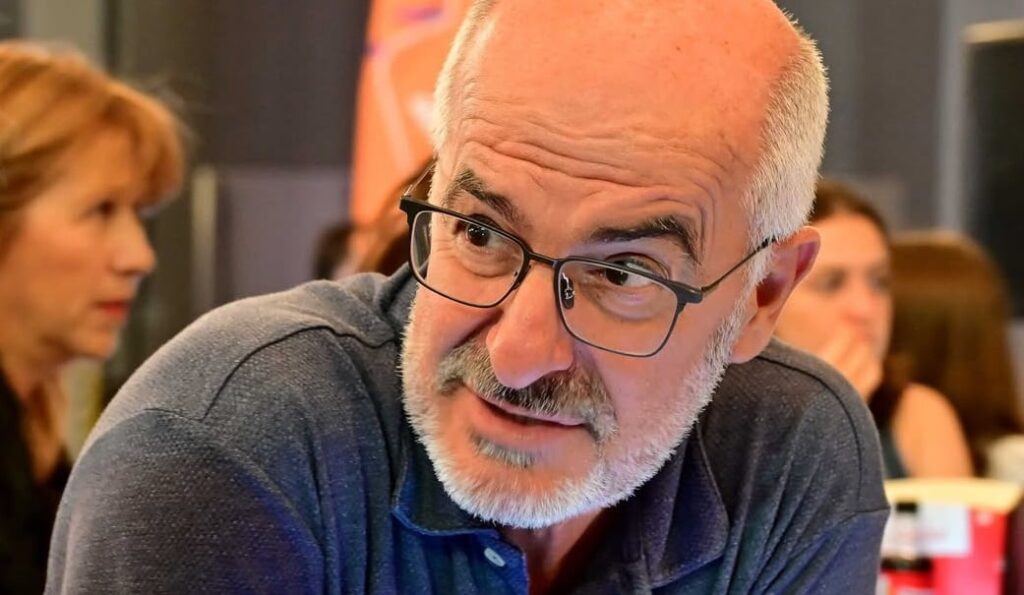
Aleksandar Damovski, editor-in-chief of the portal MKD.mk
The articles published in the “Opinions” column reflect the personal opinion of the author and may not coincide with the position of the Center