The regime in Belgrade fears only a blockade of the state and mass unrest
Certainly President Aleksandar Vučić and his entourage closely followed the youth uprising and riots in Nepal, in which, due to corruption and violence against demonstrators, key state institutions and properties of members of the ruling party burned, while the crowd on the streets beat representatives of the authorities. Dozens killed, over two thousand wounded.
Only ill-wishers could desire something like that for their country, but violence can certainly be a logical response to years of societal decay, repression and the arrogance of the ruling party caste. The causes and actors of the crises in Nepal and Serbia are similar, therefore there is fear of similar worst consequences.
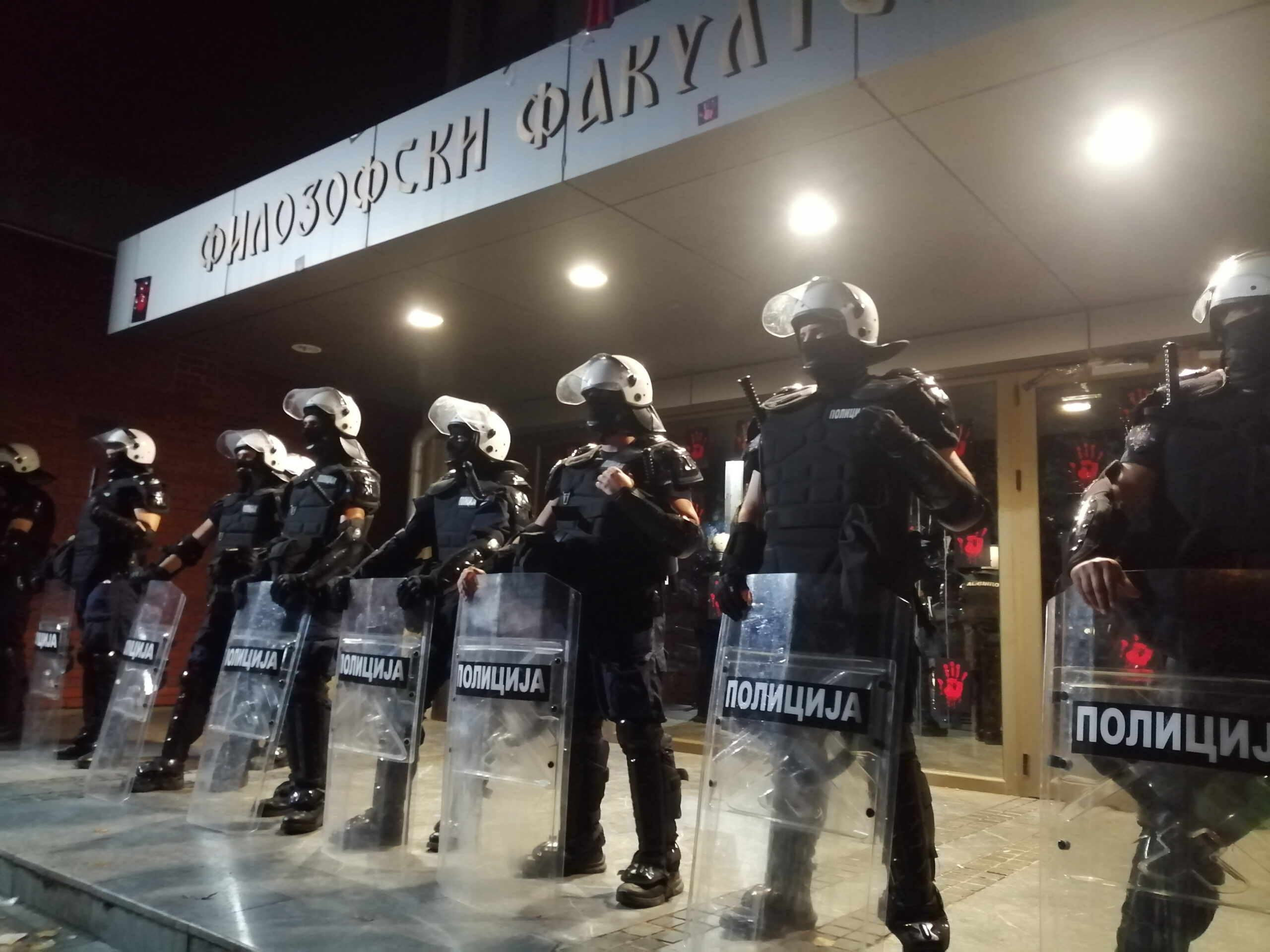
The President of Serbia believes that he has broken the main levers of the uprising, i.e. as he claims the “color revolution”, by crushing the protest of teachers, the academic community and most importantly — mass protests, by dispersing with loud weapons the largest student and civic gathering in Serbia on 15 March.
That gathering was a turning point, the students did not want a (then non-existent) “Nepali scenario”, although it was precisely with such a motive that a fair number of agitated demonstrators arrived in the capital.
The “magic” voter list
Serbia has entered a phase of intensified repression, reprisal against those who protested against further deterioration into authoritarianism. Vučić can no longer pacify Serbia, but the rebellious Serbia also does not have enough strength to force the president to call early elections now.
The goal of President Vučić is for the protests to appear to the statistical majority in Serbia and to politicians in the West as minor, extremist and marginal. Cynical is the response of the authorities that protests are dispersed in other democratic countries as well.
The European Union at this stage of the Serbian crisis is no longer credible, although it should become important in any possible mediation and negotiations between the authorities and the demonstrators. Serbia cannot get out of this crisis alone, and apart from the EU there is no one on the international level to help Serbia and mediate within a democratic framework.
Brussels is openly hypocritical, EU member states have interests both in authoritarianism and in a poor Serbia in development. The issue of corruption and Vučić’s “magic” voter list, which is considered key to rigging elections, could be resolved very quickly by pressure and turning off the financial valves of support for the regime in Belgrade, but the EU (at least publicly) has no will for that now.
It is time to react
Judging by the changes in the police, Vučić has begun to subject all levers of force to his complete control. The weakened Serbian army has been replaced by a para-army of private security and criminals. The total collapse of the student and civic protests would give the authorities only an illusory sense of victory, people would close themselves in their homes — dissatisfied, humiliated, frustrated.
But there are too many who will perhaps, even without key influential independent media, spend some time in four walls and on the social networks, where anger will only grow with the potential for the explosion of a new crisis.
A crisis can arise for several reasons — the death of demonstrators during police brutality, the collapse of some new canopy, but also the shutting down of media, that is, social networks by the regime. That would already be a “Nepali scenario”, which, moreover, is widely shared as an inspiration in comments and memes created with artificial intelligence. Serbia is third in the world in the number of weapons in the hands of civilians…
During ten months of protests there was talk of the “fifth October”, “Ukrainian”, “Pržina scenario”, but the world and circumstances change. Free and fair elections are the only peaceful solution to exit the crisis, but they are not possible in Serbia without the aforementioned external insistence and mediation.
Vučić will not call elections until he is sure that he has completely discredited the protests, and students and citizens currently do not have the strength to repeat state-scale blockades on the level of winter and spring. Vučić fears only the blockade of the state and mass unrest.
Brussels’ lack of interest in resolving the issue of procedural regularity in Serbia, a candidate for membership, before the elections, and above all the “magic” voter list teeming with ghosts, automatically places the EU on the side of accomplices in the Serbian crisis. Amid great expectations, European Commission President Ursula von der Leyen in her last address to the European Parliament did not even mention Serbia.
If elections are called under the current undemocratic conditions, if pressures and the results of the general elections are manufactured as in the last local elections (in the municipalities of Kosjerić and Zaječar), Serbia could explode like never before.
The fight for free and fair elections and the defense of the electoral will of the citizens of Serbia by peaceful methods is the democratic right of every state in the XXI century.
A response with violence by an enraged crowd and a possible large casualty can be only as a consequence of aggression, repression, the arrogance of the regime and electoral theft. Therefore international actors, who should be above the situation, must not turn a blind eye and must react in a timely manner to the crisis in Serbia.
Boris Varga. Serbian political scientist and journalist.
The articles published in the “Opinions” column reflect the personal opinion of the author and may not coincide with the position of the Center