- Montenegro Closed Five Chapters in EU Accession Negotiations
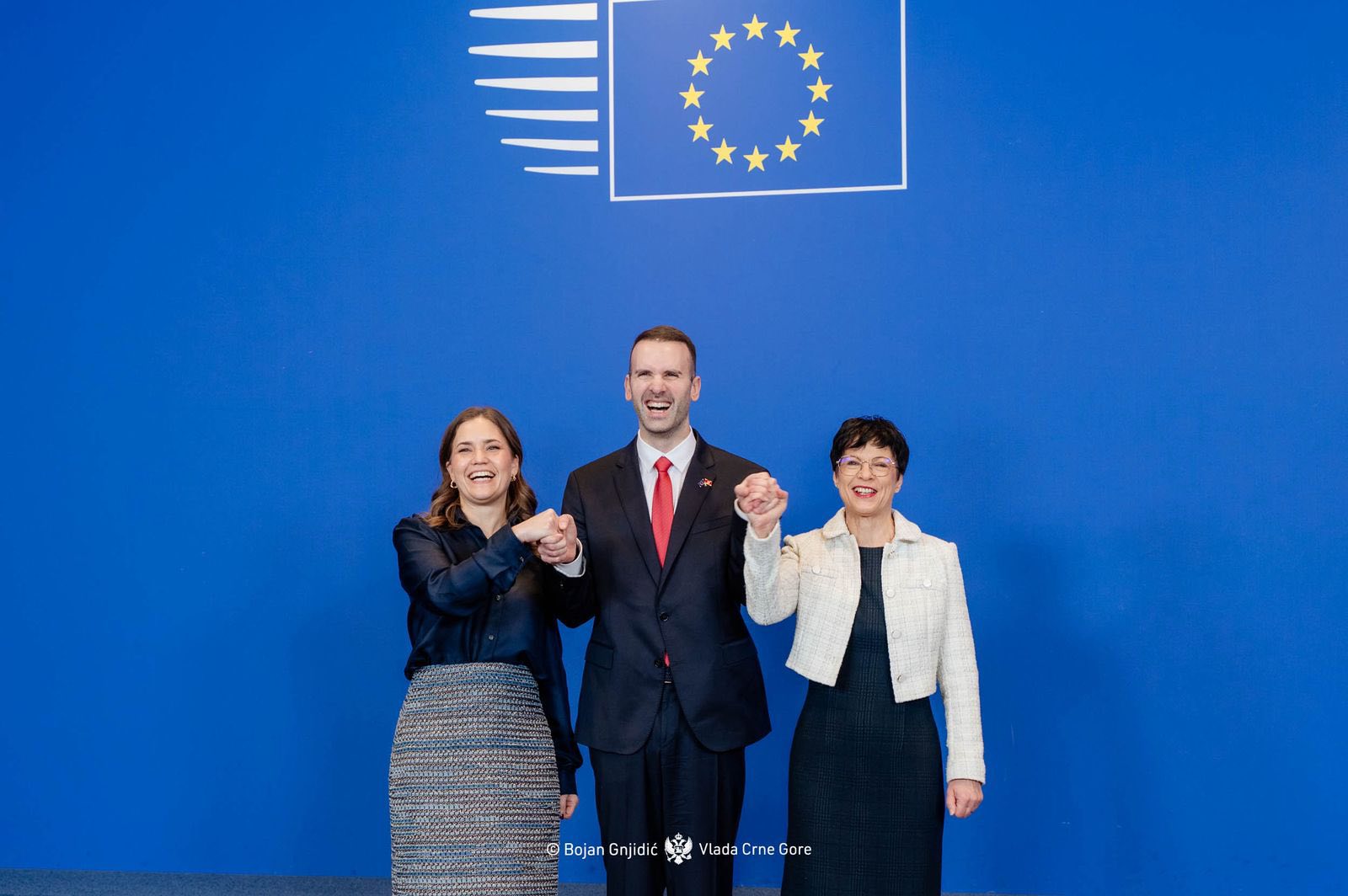
Montenegro has achieved a breakthrough on its path toward the European Union, officially closing five negotiation chapters at once.
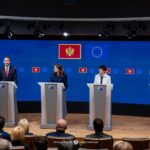
This significant progress prompted the European Commissioner for Enlargement, Marta Kos, to state that the country has “never been closer to the EU” and is the most advanced candidate for accession.
According to official reports, Montenegro has provisionally closed negotiations on the following five chapters (which are part of the Internal Market and Sustainable Economic Growth clusters):
Chapter 3 – Right of establishment and freedom to provide services.
Chapter 4 – Free movement of capital.
Chapter 6 – Company law.
Chapter 11 – Agriculture and rural development.
Chapter 13 – Fisheries.
Accession negotiations between Montenegro and the EU began on 29 June 2012. Since then, Podgorica has opened all chapters (33) and provisionally closed 12.
Commenting on his country’s achievement, Prime Minister of Montenegro Milojko Spajić emphasized: “We are working at full capacity to become the next EU member and to achieve the goal we have set for ourselves – membership by 2028.”
Despite Montenegro’s leadership, Kos made it clear that final success depends on political stability and consensus. She described national unity as a critically important condition for completing the negotiation process.
The Commissioner called on all political forces — both the government and the opposition — to “set aside their differences and work together,” especially in key areas related to the rule of law, the fight against corruption, and organized crime. These issues remain central to the most important negotiation cluster, “Fundamentals.”
Marta Kos paid special attention to Montenegro’s foreign policy, demanding full alignment of the country’s foreign and visa policy with that of the European Union.
In practice, this means that Montenegro will have to abolish visa-free regimes for citizens of those countries for which the EU requires visas, in order to guarantee common security and prevent abuse of visa-free access to the Schengen area. In particular, this also concerns Russia.
- Hungary Blocked the EU Enlargement Process
Prime Minister Viktor Orbán blocked the adoption of the official Conclusions of the EU General Affairs Council (GAC) on enlargement policy. The document was supposed to assess progress and setbacks in six Western Balkan countries, as well as in Turkey, Moldova, and Georgia. EU ministers for European affairs failed to approve the Conclusions because Budapest refused to support wording regarding Ukraine’s EU integration process. Although all other 26 member states supported a positive assessment of Kyiv’s implementation of the necessary reforms, Orbán insists on slowing Ukraine’s integration.
Germany’s Minister of State for European Affairs, Gunter Krichbaum, sharply criticized Hungary, calling its behavior increasingly destructive and stating that Budapest is seriously obstructing the functioning of the European Union.
The Chair of the General Affairs Council, Denmark’s Minister for European Affairs Marie Bjerre, expressed regret over the failed attempt to adopt a joint document, noting that efforts to find a compromise had been rejected. According to Bjerre, in this way the EU is sending “the wrong signal” to candidate countries.
“Hungary is blocking us from reaching the Council conclusions. Attempts to find the solutions have been rejected. I very much regret this, as several member states said, it sends a wrong signal to the candidate countries. We want them to choose the EU, not to choose Russia. We regret this, especially given that enlargement is very important for all other member states, as well as the fact that candidate countries are delivering on merit,” Bjerre said.
However, the step taken by the Hungarian prime minister not only slowed Ukraine’s formal progress toward the EU but also caused procedural problems for a number of Western Balkan countries, including the leader of EU integration, Montenegro.
In particular, the original draft Conclusions contained important positive news for Montenegro, including a decision to establish a special working group to develop a draft Accession Treaty with Montenegro.
Due to Hungary’s veto, instead of official EU Council Conclusions, a less significant document was adopted — the Conclusions of the EU Presidency (Denmark), which were supported by the other 26 member states (excluding Hungary). This procedural change, while confirming support for enlargement by the majority of countries, deprives the decision of the weight of official EU Council consensus and creates additional uncertainty for the future negotiation process of the entire Western Balkans region.
- Trump’s Son-in-Law Withdrew from a Project in Belgrade
The investment company Afinity Partners, owned by Jared Kushner, the son-in-law of current U.S. President Donald Trump, withdrew from the project to build a luxury hotel under the Trump brand on the site of the destroyed General Staff complex in central Belgrade.
According to The Wall Street Journal, the reason for the withdrawal was large-scale protests against the redevelopment of the General Staff complex and the filing of criminal charges against Serbia’s Minister of Culture and several officials over the removal of cultural property status from the General Staff buildings.
Recently, the project to redevelop the General Staff complex has faced strong public opposition. Since the announcement of plans to build a hotel on the site of the General Staff, civic activists and students have held several protest actions. Protesters emphasized that they would not allow the buildings to be destroyed, because the damaged General Staff effectively serves as the main memorial of the 1999 NATO bombing and has significant historical value.
At the same time, the Serbian Prosecutor’s Office filed an indictment against the incumbent Minister of Culture Nikola Selaković and three other officials. They are accused of falsifying documents and abusing their official position. The investigation claims that the officials illegally revoked the cultural property status of the General Staff complex.
In addition to Minister Selaković, the list of defendants includes the Secretary of the Ministry of Culture Slavica Jelač, the acting director of the Republican Institute for the Protection of Cultural Monuments Goran Vasić, and the acting director of the Belgrade City Institute for the Protection of Cultural Monuments Aleksandar Ivanović.
Serbian President Aleksandar Vučić stated that he would file criminal complaints against everyone who was involved in the “destruction” of the planned American investments in the reconstruction of the General Staff complex in central Belgrade. According to him, Jared Kushner’s decision to withdraw from the planned Trump-branded project in Belgrade was “terribly difficult and bad news,” since these investments would have brought Serbia 750 million euros and created thousands of jobs. The President emphasized that “he will personally ensure that all those who caused damage to the country are held accountable.” “I will file criminal complaints against all police officers, prosecutors, and other persons who were involved in the destruction of this investment, who contributed to further undermining the country’s economy,” Vučić told journalists.
- Suspicious Death of a Representative of the Serbian Defense Industry in Moscow
In Moscow, under unclear circumstances, Radomir Kurtić, a representative of the Serbian state-owned arms production and sales company Jugoimport SDPR, died.
Jugoimport SDPR is a Serbian state-owned company and the largest company in the region for the production of weapons, military equipment, technologies, equipment, and ammunition, as well as for the import and export of defense-related goods.
According to Serbian media, Kurtić died on 17 November, but public reports of his death appeared only almost a month later.
It is reported that Radomir Kurtić died suddenly on a street in Moscow. The official cause is unknown, but Serbia’s security services sent a report on a “suspicious death” to Serbian President Aleksandar Vučić. The Russian side has still not provided the results of the forensic medical examination regarding Kurtić’s death.
After Kurtić’s death, representatives of Jugoimport visited Moscow and discovered that a large number of documents, as well as computer hard drives, were missing from the company’s office.
On 16 December, answering a journalist’s question about whether he had any information regarding the Kurtić case, President Vučić said that he had more information than had been published, but that it was insufficient, and he did not want to make assumptions.
“We are awaiting a response from the Russian services. Officially, invitations, requests, and demands have been sent to them. We know that certain hard drives are missing, that some other things are missing, but this does not necessarily mean that it has any connection to the events themselves. So this could also be a routine action by some service when it establishes someone’s identity on the street,” Vučić said.
He added that more details need to be clarified and confirmed that the Serbian side has still not received any forensic examination findings. “I hope we will receive them in the near future. I will fight for the truth to become known. This concerns our citizen, an exemplary citizen and a person who worked for many years in a good Serbian company,” Vučić said.
Earlier this year, Russia’s Foreign Intelligence Service accused Serbian defense enterprises of supplying ammunition to Ukraine. After these accusations, the Serbian authorities were forced to effectively introduce a moratorium on the export of military industry products.
Darko Obradović from the Center for Strategic Analysis stated in an interview with Serbian media that the Kurtić case threatens to go beyond a tragic incident due to the lack of Russian transparency, refusal to cooperate, and the reputation that Russia has. In his opinion, the entire situation surrounding the suspicious death of a representative of Jugoimport looks like a kind of “add-on” to the imposed moratorium on the export of Serbian military equipment and ammunition. “None of this would have happened if Russia had communicated in accordance with international police cooperation, but it seems that they deliberately, as a form of political message, chose the direction of ambiguity, so conclusions can be drawn in different directions,” Obradović noted.