- The European Commission Approved the National Defence Plans of Eight Member States, Including Croatia
The European Commission has approved and forwarded for adoption by the Council of the EU the national defence plans of eight Member States — Belgium, Bulgaria, Denmark, Spain, Cyprus, Portugal, Romania, and Croatia. This decision was taken following a thorough assessment of the countries’ “National Defence Investment Plans” under the SAFE (Security Action for Europe) initiative. The approval of the plans paves the way for the first wave of low-priced long-term loans, which will allow these countries to urgently enhance their military readiness and procure the necessary modern defence equipment.
President of the European Commission Ursula von der Leyen said: “Last year, the EU has made more progress in defence than in decades. The White Paper and the Readiness 2030 Roadmap have enabled Member States to mobilise up to €800 billion for defence. This includes €150 billion for joint procurement — SAFE. We have already approved the first batch of SAFE plans for Belgium, Bulgaria, Denmark, Spain, Croatia, Cyprus, Portugal, and Romania. Others will follow shortly. The Council now urgently needs to approve these plans to ensure the rapid disbursement of funds.”
After the decision is adopted by the Council of the EU, the European Commission will finalize the conclusion of loan agreements. The first disbursements are expected in March 2026.
The first group of eight Member States is eligible to receive approximately €38 billion.
In total, 19 Member States have expressed interest in using preferential loans. The European Commission will raise funds on capital markets and distribute them to interested Member States upon request, based on their investment plans in the European defence industry.
Funding levels for each country were preliminarily established in September on the basis of the principles of solidarity and transparency. For example, Croatia is planned to receive €1.7 billion.
SAFE (Security Action for Europe) is a European Union program launched in 2025 to finance joint procurement and investments in the European defence industry, with the aim of strengthening the EU’s defence capabilities and integrating the Ukrainian defence-industrial complex into European supply chains.
- Serbia Will Receive the First Tranche Under the EU Growth Plan for the Western Balkans
After a seven-month delay, the European Commission decided to allocate to Serbia the first tranche of €56.5 million under the Growth Plan for the Western Balkans. The decision was made in light of the reforms implemented by Belgrade in the second half of 2024. Of the seven steps envisaged by the Reform Agenda for this period, Serbia completed only three, which is why instead of the full amount of nearly €112 million, Serbia will receive about 50 percent.
The Director-General of the European Commission’s Directorate-General for Neighbourhood and Enlargement Negotiations, Gert Jan Koopman, speaking before members of the European Parliament’s Committees on Foreign Affairs and Budgets, noted that Serbia “has taken few steps from its Reform Agenda related to the rule of law,” while the steps that were implemented “mostly concern the socio-economic sphere.”
Despite the delay in the decision-making process and the allocation of only part of the planned funds, the news from the European Commission was met with optimism in Belgrade.
“This news testifies to our commitment to implementing the goals of the Reform Agenda, even though our progress has somewhat slowed due to negative internal events. However, I am confident that we will quickly make up for this and return to the path of accelerated development and further reforms. This is our absolute priority, and we remain committed to it. We have clearly charted our European path and will remain on it until all reform objectives are fulfilled,” emphasized First Deputy Prime Minister and Minister of Finance Siniša Mali.
- Citizens of Albania, Bosnia and Herzegovina, Kosovo, North Macedonia, and Montenegro Will Temporarily Be Unable to Obtain U.S. Immigrant Visas
The U.S. Department of State announced radical changes in immigration policy. Starting on 21 January, the United States will temporarily suspend the issuance of immigrant visas for citizens of 75 countries worldwide, including five of the six Western Balkan countries. The State Department designated them as having a high rate of use of public benefits by their citizens after relocating to the United States.
The decision does not apply to non-immigrant visas (such as tourist, student, or temporary work visas). Short-term travel remains available under the usual procedure.
The list of countries whose citizens will currently be unable to obtain immigrant visas includes Albania, Bosnia and Herzegovina, Kosovo, North Macedonia, and Montenegro. Serbia is the only country in the region not subject to the restrictions.
The State Department’s decision is part of a broader strategy of the administration of President Trump aimed at strengthening control over the “public charge.” The Department explains that the restrictions were introduced for countries whose citizens have a high risk of becoming dependent on public social assistance or other benefits after arriving in the United States. “We are conducting a full review of policies and procedures to ensure that immigrants from high-risk countries do not become a burden on American taxpayers,” the official statement reads.
U.S. embassies in the countries subject to the restrictions may continue to accept applications and conduct interviews, but no immigrant visas will be issued after 21 January while the order remains in effect.
For the Western Balkan countries, this decision came as an unexpected diplomatic signal. Since Albania, Montenegro, and North Macedonia are NATO members, their inclusion on the list alongside states considered “unstable” has caused concern among local governments. Conversely, Serbia’s exclusion is interpreted as a specific geopolitical move by Washington in the current political context.
The duration of the “pause” in the issuance of immigrant visas has not yet been determined — it will depend on how quickly the State Department completes its review of immigrant screening protocols.
- Albania Will Join the PURL Initiative
On 15–16 January, the Minister for Europe and Foreign Affairs of Albania, Elisa Spiropali, paid a working visit to Ukraine. The main outcome of the trip was the announcement of Albania’s intention to join the PURL (Prioritized Ukraine Requirements List) program in 2026. This initiative, launched by the United States and NATO, will allow Albania to finance the procurement of U.S.-made weapons and equipment directly for the needs of the Ukrainian army.
During talks with Minister of Foreign Affairs Andrii Sybiha, the parties discussed the situation on the battlefield, the state of the energy system after Russian strikes, and mechanisms to compel Moscow toward peace through increased pressure.
The sides also discussed cooperation in countering hybrid threats and Russian information operations in the Western Balkans.
Sybiha noted that Albania is a key partner of Ukraine in the region and an active participant in the “Ukraine – Southeast Europe” format.
The economic dimension of the visit was represented by a meeting with Deputy Prime Minister Taras Kachka. The key topic was the deepening of trade and economic relations, in particular the elaboration of a bilateral Free Trade Agreement.
The parties paid special attention to supporting Ukraine’s energy sector and coordinating actions within the framework of the European integration process.
- Local Elections in North Macedonia Ended in a Triumph for the Ruling Party
On 11 January, voting took place in North Macedonia in the mayoral elections in the municipalities of Gostivar, Vrapčište, Mavrovo and Rostuše, as well as Centar Župa.
Repeat local elections in these four municipalities were held after the first round of local elections on 19 October failed to reach the minimum voter turnout threshold, or one third of registered voters.
According to preliminary results of the State Election Commission (SEC), the National Alliance for Integration is the winner in the municipalities of Gostivar and Vrapčište, the “Your Macedonia” coalition led by VMRO-DPMNE in Mavrovo and Rostuše, and the Democratic Party of Turks of Macedonia in the municipality of Centar Župa.
Thus, according to the overall results of the local elections, representatives of the ruling VMRO-DPMNE party will head 56 municipalities in the country, while the opposition Social Democratic Union of Macedonia will lead only six.
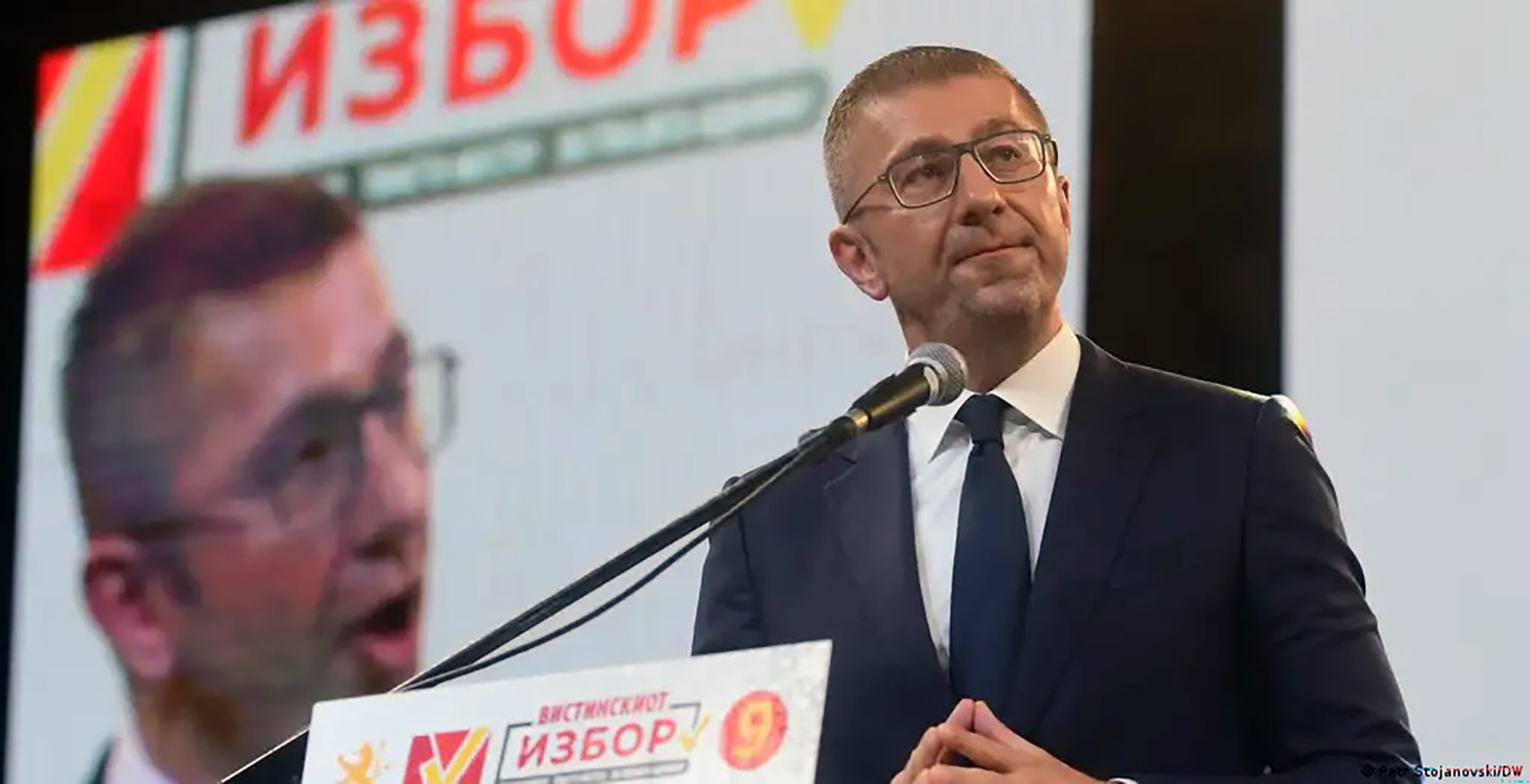
Commenting on the election results, VMRO-DPMNE leader and Prime Minister Hristijan Mickoski called them a “clear political verdict” from citizens. He emphasized that this distribution of power is a logical consequence of the loss of trust in SDSM and its current leadership headed by Venko Filipče. According to Mickoski, a party that gathers only about 140,000 votes at the national level no longer has the credibility to speak on behalf of the majority or to be considered a strong opposition.
It is reported that the electoral process passed calmly, and law enforcement agencies did not record significant public order violations on the voting day.
- The Ministries of Interior of North Macedonia and Hungary Agreed to Expand Cooperation
The Minister of Interior of North Macedonia, Panče Toškovski, paid a visit to Hungary from 14 to 16 January, during which he held a meeting with his Hungarian counterpart, Sándor Pintér. The main topic of discussion was the fight against illegal migration and human smuggling. Minister Pintér emphasized that Hungary considers the Republic of North Macedonia a strategic partner that contributes to the stability of the Western Balkans.
During the visit, a Declaration of Cooperation was signed between the Training Center of the Ministry of Interior of North Macedonia and the Police Education and Training Center of the Ministry of Interior of Hungary. The Hungarian center was invited to join the Regional Association of Training Centers and Police Academies of Southeast Europe, recently established at the initiative of the Ministry of Interior of North Macedonia.
Minister Toškovski also held meetings with the Director of the National Bureau of Investigation and the Director of the National General Directorate for Disaster Management.
“Hungary is a proven friend and partner of North Macedonia, and this visit is another step toward strengthening cooperation, exchanging experience, and building partnerships that contribute to greater security, stability, and a European perspective,” Minister Toškovski emphasized.
- Zagreb Points Podgorica to the Importance of Resolving the Issue of Restitution
Resolving the issue of restitution of property belonging to Croatian families in Montenegro is an important condition for Podgorica’s European integration. This was stated by the Minister of Foreign and European Affairs of Croatia, Gordan Grlić Radman, during his visit to Montenegro.
Grlić Radman visited the neighboring country on the occasion of the Day of the Croatian People in Montenegro, which is marked on 13 January. This date commemorates the transfer of the relics of Saint Tryphon from Constantinople to Kotor in 809, a landmark event for the Croatian community of the region.
The focus of the Croatian minister’s attention was the fate of the property of fifty-one Croatian families in the Mrčevac area (Tivat municipality). Despite the fact that the owners hold positive court decisions from all instances — from the local court in Kotor to the Administrative Court of Montenegro — the actual re-registration of land and buildings has been blocked for a long time. Gordan Grlić Radman emphasized that this issue directly concerns the rule of law and Chapter 23 of the EU accession negotiation process, which covers judiciary and fundamental rights. In the context of European integration, this chapter is key, as it demonstrates the state’s ability to protect property rights and enforce court decisions.
The Croatian minister avoided directly using the word “blocking,” but made it clear that the closing of negotiation chapters directly depends on how the candidate state fulfills the established criteria. He stressed that although Croatia supports Montenegro’s European path, Zagreb expects real progress in resolving open issues inherited after the dissolution of the former Yugoslavia.
On the Montenegrin side, Deputy Prime Minister and Minister of Foreign Affairs Ervin Ibrahimović confirmed readiness for dialogue. He noted that the country fully understands its obligations both toward Croatia and on its path to the EU. According to him, Montenegro seeks to take concrete steps to relieve future generations of the political and legal burden of the past.
In addition to restitution in Tivat, a number of other open issues remain between Zagreb and Podgorica. These include, in particular, the final determination of the border in the area of the Prevlaka Peninsula, the issue of ownership of the training sailing ship “Jadran,” which Croatia considers to have been unlawfully appropriated by Montenegro, and the dispute over the name of a swimming pool in Kotor, which bears the name of a water polo player who, during the aggression against Dubrovnik, served as a guard in the Morinj camp for Croatian prisoners.