European Commission Adopts Roadmaps for Frontrunner EU Accession Candidates
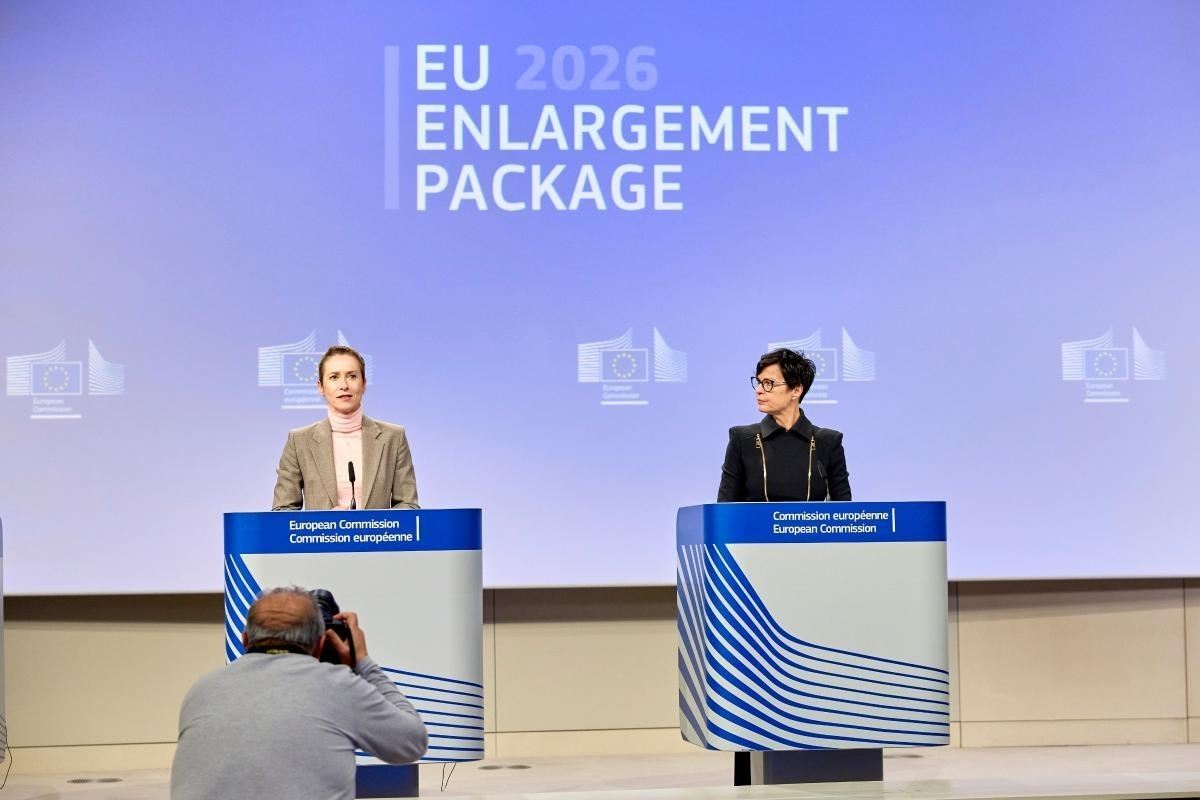
On 4 November, the European Commission adopted its annual Enlargement Package. The document takes stock of the progress made by candidate countries over the past year and sets out further priorities for their EU integration efforts. In its reports on each country, the Commission focused on the pace of reforms in the areas of democracy, the rule of law and fundamental rights, political choices on security and defence, as well as progress towards economic convergence.
Montenegro has made significant progress towards EU accession (having already provisionally closed 23 chapters). Subject to the agreement of the Member States (above all, the resolution of outstanding issues with Croatia), Montenegro could provisionally close the remaining chapters by the end of this year. Work is already under way on Montenegro’s accession treaty, which, according to forecasts, could be signed as early as next year.
During the reporting period, Albania opened the last remaining cluster and met the interim benchmarks for the rule of law chapters, paving the way for the provisional closure of four chapters. Reaching Tirana’s ambitious but achievable objective of concluding accession negotiations by 2027 requires maintaining reform momentum and fostering inclusive political dialogue, the European Commission notes. Against the backdrop of the largest protests in Albania since the 1990s, the Commission emphasises that EU integration requires the engagement of all citizens and stresses the need for constructive dialogue.
The still-unadopted constitutional amendments remain an obstacle to North Macedonia’s progress towards the EU, the European Commission states. The amendments provide for the inclusion of the Bulgarian community in the Constitution. The current government in Skopje categorically rejects the relevant arrangements reached under the previous government. Despite this, the Commission stresses that stepping up efforts to adopt the necessary constitutional amendments remains important for advancing the accession process.
Serbia has made no substantive progress in accession negotiations. In particular, as the European Commission notes, alignment with the EU’s Common Foreign and Security Policy remained low; as is well known, Serbia did not join the European sanctions against Russia. The European Commission also stresses that Belgrade must implement all obligations stemming from the EU-facilitated Dialogue with Pristina, which is an integral part of Serbia’s European perspective. The Commission stressed that Serbia’s new authorities will need to “restore respectful democratic dialogue, demonstrate a clear and unambiguous commitment to EU values, including alignment with the EU’s common foreign and security policy and efforts towards reconciliation, good-neighbourly relations and normalisation”.
Kosovo and Bosnia and Herzegovina, according to the Commission’s conclusions, are showing stagnation on their path towards the EU.
Bosnia and Herzegovina, although it continues publicly to declare its commitment to EU integration as a strategic objective, is at the same time increasingly straying from its EU path. Following the general elections, Bosnia and Herzegovina should move quickly to establish all executive and legislative bodies and demonstrate a renewed commitment to implementing the reforms necessary for EU integration, the European Commission believes.
The EU-related reform process in Kosovo has stalled amid a prolonged institutional crisis associated with a series of snap parliamentary elections, the prolonged absence of a formed government and disputes surrounding the election of the president. To make progress on its path towards the EU, the Commission notes, Pristina needs to step up the reform process and, like Belgrade, implement all obligations stemming from the EU-facilitated Dialogue.
Alongside the reports on each candidate country, the Commission presented indicative roadmaps for the countries that have made the most significant progress in the negotiation process: in the Western Balkans, these are Montenegro and Albania, and outside the region, Moldova and Ukraine. As noted, these four countries have advanced in their accession negotiations, opening clusters and provisionally closing chapters at an unprecedented pace. Montenegro’s roadmap covers the period through to the final stage, the signing of the accession treaty, whereas the plans for Albania, as for Moldova and Ukraine, are focused primarily on the next 12 months.
The Council of the EU is to consider the European Commission’s conclusions on the candidate countries and decide on further steps in the enlargement process.
Owner of Major Bank Detained in Serbia
On 31 October, the National Bank of Serbia (NBS) revoked ALTA Bank’s licence. The NBS took this decision due to the deterioration of the bank’s financial position and liquidity problems. The bank’s current operations were halted, and bankruptcy proceedings were initiated.
ALTA Bank in Serbia, ALTA Bank Bitola in North Macedonia and the ALTA Pay payment system are part of ALTA Group, which is owned by businessman from Serbia Davor Macura. Macura is considered close to the Serbian Progressive Party (SNS). Following the SNS’s defeat in the snap parliamentary elections on 25 October, media reports emerged that €50 million had been transferred from the accounts of Serbia’s ALTA Bank abroad, to Skopje and Moscow.
On 4 November, ALTA Group owner Macura and two other bank employees were detained in Serbia. According to investigators, Macura, together with two accomplices, entered the bank vault without authorisation and removed approximately 45 billion dinars (more than €380 million) from it.
Problems at ALTA Group also emerged elsewhere in the region.
On 1 November, the National Bank of the Republic of North Macedonia introduced temporary administration at ALTA Bank Bitola and capped withdrawals by the bank’s customers at a maximum of €160 per week. The measure was introduced after around €2 million was withdrawn from the bank on 31 October alone.
Also on 1 November, the Council of the Central Bank of Montenegro revoked the licence of Podgorica-based ALTA Pay to provide payment services.
Senior Interior Ministry Officials Detained in Serbia in Cases Involving Torture of Protesters and Manipulation of Investigations
Investigations into the leadership of the Ministry of Interior have begun in Serbia.
On 1 November, following a decision by the Belgrade prosecutor’s office, the head of the Criminal Police Directorate, Marko Kričak, and the head of the Crime Suppression Service, Boško Sekulović, were detained. They are suspected of abuse of official position. According to Serbian media, Kričak and Sekulović are suspected of withholding evidence from prosecutors, falsifying case files, pressuring witnesses and unlawfully treating (including beating) suspects during interrogations. The proceedings concern the investigation into a murder at a Belgrade restaurant, an investigation led by Kričak.
Before being appointed head of the criminal police at the end of December 2025, Marko Kričak headed the JZO. Independent media and the opposition repeatedly accused the JZO of excessive use of force and unlawful detentions during student protests.
On 4 November, the Ministry of Interior’s Internal Control Sector, acting on the orders of the Belgrade prosecutor’s office, detained the commander of the Special Anti-Terrorist Unit (SAJ), Igor Žmirić, and eight current and former members of the Unit for the Protection of Designated Persons and Facilities (JZO). Investigators suspect them of torture and ill-treatment committed by a group of persons acting by prior agreement while performing their official duties. The case concerns an incident that occurred on the night of 14–15 August 2025 in the garage of the Serbian government building during mass student protests. According to investigators, security officers used physical force against the detainees, beat them and threatened them. Among the victims is student Nikolina Sinđelić, who publicly stated that she had been beaten and threatened with rape by security officers.
Investigative actions in these cases intensified following the snap parliamentary elections on 25 October, as a result of which the Serbian Progressive Party (SNS) lost power after 14 years in office.
- Hungary Ends Funding for Grant Programme for Republika Srpska Farmers
The Progressus Foundation for Sustainable Development, through which the programme was implemented in Republika Srpska, announced the suspension of its implementation on 16 October.
A package for the economy and agriculture of Republika Srpska was announced in 2022 by the then president of Republika Srpska, Milorad Dodik, and the then prime minister of Hungary, Viktor Orbán. The package was worth €100 million, allocated from the Hungarian budget, of which at least €28 million was spent. The exact amount of funds disbursed has not been made public.
Farmers from Republika Srpska were required to apply to purchase machinery, equipment and tools manufactured in Hungary, with a mandatory own contribution of at least 30 per cent of the value of the investment.
The grant programme for farmers was part of the broader assistance that the Orbán government provided to Republika Srpska, bypassing the state institutions of Bosnia and Herzegovina. Other financial and economic cooperation projects between Budapest and Banja Luka included a loan of around €126 million that Republika Srpska received in 2022 through the state-owned Hungarian Export-Import Bank (EXIM), as well as announced investments in energy and infrastructure projects.
Critics stressed that cooperation between Budapest and Banja Luka under the Orbán government had political underpinnings and fuelled the separatist aspirations of the Republika Srpska leadership. Hungary’s new government, led by Péter Magyar, apparently has no intention of continuing such a policy.