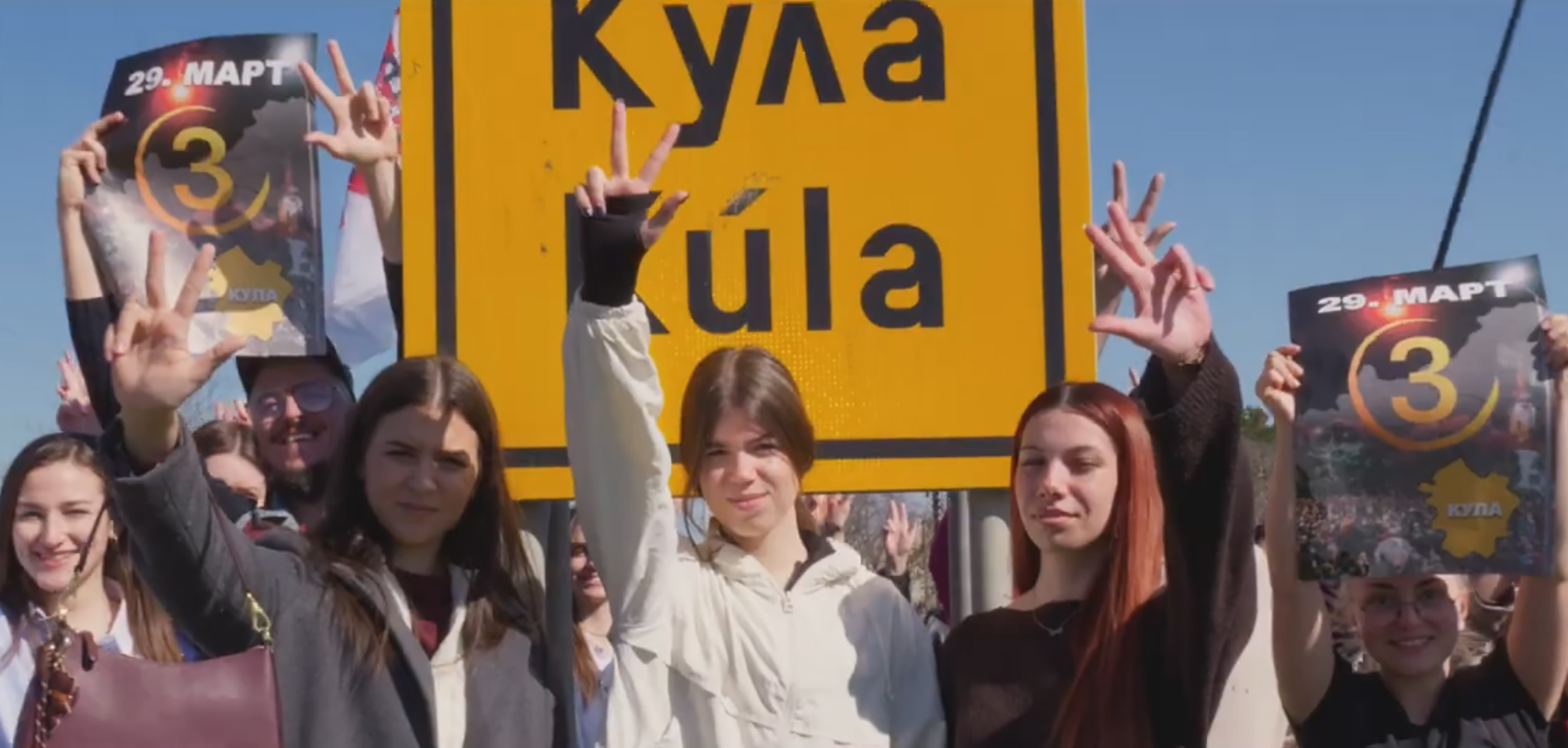
On one side, beautiful and intelligent young people, and on the other, the President of Serbia and figures with the appearance of thugs
The local elections in ten municipalities left the impression that these were parliamentary or even presidential elections in Serbia. Although numerous observers did not complain about procedural violations of the elections, outside the polling stations a real battlefield was unfolding. The conditions were not fair and democratic; opposite the student and opposition lists, which had virtually no budgets, there stood an entire enormous state machine with millions in resources and with the President of Serbia, Aleksandar Vučić, personally as its head.
Serbia was once again in an atmosphere like on the eve of civil war, and around the polling stations in those surroundings exhausted by transition, fierce electoral violence and bloody brawls were taking place with the aim of intimidating voters.
During the election campaign, the civilizational contrast of “students” and “Vučić”: on one hand, beautiful and intelligent young people, and on the other, the President of Serbia and figures with the appearance of thugs.
As expected, Vučić declared victory in all ten municipalities, but with a grim face. The tight victory is a clear message that in parliamentary elections the coalition around the Serbian Progressive Party will most likely not win a majority despite all the abuses, bribery, intimidation, and rigging.
The authority’s game
These local elections were equally important for the rebellious students and for the authorities. The authorities brought the situation to the ultimate point where it is about their survival and that of President Vučić personally.
The amount of blood and smashed heads around the polling stations shows that the autocratic regime is ready to use raw physical force to prevent a change of government.
The authorities saw these elections as a test and a proving ground for a reprisal against the student and civic protest, but the results show that the students are becoming more experienced and more independent.
Only now is it risky for the President of Serbia to call early parliamentary elections, which is one of the demands of the student protest, because not only is he not certain that he would win them, but it is becoming ever more likely that he could lose them.
Now this is a regime of a police junta and criminal thugs. And in order to repeat the intimidation of dissenters during elections and exert pressure on voters, Vučić needs an entire army of thugs and tons of cash money, which in practice is hardly doable.
The game of students and the opposition
These local elections, which are being held outside the regular schedule, were good for the students because they were “learning” with them. Last year, the students and the opposition had another block of local elections, which were also a training ground for political education. In some places the students and the opposition ran together, in some separately, in some in a combined way.
Most likely, they would have paid for it with their inexperience if President Vučić had suddenly called early parliamentary elections last year.
However, the students have one trump card, which the regime itself handed to them. It is the struggle of the free-minded youth of Serbia against the autocrat Aleksandar Vučić personally. The desire of the monolithic regime to control everything from the National Assembly to the farthest local community in Serbia is its biggest crack and weakness. In order to secure a certain victory, Aleksandar Vučić has put his own name in the campaign, so that the names of the people who tomorrow should have been solving the everyday issues of sewage systems and neglected landfills in local self-governments became irrelevant.
At the same time, every council seat won by students in those local parliaments is a victory over Vučić — personally. Concurrently, this is also the main tactic for defeating the dictator tomorrow in parliamentary elections.
The battle for power is, in the long term, already lost in advance; it only has to be played wisely, and the paragraph about Aleksandar Vučić in the history of Serbia will sound similar to the one about Slobodan Milošević.
Voluntarily into the gulag
What is worrying is that the regime can still rule for some time and do enormous damage to the institutions and citizens of Serbia.
As quickly as the students are learning lessons from political life, Vučić is just as quickly putting everything under his control through repression.
What is worrying is the possible fatigue from struggle among the protesting youth. If wrestling with windmills does not produce the expected result, many may give up. After all, that is the picture we knew for the decade before the beginning of the mass student protest.
Ahead of the rebellious students and citizens there will be an even harder choice — revolution or departure abroad?
Theory says that in electoral authoritarianism, such as the one currently in Serbia, votes and the will of the voters must be defended in the street.
Are fragile young bodies, torn away from the parental nest and the study desk, ready to stand against the shields and clubs of those for whom smashing heads is a daily routine?
Like all contemporary autocrats, Aleksandar Vučić is counting on the opposite and considers himself generous: leaving Serbia is a smarter choice than a smashed head. After all, that is the strategy of every contemporary dictator — expulsion or voluntary consent to the gulag.
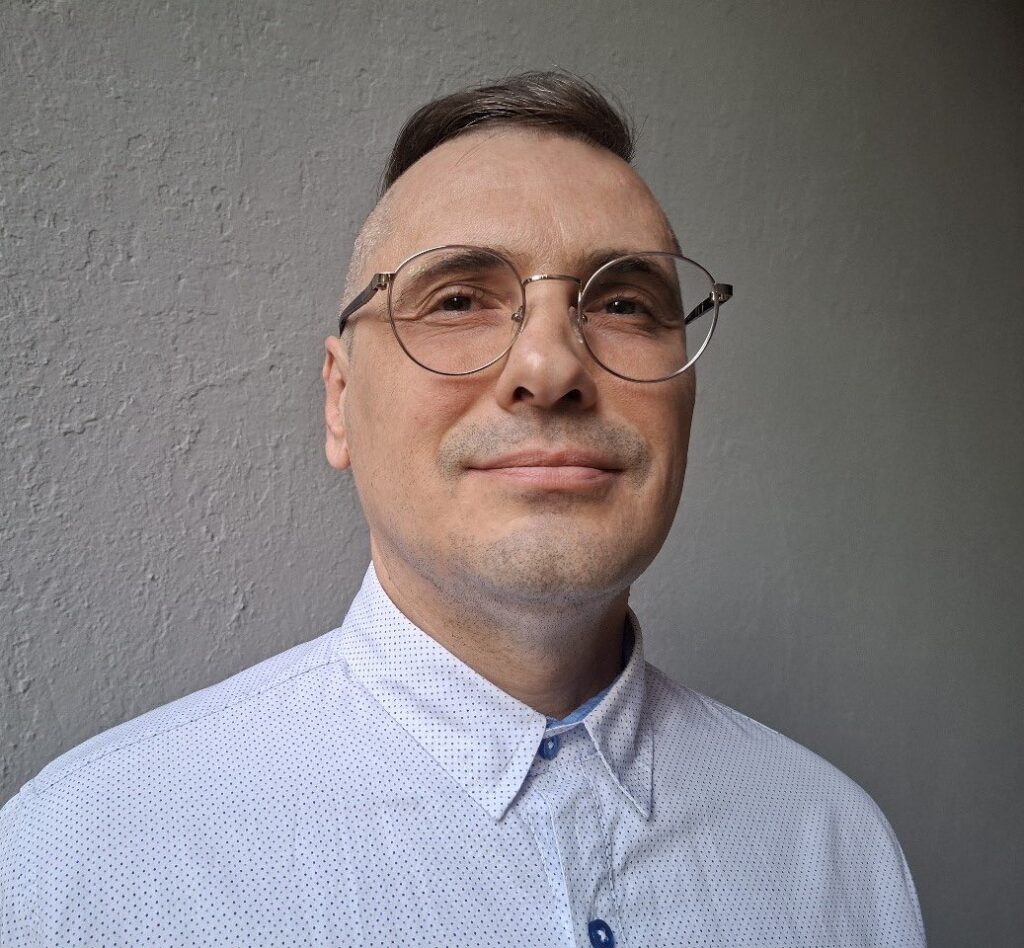
Boris Varga. Serbian political scientist and journalist.
The articles published in the “Opinions” column reflect the personal opinion of the author and may not coincide with the position of the Center