
The Western Balkans, and the broader region of Southeast Europe as a whole, are undergoing the most intensive phase of rearmament since the end of the Yugoslav wars. The largest countries in the region are carrying out the most expensive military modernization since the 1990s, replacing the “socialist” legacy with modern Western and Eastern systems. This process, which experts describe as a “quasi-arms race,” entered a phase of systemic reforms in 2025–2026, including large-scale procurement of equipment and the return of mandatory conscription.
Serbia: Regional Leader
Serbia retains its status as the regional leader in terms of defense spending. By the end of 2025, the country’s military budget reached approximately €2.2 billion (around 2.5% of GDP). The main areas of expenditure are the procurement of new military equipment from both Western and Eastern sources, and the development of its domestic defense industry.
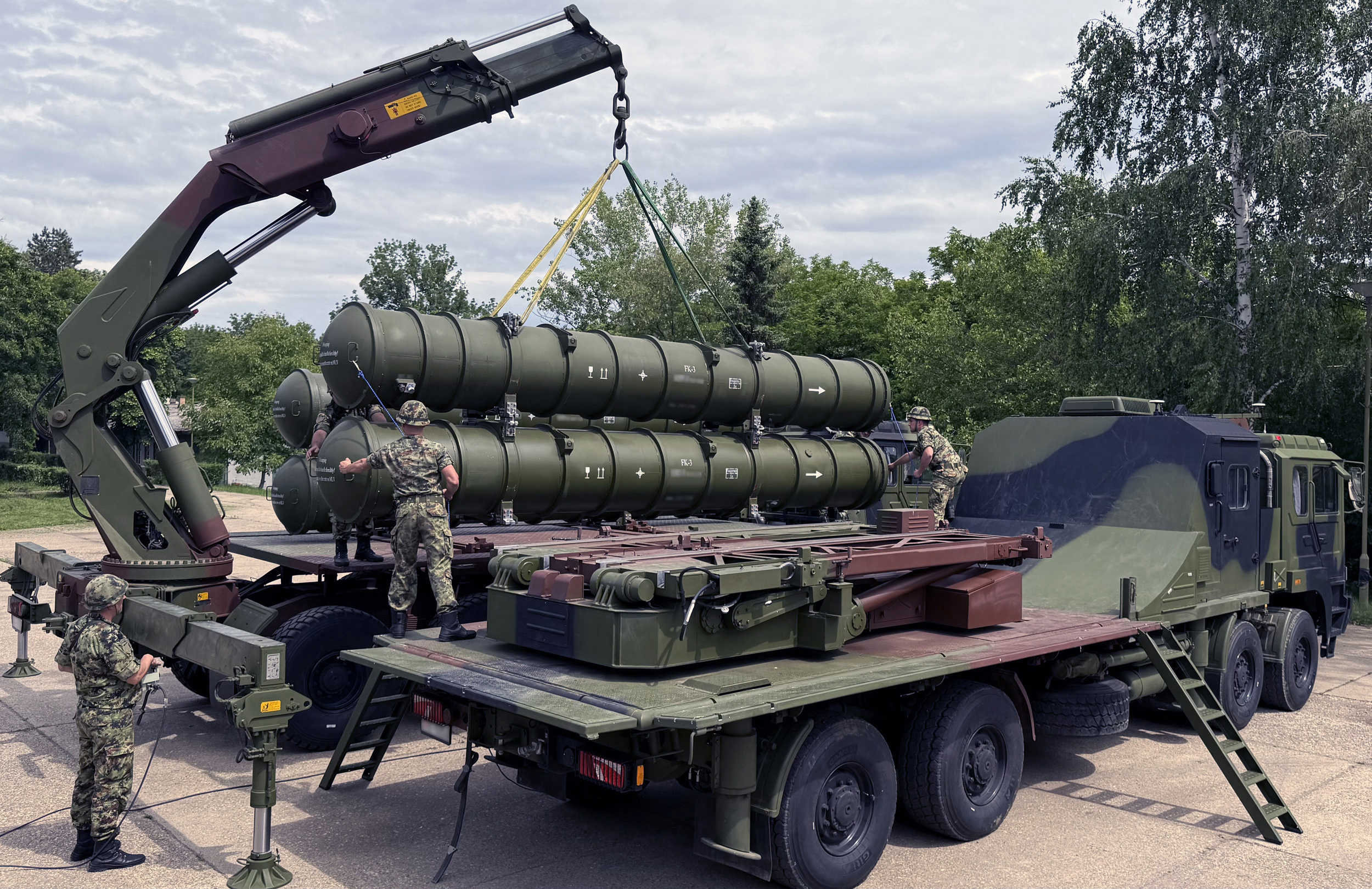
In particular, Belgrade signed a contract for the delivery of 12 French Rafale fighter jets. At the same time, the country deployed Chinese FK-3 air defense systems and received modern Chinese CH-95 strike UAVs.
In addition, Serbia is implementing a project to produce 5,000 domestically developed “Mosquito” loitering munitions. The army has already adopted FPV drones of the “Komarac” series.
From 2026, mandatory military service of 75 days (60 days of training + 15 days of maneuvers) will be introduced for men up to the age of 27.
Croatia: Development within NATO and Beyond
In Croatia, conscription for basic military training was reintroduced on 1 January 2026. The training will last 60 days and is designed for 4,000 people annually.
In 2025, Croatia’s military budget also increased significantly—to over €1.5 billion—becoming the highest in recent decades. The country officially exceeded NATO’s target for the first time, recording defense spending at 2.1% of GDP. Compared to 2024, the budget increased by 17.3%. This budgetary leap is part of a broader strategy under which Croatia plans to reach 2.5% of GDP spending by 2027 and 3% by 2030.
A significant portion of these funds (around €640 million) was directed toward the equipment and modernization program.
In December 2025, Croatia signed a €1.48 billion contract to purchase 44 Leopard 2A8 tanks. Under this agreement, Zagreb will transfer 30 M-84 tanks and 30 M-80 infantry fighting vehicles to Ukraine.
The country acquired 12 Rafale fighter jets, 89 U.S. Bradley infantry fighting vehicles, and is procuring 8 HIMARS systems (a $390 million deal).
Alongside the procurement of heavy equipment, Croatia is actively developing its domestic unmanned technologies cluster. By the end of 2025, the country effectively secured the status of one of Europe’s leaders in the production of small combat drones. The development of this sector is based on the principle of full technological independence from China and on large-scale state order. Croatia’s military-industrial complex has already reached significant production levels, which are planned to be increased in a geometric progression. By the end of 2025, the country is producing approximately 200,000–280,000 drones per year. According to Croatian Defence Minister Ivan Anušić, the country is ready to rapidly increase output to 500,000 units, and in the long term—to several million FPV drones per year, depending on the needs of NATO allies.
The main technological driver is the company Orqa (headquartered in Osijek). It has become a unique example of full vertical integration. Orqa independently produces almost all critical components, which makes its products resilient to supply chains from the PRC and compliant with NATO security standards (NDAA-compliant).
The development of production is directly linked to a new doctrine for the protection of critical infrastructure: Croatia became one of the first NATO countries to order the development and production of its own anti-aircraft drones for intercepting enemy UAVs. In December 2025, an agreement worth €125 million was signed with the Croatian electrical engineering giant Končar to create a multilayered anti-drone defense system. This system combines radars, 30-mm anti-aircraft guns, and swarms of interceptor drones.
Croatia is actively using funding through European programs (such as “ReArm Europe”) to transform itself into a regional “drone hub.” This allows the country not only to strengthen its own army but also to become a key supplier for the entire Alliance, offering cheap, mass-produced, and secure (without Chinese components) solutions for modern warfare.
Albania: NATO Base and Domestic Industry
Albania’s defense budget in 2025 amounted to approximately €524 million (2% of GDP). The main focus was the modernization of the Kuçova air base, which has turned into a strategic NATO hub. However, the real breakthrough was the agreement with Elbit Systems.
The contract with the Israeli company Elbit Systems was signed in September 2025. The agreement provides not only for the delivery of ATMOS howitzers, SPEAR mortars, and Magni-X/Thor drones, but also for the construction of a 5,000 sq. m plant in the north of the country (through the state-owned company KAYO) for the assembly of drones and ammunition by 2027.
Kosovo: Ambitions of the Security Force
Pristina, despite international pressure, continues to implement a 10-year plan to transform the Kosovo Security Force (KSF) into a regular army. In 2025, the budget of the Security Force (KSF) reached €208 million (around 2% of GDP).
Kosovo received Bayraktar TB2 drones and is awaiting the delivery of 246 Javelin missiles from the United States.
In January 2026, Kosovo conducted tests of the domestically produced Skifteri K1 loitering munition. The manufacturer claims a range of up to 1,124 km and a 42 kg warhead.
2025 became a turning point for Kosovo’s defense sector due to the start of construction of the first-ever state-owned ammunition factory in the republic’s history. The project is being implemented with the support of Western partners (including Turkey and companies from the United States) and aims to fully supply the Kosovo Security Force (KSF) with NATO-standard 5.56 mm ammunition, as well as 7.62 mm and 9 mm rounds.
The plant is located in an industrial zone near Mitrovica. In addition to small-arms ammunition, the production line is designed with the possibility of rapid modernization to manufacture 82 mm and 120 mm mortar rounds. This facility is part of a broader “shell resilience” strategy aimed at reducing Kosovo’s critical dependence on imports.
Formation of New Military Alliances
The militarization of the region is accompanied by the crystallization of two opposing axes of influence that go beyond classical NATO structures.
“Adriatic Axis”: Croatia — Albania — Kosovo
On 18 March 2025 in Tirana, the three countries signed a Declaration on Military Cooperation. This alliance aims to:
• harmonize defense strategies and jointly invest in the military industry;
• exchange intelligence to counter hybrid threats;
• facilitate the full integration of Kosovo into NATO defense structures.
Serbia perceived this pact as a direct threat and an attempt to “block” Belgrade.
“Danube Axis”: Serbia — Hungary
For its part, Serbia deepened military cooperation with Hungary. On 1 April 2025 in Belgrade, a strategic partnership agreement was signed, which includes 79 joint military activities for 2025. This is a record number of activities, covering joint exercises and military-technical cooperation. Aleksandar Vučić described cooperation with Budapest as “a step toward a de facto military alliance,” creating a unique precedent of cooperation between a NATO country (Hungary) and an out-of-the-bloc Serbia.
Military Exercises in Unexpected Combinations
In 2025, military maneuvers became a platform for regional countries to practice the latest tactics.
In July 2025, Serbian special units conducted the “Peacekeeper 2025” exercises in China, during which the use of unmanned systems in special operations was practiced, particularly in urban environments. This demonstrates that Belgrade is not only purchasing equipment but also adopting the Chinese doctrine of “drone-centric” warfare.
In the autumn of 2025, Hungarian forces, together with NATO allies, including Croatia, conducted the largest military exercise in modern Hungarian history—“Adaptive Hussars 2025.” During the exercises, Hungarian troops practiced crossing the Tisza River via a specially constructed temporary bridge. A unique element of “Adaptive Hussars 2025” was the practice of anti-drone corridors—the systematic deployment of electronic warfare to protect logistics.
The Kosovo Security Force, within the framework of the large-scale “Defender 25” exercises, practiced border defense in mountainous terrain with the support of NATO aerial reconnaissance assets, which was intended to enhance the operational interoperability of the KSF with the Western military alliance.
New Security Logic and the Factor of “Big War”
An analysis of the militarization of the Western Balkans / Southeast Europe leads to the conclusion that there has been a radical change in the region’s security paradigm. The main factors shaping this process are as follows.
Lessons of the Russian-Ukrainian War
The key lesson of the Russian-Ukrainian war for the region was the realization that compact professional armies are incapable of sustaining prolonged high-intensity combat operations. This is precisely why Serbia and Croatia took the politically difficult step of restoring conscription, considering it necessary to ensure a mobilization reserve and create conditions for scaling up the armed forces in the event of a security threat.
Technological Autonomy and the “Drone War”
The region is actively introducing unmanned technologies. Serbian “Mosquito” and Kosovar “Skifteri” demonstrate that even small states are trying to acquire their own means of remote strike. This creates a situation of “mutual deterrence.”
Military Micro-Blocs
The formation of small regional military alliances demonstrates that the countries of the Western Balkans / Southeast Europe are seeking new formats to strengthen their security, adapting to the current geopolitical situation. When “great powers” and the strongest military alliances focus on other issues and other regions, the Western Balkans / Southeast Europe are trying to work independently on strengthening their armed forces, military industries, and regional defense cooperation.
Kosovo: From Object to Subject of Security
The strengthening of the Kosovo Security Force (KSF) indicates Pristina’s transition from a model of a “passive consumer of security services” to one of “independent defense.” Kosovo’s leaders have set a course for developing their own army, their own military industry, and their own system of military alliances, and, judging by the results of the latest parliamentary elections, this course will be maintained in the near future.
Surviving in the New World
In conclusion, the militarization of the Western Balkans / Southeast Europe is an attempt by regional states to adapt to a world in which international law has given way to the “law of force.” It is obvious that the growth in the quantity of weapons increases overall risks, “filling the powder keg with gunpowder.” At the same time, there is a view according to which a new system of deterrence is being created in the region, under which the price of any aggression becomes unacceptably high.
CWBS Analytical Group