In Serbia, the control of elections will be important, but also the post-election combinatorics.
The anniversary of the collapse of the canopy in Novi Sad, where 16 people deceased, passed in the continuity of mutual exhaustion of protesters and the government in Serbia. Aleksandar Vučić did not manage to suppress, break, divide, discredit the protests, while on the other side the protesters did not manage to force the President of Serbia to call early parliamentary elections.
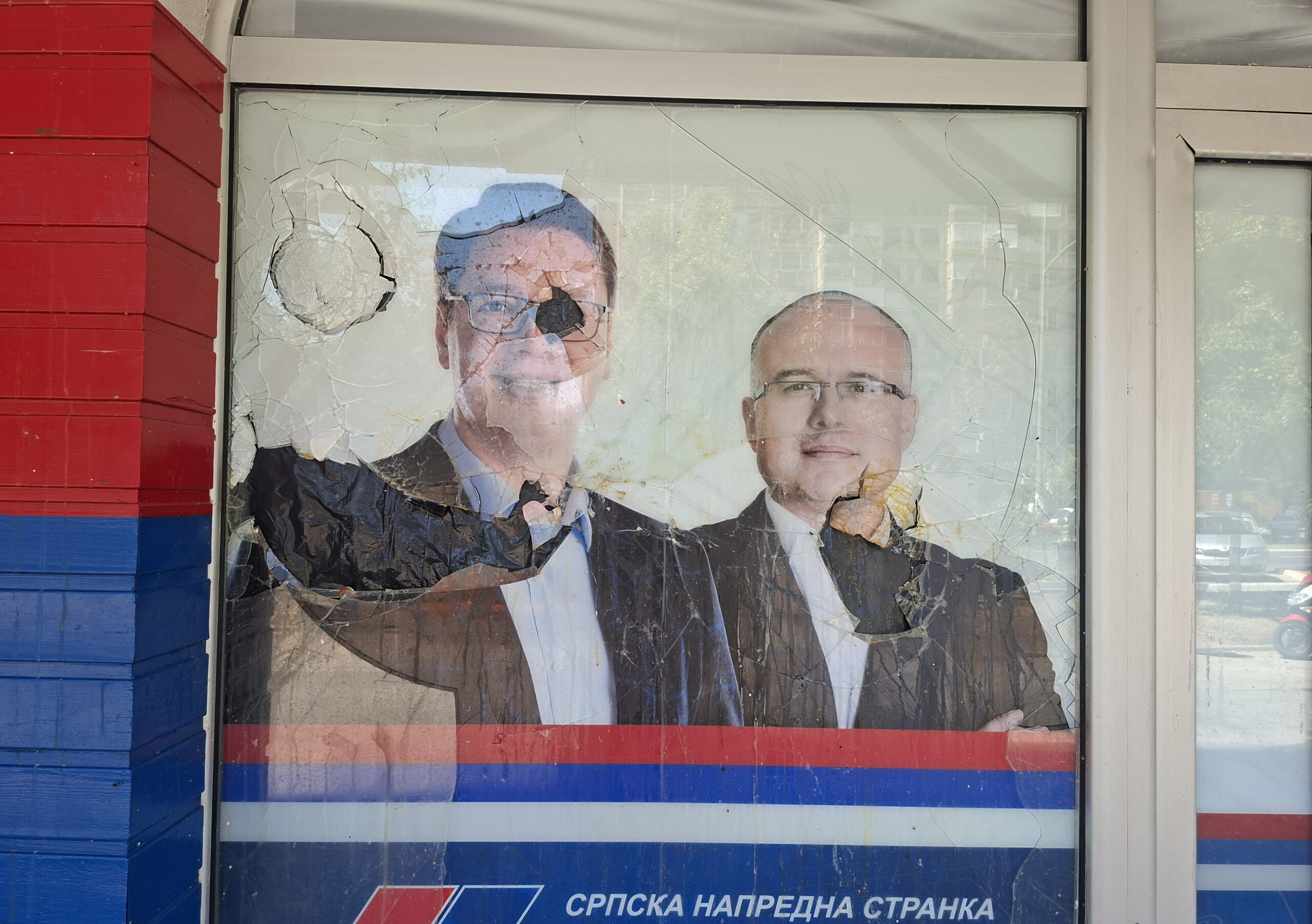
Serbia is, as never before, a divided society of “blockers” (as the government calls the protesters) and “ćacije” (as the protesters call the supporters of the government). The prior will not give up their demands for political change, while the latter are blackmailed or bought to physically defend Vučić and the Serbian Progressive Party.
Vučić has against himself the majority of the youth of Serbia, and that is a long-term lost political battle, but he has the state apparatus and the criminal oligarchy with whose help he can continue to rule for some time. Students have the enthusiasm of youth and faith in a better Serbia. Free from greed, President Vučić cannot buy the young with dirty cash, loans or other benefits.
For them protest is a school, and positive experiences and occasional declines of the protests make the outcome of the rebellion uncertain. But, besides the students, there is not a single other actor on the political scene of Serbia who can defeat the clique of the Serbian Progressive Party that is deeply rooted in society.
Both the students and Vučić are preparing for elections. The students and high-school pupils, with their protest marches which resemble religious pilgrimages, are changing Serbia, but Vučić is also working on directing the protests before future elections.
What could be called the (in)direct success of Vučić is nationalism, anti-EU sentiment and conservatism which over the course of a year have prevailed at the student and civic protests. It started from the urban, liberal and left, and ended in nationalism and the ideology of the Serbian right. This is the terrain of the former Serbian Radical Party, today’s Serbian Progressive Party.
The students do not reveal the names from their list, which the government already knows. Although modern communications and social networks are good for mass mobilizations, every action that does not occur quickly and unexpectedly is easily discovered by the Serbian secret service.
For a long time now, unconfirmed names from the top of the student list have been circulating on the networks, such as the nationalist professor Milo Lompar. Such information and such personnel very much suit the political game of the progressives. And it is not only Aleksandar Vučić who is interested in the long-term survival in power, but there is a wide circle of interests of people who do not want to be removed or prosecuted if the regime falls.
Although generally in a worse position, Vučić is in the field of elections a step ahead of the students. While inexperienced students and citizens argue about the names on the electoral list, about how many columns to go into the elections with, and divide among themselves, Vučić still has at his disposal the state and criminal resources with which he can influence the course of the elections.
The key, although less frequently asked question in the public, is which function Vučić is planning after the expiration of his second presidential term. Regular presidential elections in Serbia are planned for the spring of 2027, but how to align them with parliamentary elections? And would early calling of elections be better for Vučić, unlike the bad decision of early presidential elections made before major political turns by former presidents Slobodan Milošević (2000) and Boris Tadić (2012)?
Regardless of whether the political crisis will end peacefully at the elections, or revolutionarily on the street, everything indicates that political changes will resemble the departure of Slobodan Milošević, when the “new” nationalist Vojislav Koštunica came to the head of Serbia, who suited the majority of the people, Moscow and Washington.
On the other hand, the political heterogeneity of the protests indicates that the MPs from the student list will hardly remain in a stable political option after the elections. Everyone will go their own way, like the diverse united opposition (DOS) after October 5, 2000 and the fall of Milošević.
While the students consider political parties unimportant, Vučić and the Serbian Progressive Party are at an advantage with their years-long creation of satellite parties, movements and other political subjects which can be useful for future forming of parliamentary majorities.
This again leaves space for Vučić and the “progressives” to repackage themselves and remain in power. Thus, Vučić as a resurrected leader and prime minister could find himself in the company of his ideologically close Eastern European colleagues, Prime Ministers Robert Fico, Viktor Orbán, and even the new returnee Andrej Babiš.
If the transfer of power in Serbia takes place without bloodshed, there will be no political revanchism. Because there is no change of ideological paradigm, as at the end of communism in Eastern Europe, nor a civilizational or foreign-policy change of vector, as on the Maidan in Ukraine.
Students and citizens, together with the parties, must carefully plan not only the monitoring of the elections, but also the post-election process. The success of the student list in the elections could, in the parliamentary combinatorics of forming a majority, experience defeat. On this may depend the fulfillment of the demand to punish those responsible for the death of 16 people at the railway station in Novi Sad and the fight against endemic corruption. The awakening of Serbia is an emotional phase, but taking power and governing the state is a cold rational process.
Boris Varga. Serbian political scientist and journalist.
The articles published in the “Opinions” column reflect the personal opinion of the author and may not coincide with the position of the Center