- The United States Temporarily Allowed the Operation of NIS
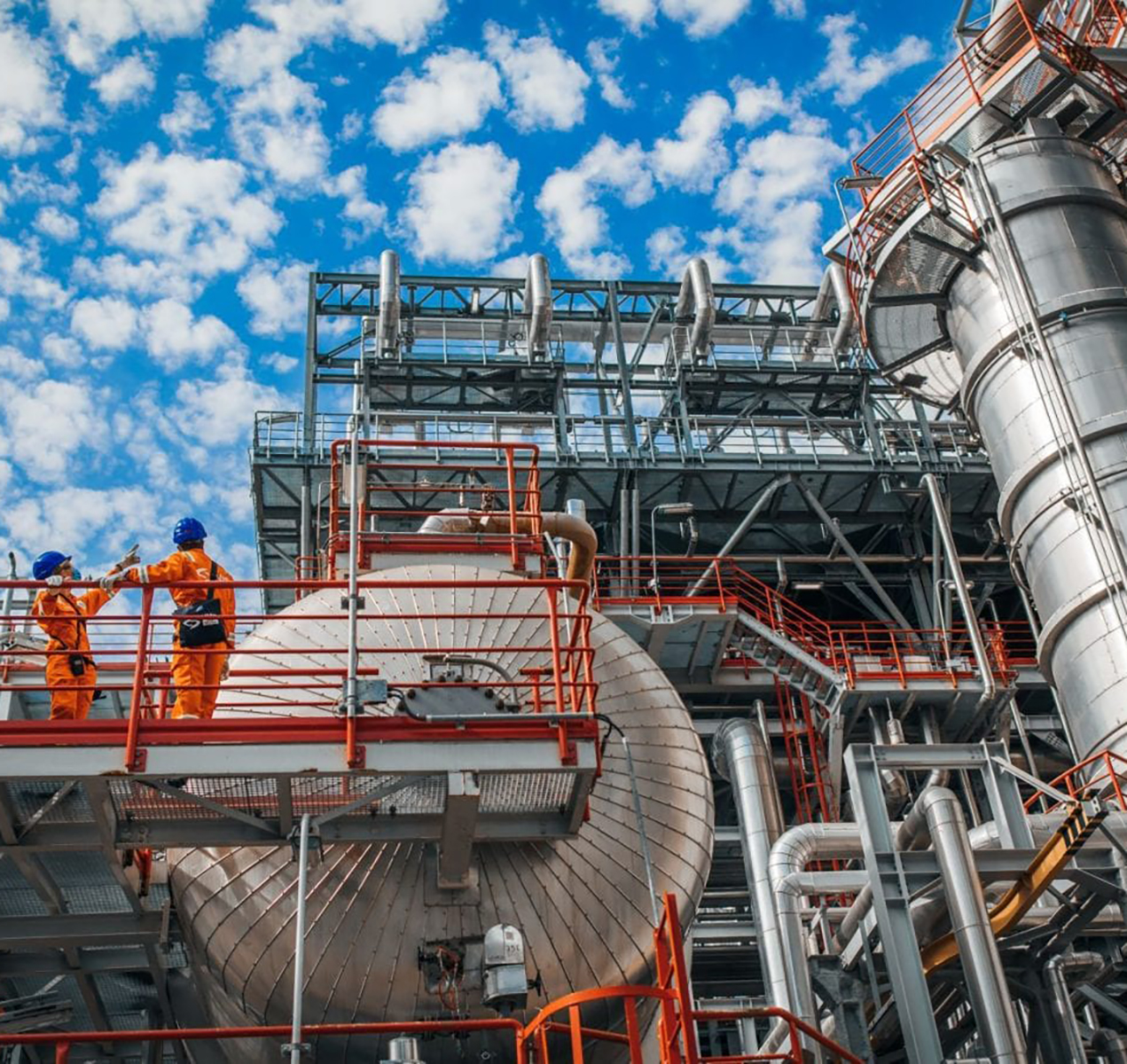
On 31 December 2025, the Office of Foreign Assets Control of the U.S. Department of the Treasury (OFAC) extended the operating license for the Oil Industry of Serbia (Naftna industrija Srbije, NIS) until 23 January 2026. Serbian Prime Minister Đuro Macut emphasized on 1 January that the extension of the license makes it possible for NIS and the Pančevo oil refinery to continue operating.
According to Serbian sources, obtaining the license was the result of intensive diplomatic activity and negotiations conducted by Serbian President Aleksandar Vučić with OFAC and the U.S. Department of State, with the participation of Hungarian Prime Minister Viktor Orbán.
“MOL, together with the Oil Industry of Serbia, together with the Serbian state, worked on a letter to OFAC and on securing this operating license, which gives us air and the possibility for additional crude oil supplies,” Vučić said in an interview with Serbian public broadcaster RTS. “Of course, not all problems have been resolved, but what is important is that as of last night, the Oil Industry of Serbia has the right to pay for, supply, and process petroleum products and crude oil that it will deliver to our country via the JANAF pipeline,” he noted.
On 9 October 2025, OFAC applied sanctions against NIS, whose majority shareholding (56 percent) is owned by Russian companies. The stated goal, as announced by Washington, was to prevent Russia from using revenues from energy sales to finance the war in Ukraine.
Since the introduction of sanctions, NIS has been unable to import crude oil via the Adriatic Pipeline (JANAF), which runs through Croatia, and on 2 December the NIS oil refinery in Pančevo was forced to halt operations. In order to supply for the domestic market, Serbia was forced to use state reserves and import petroleum products from other countries, primarily Hungary.
As Vučić stated, the country’s economy felt “very serious consequences” of the sanctions imposed due to the Russian owners of NIS. “We are seeing a decline in industrial production both in December and in November due to the shutdown of the oil refinery. And this is strikingly and dramatically reflected in the state of our economy,” he emphasized.
According to the Serbian president, during the validity of the issued license, until 23 January, a draft contract between the Russian owners of NIS and the buyer, Hungary’s MOL, should be ready.
“Why is the 23rd important? I think that at that moment the Americans expect to see all the main points of the future contract between the seller, the Serbian Oil Industry, and the future buyer, in this case most likely the Hungarian company MOL.”
- Early Parliamentary Elections in Kosovo Won by Kurti’s Party and the “Serb List”
On Sunday, 28 December, early parliamentary elections were held in Kosovo. This was the second nationwide vote in one year: after the elections in February, MPs failed to form a government, which led to the dissolution of parliament in November and the scheduling of new elections for late December.
According to preliminary data from the Central Election Commission, after processing more than 99.5 percent of polling station records, the party of incumbent Prime Minister Albin Kurti, the Self-Determination Movement (Lëvizja Vetëvendosje, LVV), significantly strengthened its position. LVV received 49.3 percent of the vote, a substantial increase compared to its February result (42.3 percent).
Although Kurti may still require the support of MPs from non-Serb minorities to secure an absolute majority in parliament, his position has become significantly stronger than at the beginning of 2025.
In his address after the vote, Kurti called the election results “a victory of the people and the Republic of Kosovo.” He stressed that Kosovo must now unblock EU funding and other international programs that were frozen due to dysfunctional state institutions. “As soon as the results are confirmed, we will need to establish institutions and continue the good work as quickly as possible. We are waiting for the EU Growth Plan worth 880 million euros and three agreements with the World Bank totaling 120 million euros,” Kurti noted.
For the main opposition parties, the results of the December elections were a setback.
The Democratic Party of Kosovo (Partia Demokratike e Kosovës — PDK) retained second place with 21 percent, almost repeating its February result.
The Democratic League of Kosovo (Lidhja Demokratike e Kosovës — LDK) suffered the greatest losses, falling to 13.6 percent (compared to 18.3 percent in February). The media are already discussing the possible resignation of the party leadership.
The Alliance for the Future of Kosovo (Aleanca për Ardhmërinë e Kosovës — AAK) of Ramush Haradinaj received 5.7 percent, barely crossing the electoral threshold.
The Belgrade-oriented party “Serb List” (Srpska lista) won around 90 percent of the vote in Serb communities, guaranteeing it all 10 seats reserved for Serbs in parliament. Party leader Zlatan Elek emphasized that Kosovo Serbs demonstrated unity by not giving a chance to alternative Serb candidates, who received a minimal number of votes.
The parliamentary elections on 28 December were historic in terms of voter turnout in Kosovo. A total of 899,521 citizens exercised their right to vote, excluding diaspora votes. In percentage terms, approximately 45 percent of voters cast ballots.
The previous record was set on 9 February this year, when 871,662 citizens voted at polling stations in Kosovo.
On 2 January, the start of counting votes from abroad was announced. In particular, the diaspora was able to vote at 29 diplomatic missions of the Republic of Kosovo in 18 different countries worldwide.
It is expected that after counting all ballots, the total number of votes will amount to approximately 950,000.
- Criminal Proceedings Closed over the Novi Sad Canopy Collapse Against Serbia’s Former Construction Minister
On 24 December, the Higher Court in Novi Sad dismissed part of the indictment related to the collapse of the canopy at the Novi Sad railway station on 1 November 2024, which resulted in the deaths of 16 people. The tragedy triggered a wave of mass anti-government protests that continue to this day. The main demand of protesters is the punishment of those responsible for the deadly collapse of part of the reconstructed station building.
However, with its decision, the court terminated criminal proceedings against six individuals, including Goran Vesić, who was the Minister of Construction, Transport and Infrastructure at the time of the reconstruction of the railway station. As reported, the court made this decision due to a lack of evidence to establish reasonable suspicion that the accused committed the alleged criminal offenses.
In addition to Vesić, proceedings were closed against the then acting director of Serbian Railway Infrastructure, Jelena Tanasković, the then assistant minister of construction Anita Dimoski, and three expert supervisors.
At the same time, the Novi Sad court confirmed charges against seven other defendants under the same indictment. The indictment was upheld against Nebojša Šurlan, director of Serbian Railway Infrastructure at the time of the Novi Sad station reconstruction, and six other representatives of design companies, construction contractors, and technical supervision bodies.
The court’s decision to terminate criminal proceedings against former officials, particularly the former minister, caused outrage among relatives of the victims and protest participants. The Higher Prosecutor’s Office in Novi Sad has already filed an appeal with the Appellate Court against the ruling, which determined that “there are no grounds for charges” against the six suspects.
- A State of Energy Crisis Declared in North Macedonia
On 24 December, the government of North Macedonia declared a seven-day state of energy crisis due to an acute shortage of oil fuel caused by protests by farmers in Greece that began on 30 November. The blocking of highways and border crossings by protesters led to the stoppage of hundreds of fuel tankers needed for the operation of Macedonian thermal power plants. As North Macedonia has no domestic oil refining capacity, it depends on fuel supplies through the Greek border.
Under the declared crisis regime, the government in Skopje allowed the energy company to use state reserves, calling the step “forced but necessary” to save the energy system. Officials confirmed that more than 10,000 tons of fuel oil from reserves would help buy time while negotiations with the Greek side continue on establishing “green corridors” for fuel trucks even amid protests. Prime Minister of North Macedonia and leader of the ruling VMRO-DPMNE party Hristijan Mickoski and the Minister of Energy stressed that the energy situation constituted “force majeure.” Government officials stated that the previous administration left the energy sector in a neglected state, reducing the country’s resilience to external shocks.
At the same time, representatives of the opposition Social Democratic Union of Macedonia (SDSM) accused the current government of “amateurism” and untimely response. They stated that the authorities should have formed sufficient fuel oil reserves before the onset of winter, knowing about the unstable regional situation, rather than waiting for a complete halt in supplies.
Meanwhile, Greek farmers temporarily suspended blockades during New Year celebrations but promised to resume actions after the holidays. Their demands remain unchanged: resolution of a corruption scandal involving European agricultural funds and payment of outstanding subsidies, reduction of high production costs, and better procurement prices.