- “Serb List” won 9 out of 10 seats in the Kosovo parliament
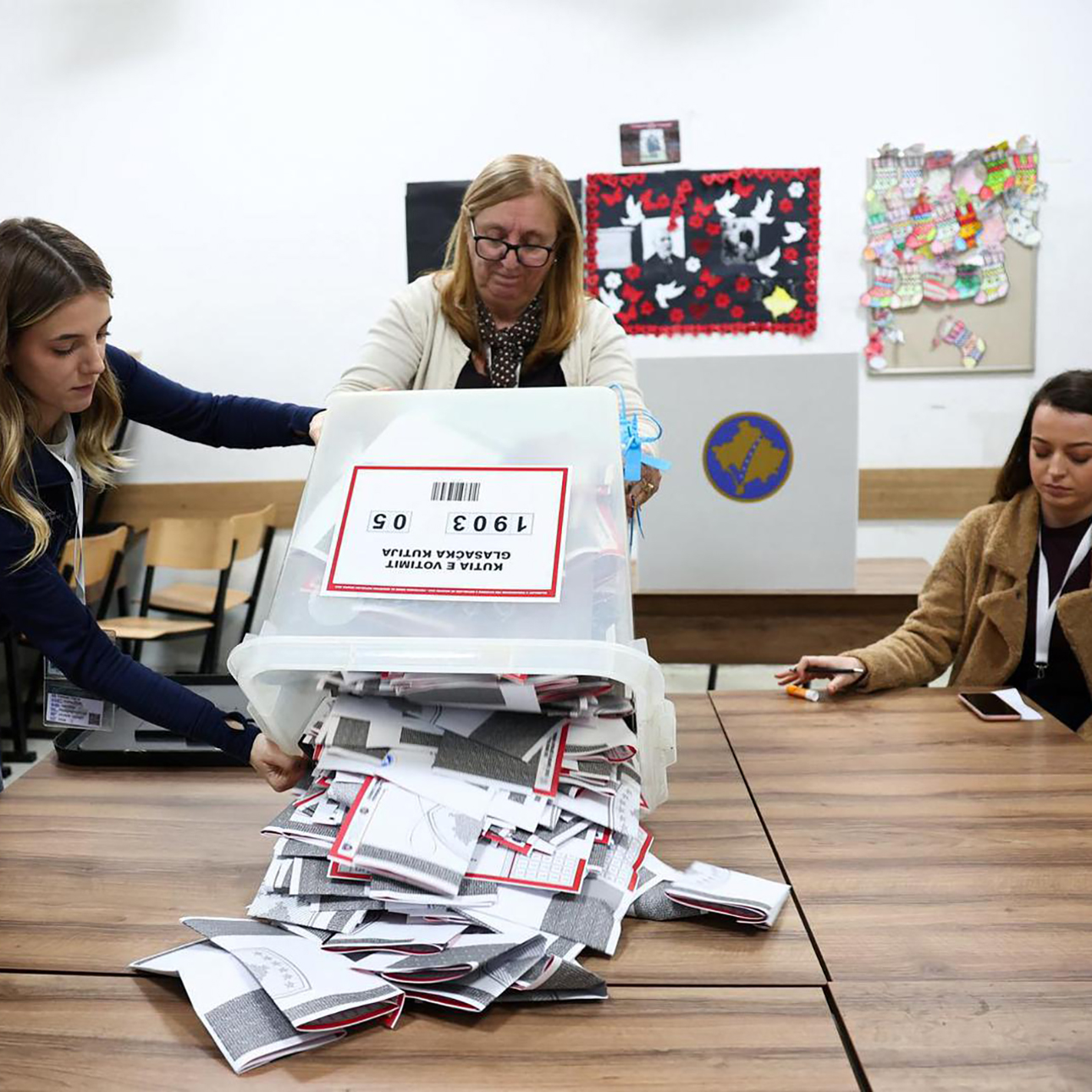
In the snap parliamentary elections in Kosovo held on 28 December, the Self-Determination Movement (Lëvizja Vetëvendosje, LVV) of the current head of the Government of Kosovo, Albin Kurti, received 51.11 percent of the votes, or 57 mandates, according to the final results published on the website of the Central Election Commission of Kosovo after all votes were counted. In second place was the Democratic Party of Kosovo (Partia Demokratike e Kosovës — PDK), which received 20.19 percent of the votes and 22 seats in parliament; in third place was the Democratic League of Kosovo (Lidhja Demokratike e Kosovës — LDK) with 13.23 percent of the votes and 15 seats. The Alliance for the Future of Kosovo (Aleanca për Ardhmërinë e Kosovës — AAK) received 5.5 percent of the votes, or six mandates.
Self-Determination is the only party that received more mandates than in the regular elections on February 9. The Democratic Party of Kosovo received two fewer mandates than in the previous parliamentary elections on 9 February, and the Democratic League of Kosovo received five fewer mandates.
Of the 10 mandates granted for the Serbian community, “Serb List” won nine mandates. It received 4.84 percent of the vote. One mandate was won by the party “For Freedom, Justice and Survival” of Nenad Rašić, a minister in Kurti’s government, which received 0.51 percent of the vote.
The results of the Serbian-community parties were practically a repetition of the results of the elections on 9 February. However, they did not coincide with the preliminary results announced by official Belgrade. According to Serbian President Aleksandar Vučić and Serbian government officials, “Serb List” was to receive 10 mandates, but the final vote count refuted this projection.
The other 10 mandates out of 120 in the Kosovo parliament were won by representatives of other communities.
- Republika Srpska celebrated Republika Srpska Day
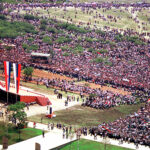
Republika Srpska held large-scale festivities on the occasion of Republika Srpska Day on 9 January, despite the fact that the Constitutional Court of Bosnia and Herzegovina has declared this holiday unconstitutional.
The central event was a festive parade in Banja Luka, in which more than 2,000 people took part, units of the Ministry of the Interior of Republika Srpska, veterans’ organizations, and representatives of the Russian motorcycle club “Night Wolves”.
In a central place in the stands, in addition to the leadership of Republika Srpska, were present the former President of Republika Srpska Milorad Dodik and foreign guests, including Nikola Selaković, Minister of Culture in the Government of Serbia.
Media attention was drawn to Rod Blagojevich, a former governor of the U.S. state of Illinois and a current lobbyist, who stood in the front row during the parade.
Danilo Vučić, the son of Serbian President Aleksandar Vučić, was also present at the celebration. President Vučić himself sent an official congratulatory message.
The Office of the High Representative (OHR) in Bosnia and Herzegovina warned the day before that celebrating 9 January as Republika Srpska Day constitutes disrespect for the decisions of the Constitutional Court of Bosnia and Herzegovina, emphasizing that such behavior may also entail criminal liability.
Previous celebrations of 9 January were accompanied by U.S. sanctions against those who organize the festivities contrary to the court’s decision. However, at the end of October last year, Donald Trump lifted sanctions against 47 individuals and dozens of companies linked to Dodik and his associates, many of whom had been sanctioned for their role in organizing the 9 January celebrations.
- The United States withdrew from the International Mechanism that continued the work of the Hague Tribunal
The United States withdrew from the International Residual Mechanism for Criminal Tribunals (IRMCT) in The Hague, an institution that became the successor to the International Criminal Tribunal for the former Yugoslavia and the Rwanda tribunal.
This step is part of a broader decision by Washington to withdraw from 66 international organizations and bodies, based on a presidential memorandum ordering the termination of participation in and funding for structures deemed not to align with American interests.
This decision is of particular significance for Bosnia and Herzegovina. The International Residual Mechanism in The Hague preserves the legal continuity of verdicts on genocide and war crimes committed during the wars of the 1990s, conducts appellate procedures, and manages archives that are of key importance in combating the denial of crimes.
In particular, within the framework of the Mechanism, final judgments were handed down in the cases against Bosnian Serb leaders Radovan Karadžić and Ratko Mladić, who were sentenced to life imprisonment for their role in Srebrenica genocide and other crimes against humanity.
The withdrawal of the United States, one of the key countries behind the creation and functioning of the Hague Tribunal, further weakens the international system that protects these decisions from political challenge and relativization. Although the International Residual Mechanism formally continues to operate under the auspices of the United Nations, without full political and financial support from the United States its authority and operational capabilities remain significantly limited.
Former President of Republika Srpska Milorad Dodik has already expressed his satisfaction with the decision of the U.S. president. “I welcome the decision of President Donald Trump and the United States to withdraw from a number of international quasi-institutions, which for years were used as lobbying and pressure groups for the now failed neoliberal projects. This decision demonstrates President Trump’s consistency in returning sovereignty to states and peoples,” Dodik said.
- Croatia adopted a decision on urgent assistance to Ukraine
The Government of Croatia adopted a Decision on providing urgent assistance to Ukraine. This is the fifteenth aid package to date. It concerns 100 mobile machine tools of Croatian production, as well as related consumables, with a total estimated value of 625 thousand euros including VAT.
A Resolution was also adopted on technical support for Ukraine’s energy system, given that numerous energy facilities and critical infrastructure across Ukraine have been severely damaged or destroyed, and a significant part of the country is experiencing disruptions in electricity supply. The transfer to Ukraine of transformers, pumps, and other technical equipment that is no longer used in Croatia is expected.
Croatian President Zoran Milanović, who usually criticizes Andrej Plenković’s government for its pro-Ukrainian position, once again emphasized that Croatia will not send its troops to Ukraine and stressed that financial assistance to Ukraine must not harm the Armed Forces of the Republic of Croatia.