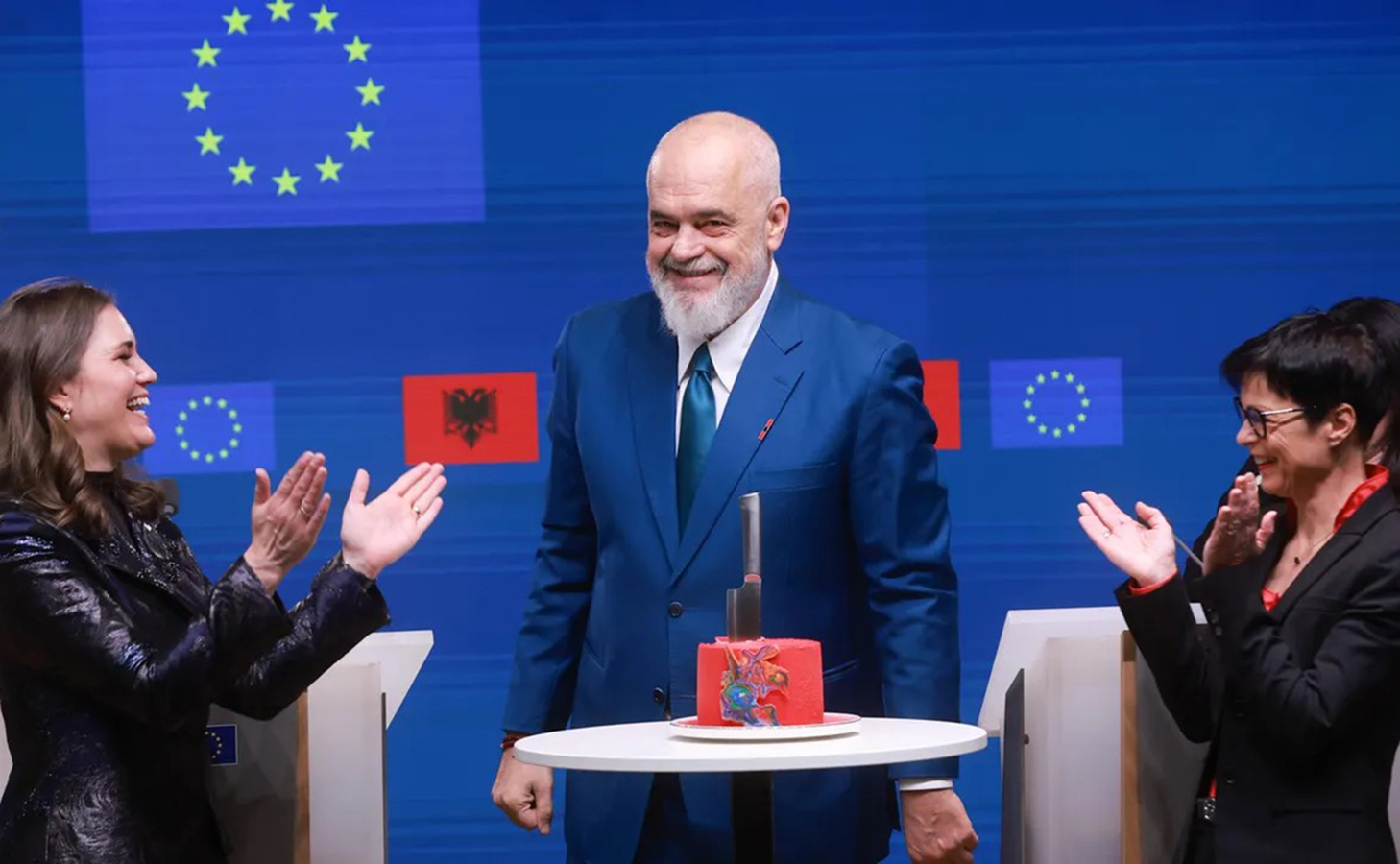
- Albania has opened the last negotiation cluster for EU accession.
Cluster 5, “Resources, Agriculture and Cohesion,” was officially opened during the Intergovernmental Conference in Brussels.
This step has symbolic and technical significance: it means that all 33 negotiation chapters, grouped into six thematic clusters, are now formally open for negotiations.
Representatives of the European Union highly praised the speed of Tirana’s reforms, emphasizing the merit-based principle and the geopolitical importance of enlargement.
Denmark’s Minister for European Affairs, Marie Bjerre, confirmed the strategic importance of this process: “Enlargement is a geopolitical necessity for the EU… Today’s step of opening the last negotiation cluster with Albania demonstrates the country’s commitment to further progress on its path toward EU membership.”
European Commissioner for Enlargement Marta Kos noted that this event is symbolic not only for Tirana, stating that Albania’s achievements on the path toward the EU inspire the country and citizens of the Western Balkans “who aspire to the same determination and change.”
Albanian Prime Minister Edi Rama called this success a “record achievement” and declared the country’s ambitious goals: “Nothing will stop Albania’s path to EU membership in 2030. The government’s goal is to complete the negotiation process by 2027.”
Albania’s attention will now fully shift to the implementation of reforms and the closing of negotiation chapters. This is a much more complex stage. For a chapter to be considered closed, a candidate country must not only adopt the relevant EU laws (acquis communautaire) but also demonstrate their effective implementation and practical application.
- Early parliamentary elections will be held in Kosovo on 28 December
Kosovo’s President Vjosa Osmani signed a decree dissolving the parliament and decided to hold extraordinary parliamentary elections on 28 December 2025.
The decision was made after a consultative meeting Osmani held with representatives of political parties.
“The date of 28 December was set because it is the only date that allows the CEC to organize elections in the regular manner and within constitutional deadlines,” the president said. In addition, according to her, most parties proposed exactly this date for the vote.
The holding of extraordinary elections became necessary after the parliament failed to form a government. Deputies twice voted against the formation of a “Self-Determination” (Vetëvendosje, LVV) government — first under the current acting prime minister Albin Kurti, and then under the former speaker of parliament Glauk Konjufca. According to the Constitution of Kosovo, if the second candidate for prime minister, who received the mandate to form a government, cannot secure parliamentary support, the president must call new elections, which must take place within 40 days from the announcement.
The Central Election Commission has already approved the schedule of activities for holding early elections to the Assembly of Kosovo, which will take place on 28 December 2025. The election campaign will last only 12 days — from 17 to 28 December.
Experts warn that Kosovo may face another period of political instability after the elections of 28 December, emphasizing that the renewal of the parliament may not significantly change the balance of political forces. Recently held local elections confirm this forecast — none of the parties had a significant advantage according to the results of the vote. According to expert assessments, Albin Kurti’s “Self-Determination” will most likely remain the frontrunner in the election race, but again, as after the elections in February this year, LVV will not have an absolute majority in parliament.
- A summit dedicated to the implementation of the EU Growth Plan was held in Tirana
EU Commissioner for Enlargement Marta Kos and the leaders of the six Western Balkan countries (Albania, Bosnia and Herzegovina, Kosovo, Montenegro, North Macedonia and Serbia) met in Tirana at the “Our Path to the EU” summit to assess progress in implementing the EU Growth Plan for the Western Balkans and to discuss priorities for the future.
The Growth Plan, backed by a Reform and Growth Facility amounting to 6 billion euros, supports Western Balkan partners in conducting reforms to advance toward EU membership, according to the statement of the European Commission.
In 2025, 414 million euros were allocated from the Reform and Growth Facility. Albania received 164 million euros, Montenegro — 45 million euros, and North Macedonia — 76 million euros.
Serbia was also granted preliminary financing of 111 million euros, and the Commission is currently assessing two additional funding requests.
Kosovo and Bosnia and Herzegovina have not received any funds yet. Kosovo has not yet ratified the Financing Agreement and the Loan Agreement.
Bosnia and Herzegovina approved its Reform Agenda with delay, and now the document must be approved by the European Commission.
Marta Kos emphasized that she had held an open discussion with regional leaders on how to accelerate the implementation of the Growth Plan and how the results of this process can benefit all citizens of the Western Balkans.
“We have many reasons to celebrate, but we must also be honest: two out of six countries have not yet begun implementing reforms. The two best-performing countries (Albania and Montenegro) have implemented around 50 percent of the agreed reforms, and here we see a clear link between progress in the accession process and the implementation of the Agenda (of reforms). Regarding allocated funds, we have still not covered 10 percent of the total amount. Therefore, we can and must do more together,” the Commissioner added.
“Ultimately, all Western Balkan countries belong in the EU; all Western Balkan countries must become full-fledged members of the Union,” the Commissioner said.
***
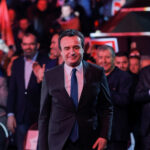
The acting Prime Minister of Kosovo, Albin Kurti, at the EU Growth Plan summit in Tirana, criticized the European Union for the lack of progress in granting Kosovo candidate status. He called it a paradox to speak of urgent EU enlargement when Kosovo’s application has been sitting on the EU’s shelves for three years.
“No country in our region was more prepared at the moment of receiving candidate status than Kosovo is today. Talking about the urgency of enlargement (of the EU), on the one hand, while leaving Kosovo’s application to gather dust for three years on an EU shelf, is, to put it mildly, a paradox,” he said.
- The Anti-Corruption Court in Albania has suspended a minister from office
The Special Court for Anti-Corruption and Organized Crime (GJKKO) of Albania suspended from office the Deputy Prime Minister and Minister of Infrastructure and Energy Belinda Balluku.
GJKKO’s decision to suspend Balluku was made within the framework of an investigation by the Special Prosecution Office (SPAK) into alleged violations by Balluku during public procurement procedures. The case concerns, in particular, the construction of a tunnel on a highway in southern Albania and the Tirana ring road. The court also imposed a travel ban on Belinda Balluku.
During a session of the Albanian parliament, Balluku rejected the accusations and stated that she would cooperate with the investigation.
The Albanian government headed by Prime Minister Edi Rama appealed the decision of GJKKO by officially addressing the Constitutional Court of the country.
Prime Minister Rama described GJKKO’s decision as a “brutal act” that “interferes with the independence of the executive branch.” At a joint press conference with EU Commissioner Marta Kos in Tirana, responding to a journalist’s question regarding the court’s decision to suspend Belinda Balluku, Rama emphasized that “it is not common practice in the EU for people to be suspended from office,” and that “this is a unique example in the history of Europe.”
At the same time, Rama stated that the government would respect GJKKO’s decision until the Constitutional Court issues its ruling. For now, as the prime minister emphasized, Albania has effectively been left without a deputy prime minister and an acting minister of infrastructure and energy.
***
Albania has the reputation of one of the most corrupt countries in Europe, and the fight against organized crime and corruption is one of the main conditions for EU accession. Since submitting its membership application, Albania has introduced several anti-corruption instruments, including the establishment of the special anti-corruption body SPAK to fight corruption and organized crime at the highest levels of government.
One of the most original steps of the Albanian government in combating corruption was the “appointment” of the AI-bot Diella to the “position” of a virtual minister responsible for improving public procurement and eradicating corruption.
In a recent interview with Euronews, Rama stated that by 2027 the country will introduce a fully AI-based public procurement system designed to “ensure an unprecedented level of speed, transparency and accuracy.”
- Vučić is accused of involvement in the “Sarajevo Safari”; the President of Serbia firmly denies it
An international scandal erupted around the President of Serbia, Aleksandar Vučić, after Croatian investigative journalist Domagoj Margetić filed a complaint against him with the Milan prosecutor’s office, accusing him of involvement in the so-called “Sarajevo Safari” — a case concerning “sniper tourism” during the siege of Sarajevo in the 1990s. According to the journalist’s claims, Vučić may have been present at military positions from which foreign nationals supposedly shot at civilians in Sarajevo for money.
The information about Margetić’s complaint was published by a number of reputable Western media outlets.
Serbian President Aleksandar Vučić immediately and firmly denied all accusations, calling them malicious disinformation directed against Serbia. Vučić stated that such texts are “part of a doctrine and strategy aimed at overthrowing the Serbian state.”
Alongside public denials, Vučić announced his intention to file lawsuits against the media outlets spreading these accusations and to hire “the best lawyers in the world” for this purpose. “I believe that I can take millions from them for this,” the President of Serbia said, adding that part of the money would go to lawyers, and part would be donated to children in need.