- Christian Schmidt Resigns from the Position of High Representative in Bosnia and Herzegovina
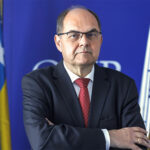
The High Representative in Bosnia and Herzegovina, German diplomat Christian Schmidt, has resigned after almost five years in office. He has already informed the Peace Implementation Council Steering Board (PIC SB) of his intention and requested that the procedure for selecting a new High Representative be initiated.
Schmidt will continue to perform all regular duties in full until the process of appointing his successor is completed.
The Office of the High Representative (OHR) has existed since the end of the war in Bosnia and Herzegovina. Its role is to oversee the post-war order and ensure compliance with the Dayton Peace Agreement. Schmidt’s mandate is the second-longest in the history of this institution. He was appointed to the position on 27 May 2021 and assumed office on 2 August of the same year.
During his mandate, Schmidt repeatedly emphasized the need to preserve the country’s territorial integrity, counter separatist rhetoric, and carry out reforms related to the rule of law, the functioning of the judicial system, and the electoral process. Among his most notable decisions were interventions in the electoral legislation and constitutional mechanisms of the Federation of Bosnia and Herzegovina in 2022, as well as amendments to electoral rules in 2024, which he justified by the need to strengthen the transparency and functionality of the electoral process. In addition, Schmidt repeatedly used his powers to block or annul decisions by the authorities of Republika Srpska which, in his opinion, undermined the constitutional order, state institutions, and the implementation of the Dayton Peace Agreement.
A separate feature of his tenure was the constant conflicts with the leaders of Republika Srpska, primarily with Milorad Dodik. In Banja Luka, it was emphasized from the very beginning that Schmidt was not a legitimate High Representative because, in their view, his appointment should have been distinctly approved by the UN Security Council. In addition, the authorities of Republika Srpska accused him of excessive use of the so-called “Bonn powers” and of unlawful, as they interpreted it, interference in electoral legislation, issues of state property, and decisions of RS institutions.
A similar position was held by Russia, which also insisted that without distinct approval by the UN Security Council, Schmidt lacked proper international legal legitimacy.
At the same time, according to Frankfurter Allgemeine Zeitung (FAZ), the United States has been now exerting pressure for several months and demanding that Schmidt resign as soon as possible, while Washington allegedly seeks to appoint a successor “who is easier to manage.” FAZ claims that Schmidt turned the Americans against him through criticism of the gas pipeline project from Croatia to Bosnia and Herzegovina (the “Southern Interconnection” project), in the construction of which an American company linked to Donald Trump’s team is involved.
- On 4 October, Bosnia and Herzegovina Will Hold “High-Tech” Elections for the First Time
Elections have been announced for the Presidency of Bosnia and Herzegovina, the Houses of Representatives in the state-level parliament and in the National Assembly of Republika Srpska, the President and Vice Presidents of Republika Srpska, as well as the assemblies of the ten cantons of the Federation of Bosnia and Herzegovina.
A total of 518 officials from authorities at various levels are to be elected.
The election campaign will begin on 4 September. The results must be announced no later than 20 November.
More than 3.4 million voters are registered on the voter list. Around 5,300 polling stations will be established.
The elections on 4 October will be the first “high-tech” elections in which citizens’ identities will be verified biometrically and cast ballots will be counted electronically. At present, the Central Election Commission of Bosnia and Herzegovina is preparing for the introduction of biometric voter identification and ballot scanning.
- Delegation of Republika Srpska Visited Moscow
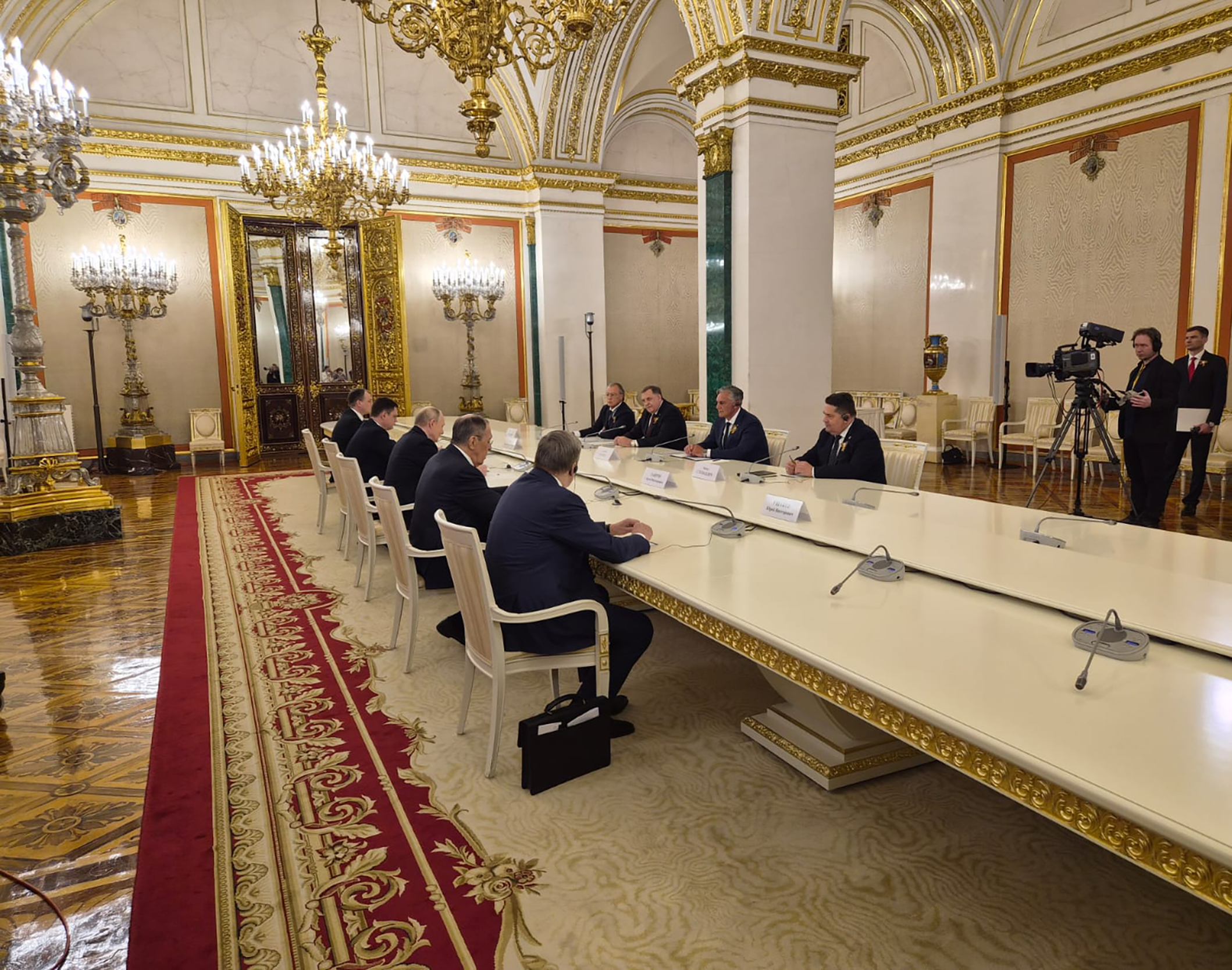
The President of Republika Srpska, Siniša Karan, the Speaker of the National Assembly of RS, Nenad Stevandić, and the leader of the Alliance of Independent Social Democrats, Milorad Dodik, took part in the 9 May parade and met with the President of the Russian Federation, Vladimir Putin, in the Kremlin. On the Russian side, the meeting was attended by Foreign Minister Sergey Lavrov, Deputy Prime Minister Alexander Novak, and Presidential Aide Yuri Ushakov.
In his welcoming remarks, Putin emphasized that the Russian side is committed to continuing fruitful cooperation with Republika Srpska and developing partnership in the political, economic, cultural, and humanitarian spheres. He also noted the shared vision of history and the convergence of approaches to the situation in Bosnia and Herzegovina, the Balkans, and Europe.
In response, RS President Siniša Karan thanked Putin for the fact that the Russian Federation is the most important strategic partner of Republika Srpska on the international stage. “We will continue to build an even stronger foundation for our relations,” he stated.
In an interview with TASS published in these days, Karan emphasized that Republika Srpska would continue to develop comprehensive cooperation with Russia and would not allow the introduction of sanctions. He also supported Russia’s war against Ukraine (the so-called “special military operation”).
After returning from Moscow, at a press conference in Banja Luka on 11 May, Siniša Karan stated that the issue of preserving the constitutional position of Republika Srpska had been discussed with Russian officials, and that emphasis had been placed on the need to close the Office of the High Representative and review the decisions adopted by Christian Schmidt. The meeting with the President of Russia also focused on the implementation of infrastructure projects, such as the development of gas infrastructure and the Eastern Interconnection.
- Western Balkan Countries May Not Receive €700 Million Foreseen by the EU Growth Plan
The countries of the Western Balkans are falling behind on reforms and steps necessary to engage funds from the European Growth Plan for the Western Balkans, and as a result they may lose more than €700 million if they do not fulfill the necessary conditions by the end of June this year. This was confirmed by the European Commission in Brussels, while EU Commissioner for Enlargement Marta Kos warned the countries of the region about the risks in an official letter.
Overall, the Growth Plan provides €6 billion for the Western Balkans, of which €2 billion are grants and €4 billion are concessional loans. Payments are made only after confirmation of reforms in the areas of the rule of law, public administration, economic liberalization, and transparent use of funds. The European Commission emphasizes that the instrument is “strictly time-limited,” and the grace period for reforms that were supposed to have been completed back in 2025 expires on 30 June 2026.
Albania, North Macedonia, and Montenegro have so far been the most successful in using European funds: they have already received several tranches and have positive assessments regarding the implementation of reforms.
Serbia received the first payment, but the pace of fulfilling obligations has slowed down, and regression has been recorded in certain areas. The European Commission is currently analyzing whether Belgrade may be eligible for the next tranches.
Kosovo has received only the first payments from “pre-financing,” the condition for which is the signing and ratification of the agreement on funds and the loan agreement with the EU. Pristina has not submitted a formal request for payment of the next tranches related to reforms. This is linked to the prolonged political crisis and preparations for the second early elections in the last six months.
The only country that has not fulfilled even the minimum conditions and has not received even pre-financing is Bosnia and Herzegovina. Due to the lack of ratification of the key financial agreement with the EU, Bosnia and Herzegovina cannot even submit a formal request for the first payment. Around €100 million has already been lost, and another €373.9 million is under threat. Thus, Bosnia and Herzegovina risks completely losing access to the funds allocated to the country under the EU Growth Plan.
The European Commission emphasizes that if the countries of the region do not fulfill the necessary conditions by the end of June, they will collectively lose more than €700 million — almost 12% of the entire package. Part of these funds may be redistributed among the states that demonstrate better progress.
- Opposition Protests Continue in Albania
On 8 May, another protest by opposition forces in the Albanian capital, Tirana, escalated into an open confrontation with law enforcement. Following the clashes, the police detained at least three people. Tensions began to rise when a column of protesters headed toward the building of the Ministry of Internal Affairs, but their path was blocked by a dense police cordon. The escalation occurred after some participants began throwing pyrotechnics and explosive materials at law enforcement officers. In response, the police used tear gas and water cannons.
The head of the Democratic Party, Sali Berisha, sharply criticized the actions of the security forces, calling the incident a “terrible crime” and stating that the march had been conceived as a peaceful action, while the violence had been provoked by the authorities, who obstructed the exercise of the constitutional right to protest.
These protests are a part of the prolonged political crisis in Albania. The opposition accuses Rama’s government of corruption and concentration of power, demanding the resignation of the government and the formation of a technical cabinet to prepare new elections.