Introduction: “When a High Representative can be removed by an agreement between Washington and Banja Luka, bypassing Sarajevo, then it is clear how thin the real sovereignty of this country is. And how low Bosnia and Herzegovina is today on the West’s list of priorities.”
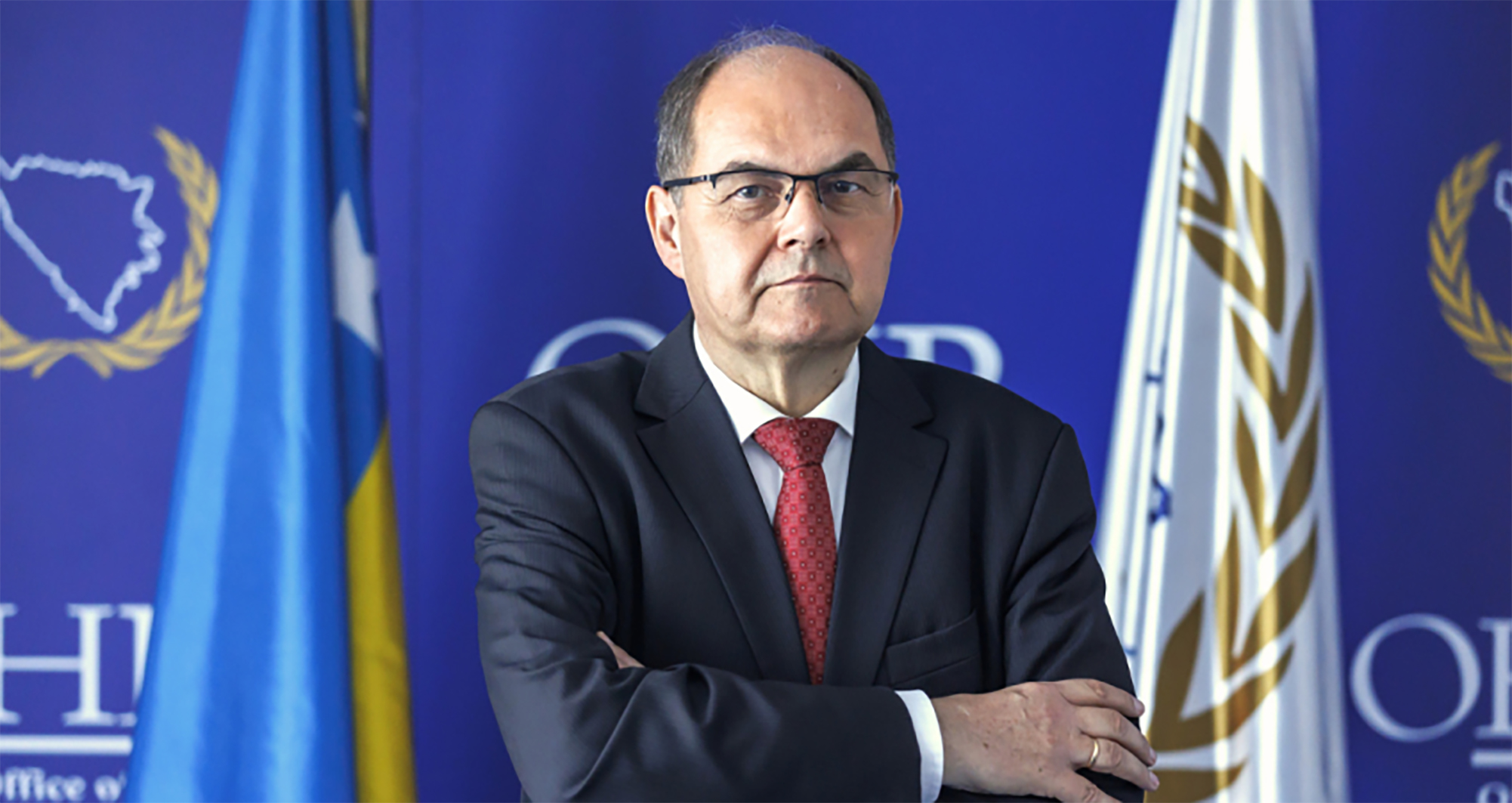
Christian Schmidt is leaving quietly. Without fanfare, without grand farewell speeches, without the theatrical international seriousness with which he was welcomed when he came to Bosnia and Herzegovina as a “saviour of stability.” And it is precisely in that silence that the most important political message of today’s Bosnia and Herzegovina is hidden: the West no longer has either a plan or the nerves for this country.
And that is why Schmidt is not falling because of weakness. He is falling because he has become unnecessary.
That is the brutal truth that the domestic political scene is trying to hide from citizens. For years, the public was sold the story that the international community was watching over Bosnia and Herzegovina, that the OHR was the last line of defence of the state, that the West would stop anyone who tried to undermine the Dayton Agreement. Today it is becoming clear that many of those narratives were ordinary political anaesthesia for citizens.
Because when a High Representative can leave after an agreement between Washington, Moscow, and Banja Luka, while Sarajevo learns about it from Milorad Dodik’s statements, then it is clear how thin Bosnia and Herzegovina’s real political power is.
And Dodik announced all of this much earlier.
While Sarajevo television stations mocked him and declared him a politically dead man, Dodik was saying already last year that Schmidt would be “swept out” of office as part of an agreement with the Americans. At the time, Troika’s political supporters were assuring the public that it was a bluff. There was talk of sanctions, isolation, arrests, and the “final end of secessionist politics.”
Today?
Schmidt is preparing to leave. Russia is announcing an initiative to annul his decisions in the UN Security Council. Washington is silent. And Dodik acts like a man who knows the scenario in advance.
And that is precisely where the most dangerous part of the story begins.
Because there is no longer room here for political pretence. Only two possibilities remain.
The first: the Sarajevo authorities knew what was being prepared and consciously lied to the citizens.
The second: they had no idea what was happening and served as political decor while others decided the fate of the country.
Both options seem devastating.
If they knew, then they were selling citizens a story about defending the state for months while at the same time silently watching the removal of the man they had presented as the key protector of Bosnia and Herzegovina.
If they did not know, then Bosnia and Herzegovina has a government that does not understand even the elementary geopolitical processes around it.
And perhaps that is precisely the most accurate description of the entire situation.
In recent years, Sarajevo political establishment has behaved like an administration that believes it will be saved by platitudes about European values and international law, while in the meantime the world has changed beyond recognition. America today pursues a policy of raw interest. Russia uses every vacuum to expand its influence. The European Union acts tired, slow, and without a real strategy for the Balkans.
In such a world, Bosnia and Herzegovina becomes a bargaining chip.
Christian Schmidt is only a symptom of that change.
From the very beginning, his mandate was politically controversial. Without confirmation from the UN Security Council, with increasingly weak international legitimacy and with open opposition from Moscow, Schmidt acted more like the West’s crisis manager than a serious international authority.
And then he made the key mistake.
He suspended the Constitution of the Federation of Bosnia and Herzegovina in order to enable the formation of the Troika–HDZ government. At that moment, he ceased to be a neutral arbiter and became a political actor. Many warned at the time that the High Representative was stepping directly into political mud from which he would no longer be able to emerge clean.
And that is exactly what happened.
America used him while he was needed for the recomposition of power. When the job was finished, Schmidt became a burden. Especially after the conflict over state property and energy projects that are important to Washington because of the suppression of Russian influence.
In the world of the new American policy, there is no sentimentality toward used personnel.
That is why today it is almost grotesque to watch a man who for years carried out the political instructions of the West leave without real support from that very West.
Dodik understood this much earlier than Sarajevo.
That is why today he speaks like a winner. That is why he openly celebrates his closeness with Moscow and Trump’s political circles. That is why he seems more confident than a few years ago, when his political end was being declared every day.
Because he understands what many in Bosnia and Herzegovina still refuse to admit:
The West no longer has a strategy for this country.
And when great powers lose interest, small countries are left alone with their crises.
That is why Schmidt’s departure is much more than the personal replacement of one High Representative. This is the end of a political illusion. The end of the story that someone from outside will permanently protect Bosnia and Herzegovina from domestic nationalisms, corruption, and political deals.
That illusion collapsed at the moment when it became possible for Milorad Dodik to speak more about the fate of the High Representative than the institutions of the state itself.
And there lies the greatest tragedy of the entire story.
Bosnia and Herzegovina today looks like a country about which everyone negotiates except itself. Washington calculates its interests. Moscow expands its influence. Zagreb pushes its own political projects. Belgrade balances between East and West. And Sarajevo is still trying to believe that declarations and diplomatic phrases will save it.
The world, however, has become a much more brutal place.
In that world, those who have moral arguments do not win. Those who understand power relations win.
Dodik understands that.
Sarajevo political establishment still does not.
And that is why Christian Schmidt is leaving today as a symbol of one great political defeat. Not only his personal defeat, but the defeat of the entire idea that Bosnia and Herzegovina has serious international protection.
Everything after that will be much more dangerous.
Dragan Bursać. Professor of philosophy, columnist and journalist (BiH).

The articles published in the “Opinions” column reflect the personal opinion of the author and may not coincide with the position of the Center