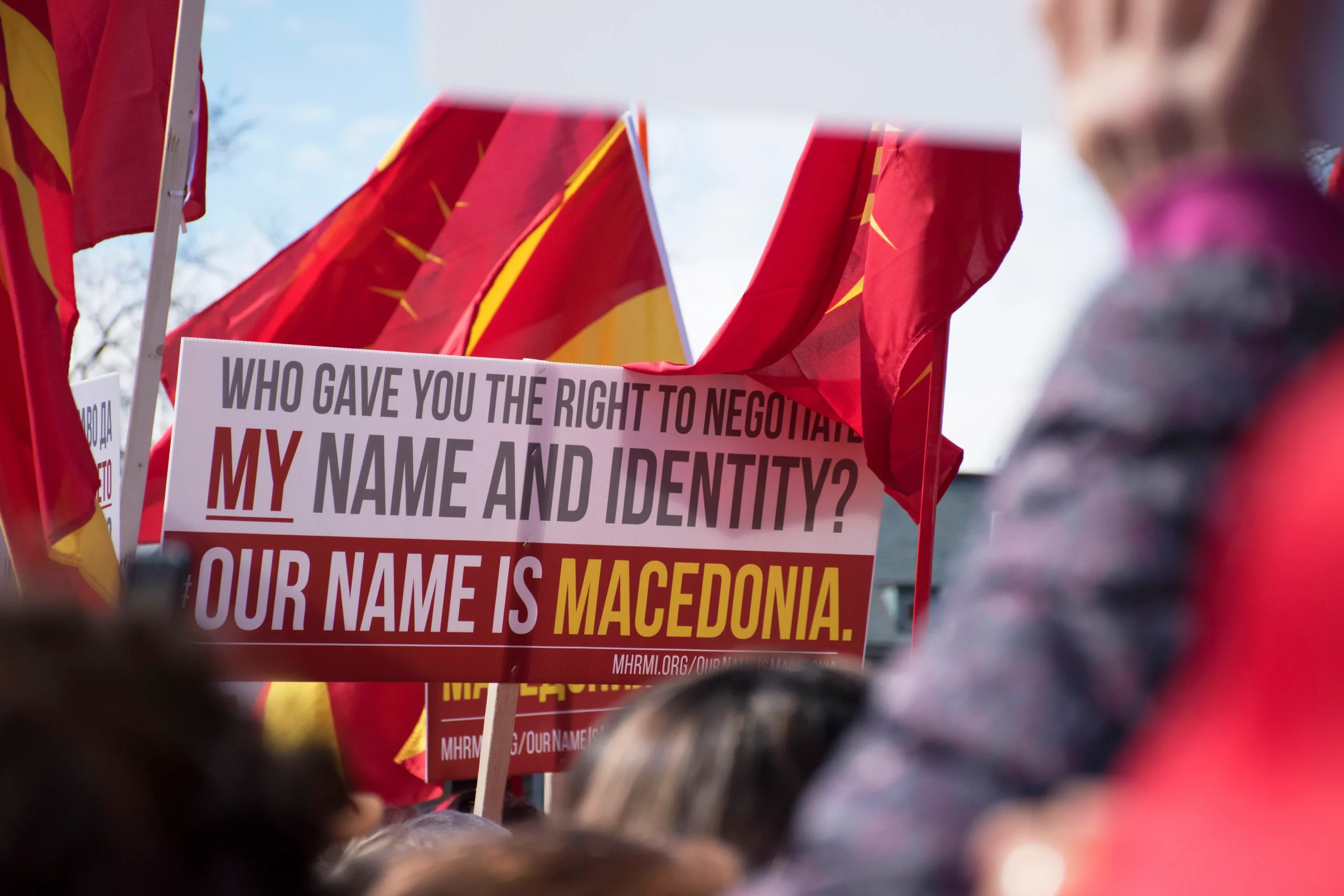
The process of European Union enlargement to the Western Balkans has been stagnating for more than 20 years, yet the case of North Macedonia is unique even by regional standards. Having obtained EU candidate status as early as 2005, the country has still not managed to begin full-fledged accession negotiations. First, Macedonians went through a dispute with Greece over the national flag, which was ultimately changed; then through a saga over changing the country’s name, also at Greece’s insistence, which concluded with the Prespa Agreement in 2018 and the emergence of the “Republic of North Macedonia” on the map. However, after that, a new obstacle emerged on the path to the EU — Bulgaria’s veto.
Fundamental Differences
At the core of the Bulgarian-Macedonian confrontation lies a deep ideological conflict over the interpretation of the history of the Balkan Peninsula from the late nineteenth century to the mid-twentieth century.
Official Sofia has historically regarded Macedonians as a sub-ethnic group of the Bulgarian people, and the Macedonian language as a dialect of Bulgarian that was artificially shaped through Serbianization during the period of Josip Broz Tito’s communist Yugoslavia. From Bulgaria’s perspective, the creation of the Macedonian nation was a geopolitical project of the Comintern and Belgrade, intended to detach the region’s population from its Bulgarian roots.
By contrast, the dominant narrative in Skopje is that the Macedonian ethnic group developed independently of the Bulgarian one. Any attempts to challenge the language or identity are perceived in Macedonian society as a denial of the very right to the existence not only of their country, but of their nation as well.
Historical Stumbling Blocks:
- Goce Delčev and the Ilinden Uprising: Both countries regard Goce Delčev, the leader of the revolutionary movement against the Ottoman Empire at the turn of the twentieth century, as a national hero. Bulgaria refers to his letters, in which he described himself as Bulgarian, whereas North Macedonia interprets his activities as a struggle for an independent Macedonian state.
- The Second World War period: For many years, Macedonian historiography used the term “Bulgarian fascist occupation” (as Bulgaria was for a time an ally of the Third Reich and controlled Macedonian territories in 1941–1944). This expression can be found in textbooks, academic works, and on monuments. Sofia demands the removal of the words “fascist” and “occupation,” insisting on the term “administration,” and accuses Skopje of hate speech.
- The Ohrid Archbishopric: A religious dispute over the legacy of the eleventh century. Bulgaria considers it an exclusively Bulgarian ecclesiastical institution established by Emperor Basil II “the Bulgar Slayer,” while Macedonians regard it as the foundation of their autocephalous Orthodox tradition.
The French Plan
In 2017, Skopje and Sofia signed the Treaty of Friendship, Good-Neighbourliness and Cooperation, which was intended to ease tensions. Within its framework, a Joint Multidisciplinary Expert Commission on Historical and Educational Issues was established. Its task was to reach a consensus on history textbooks. However, the commission quickly turned into a political battleground. Its work reached a deadlock: another meeting in June 2026 once again ended with an official statement from the Bulgarian side declaring a “zero result” because of the Macedonian colleagues’ refusal to approve previously agreed wording concerning the Ohrid Archbishopric.
In 2020, Bulgaria officially blocked the start of North Macedonia’s EU accession negotiations. The way out of the impasse was supposed to be the so-called “French compromise” of 2022, developed during Emmanuel Macron’s presidency of the Council of the European Union. This arrangement established three key issues that remain the subject of dispute:
- Including the Bulgarian minority in the Constitution: The French proposal requires Skopje to include Bulgarians in the Constitution as one of the constituent peoples of the state. For Bulgaria, this is a non-negotiable condition, without which Sofia will not agree to the opening of the first negotiating cluster. Meanwhile, the government in Skopje has blocked this step because it lacks the required two-thirds constitutional majority in parliament, while the demand itself is perceived by the public as a “Bulgarian dictate.”
- Implementation of the decisions of the Historical Commission: Under the compromise, North Macedonia is required to implement changes to school textbooks. The Bulgarian side insists that the texts should be based exclusively on authentic historical documents. For the Macedonian authorities, this is interpreted as an encroachment on national identity and censorship imposed by a neighbouring state.
The problem with the compromise was that Brussels incorporated Sofia’s demands into the EU’s official negotiating framework. As a result, the dispute between the two countries was transformed into a confrontation between the entire European Union and North Macedonia.
Room for Compromise
The current Macedonian government, led by VMRO-DPMNE, is unwilling to make concessions for the sake of European integration. After all, the previous government, led by the SDSM, agreed to change the country’s name, which secured the Republic of North Macedonia’s accession to NATO, but not the start of EU accession negotiations. Skopje does not intend to amend the Constitution without additional guarantees from the EU that accession negotiations will begin if it does so, and believes that negotiations should start first, followed only then by constitutional amendments.
Macedonian government officials regard the Bulgarian side’s historical claims as politicization and have no intention of changing their history to satisfy their neighbours. Consequently, meetings of the joint historical commission continuously end with no results. Recently, North Macedonian Foreign Minister Timčo Mucunski directly accused Sofia of using the historical commission as a “political instrument,” emphasizing that “Bulgaria will never be able to change by force the self-identity of the people of North Macedonia.”
In Bulgaria, where there is political consensus on the Macedonian issue, there is little reason to expect any softening of the country’s approach to relations with its neighbour. Bulgarian diplomacy insists that international agreements, including the 2022 EU negotiating framework, must be implemented, and that there will be no concessions to Skopje.
A European Integration Deadlock
Historically, Brussels treated the integration of Albania and North Macedonia as a package. However, because of the Macedonian-Bulgarian crisis, Albania eventually pulled ahead by launching substantive cluster-based negotiations. North Macedonia was left alone in the “grey zone” of waiting, causing deep disappointment with European institutions within Macedonian society.
Citizens feel that the country consistently fulfilled all the demands of its neighbours (including changing its name and flag at Greece’s insistence), only for other neighbours to put forward new bilateral demands that became EU accession criteria.
For a long time, former Hungarian Prime Minister Viktor Orbán served as Skopje’s main hope and as an “advocate” for the VMRO-DPMNE government within the European Union. Hungary provided Skopje not only with financial and political support but also actively promoted the idea that North Macedonia should begin the actual EU accession process without fulfilling Bulgaria’s demands. Orbán sought to act as a mediator by proposing that the bilateral conflict be separated from the broader European enlargement track.
However, following political changes in Budapest and Orbán’s withdrawal from active European leadership, the government found itself in deep diplomatic isolation within the European arena. With the loss of its principal lobbyist, VMRO-DPMNE lost any realistic opportunity to circumvent the “French compromise.”
Brussels has made it clear that the negotiating framework approved by all EU member states is final and not subject to revision. Without a Hungarian veto against Brussels’ collective decisions and without aggressive lobbying from Budapest, Skopje’s idea of beginning EU accession without direct compromises with Sofia has become definitively impossible.
How to Unblock EU Enlargement
North Macedonia’s further European integration depends on how willing the country’s citizens are to make further painful compromises for the sake of a European future, and on how important the accession of the Western Balkans is to the EU itself.
Given VMRO-DPMNE’s firm position, only the now-opposition SDSM (Social Democratic Union of Macedonia) would be able to implement the “French compromise.” Historically, the SDSM has been more pro-European and considerably more willing to compromise with neighbouring countries (it was they who implemented the agreement with Greece), so its return to power would create an opportunity to revive the integration process under the existing conditions.
The EU could independently unblock North Macedonia’s European integration through internal institutional reforms. The first option is to reform the enlargement methodology by adopting a phased (gradual) approach to the accession of new member states, a possibility that is already being actively discussed.
The second option is for Brussels to adopt a fundamental political decision to remove all bilateral historical disputes and complex issues of national identity entirely from the official negotiating process. After all, such claims by individual member states are not part of the official Copenhagen criteria for accession, which are based exclusively on the rule of law, democracy, and a market economy.
This second option is currently not at the centre of discussions. Nevertheless, the issue is important not only for the Western Balkans but also for another part of Europe, given that another EU candidate country, Ukraine, has unresolved historical issues with neighbouring Poland. If the European Union is genuinely committed to enlargement, Brussels will likely have to abandon the practice of imposing strict subjective restrictions and obstacles on individual candidate countries at the request of individual member states.
CWBS Analytical Group