Why would a repressive regime in the twenty-first century imprison and kill people when it can simply expel them
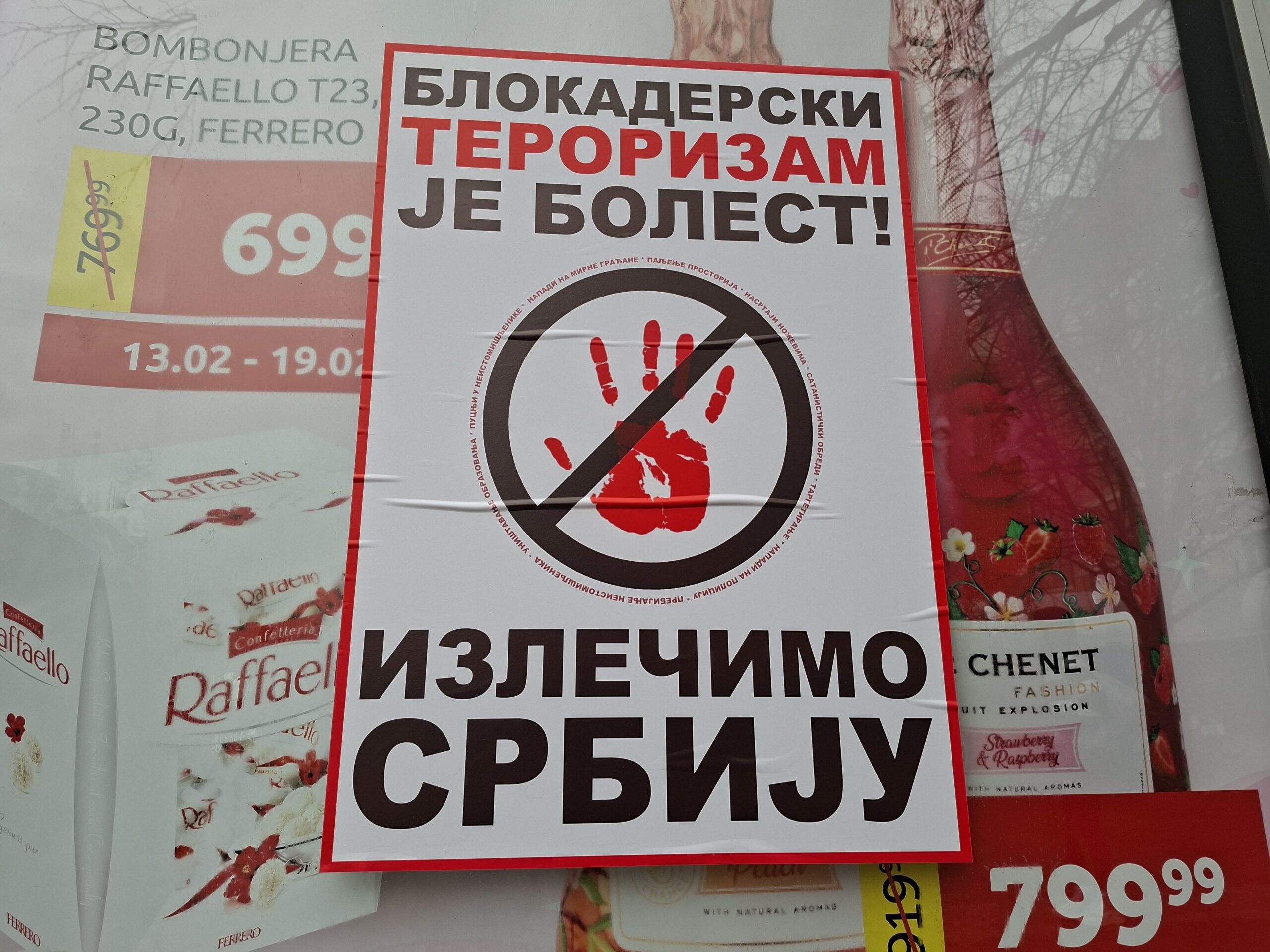
The latest student rallies in Novi Sad and Kraljevo did not end with a staged attack by regime provocateurs on the police. It has become almost routine for large protests to end with a performance staged for pro-government television channels and tabloids, whose aim is to portray students and citizens as violent extremists and enemies of the state.
However, this is merely a change in the methods of pressure. After the student rally in Novi Sad, hooligans wearing balaclavas smashed the car of David Gruhonjić, the son of journalist and university professor Dinko Gruhonjić, who has been the constant target of the regime’s smear campaign in Serbia. The location, timing, and target of the attack were chosen carefully.
The message is being sent not only to opponents of the regime, but also to all potential assailants: targeting children and attacking the families of those who publicly criticize Aleksandar Vučić is permitted.
Soon afterwards, the underage daughter of military analyst Aleksandar Radić, who had spoken about the use of a sonic weapon at the largest student rally in Belgrade on March 15, 2025, also became a target of the regime. The pro-government media did not unintentionally publish video footage recorded while Radić was being surveilled, which also captured his underage daughter. Shortly afterwards, he left Serbia.
Against Free-Thinking Youth and the Educated
If we rewind three years, before the student uprising, citizens were leaving Serbia in a state of collective depression caused by partitocracy and the autocratic regime. Most public opinion surveys over the past decade and a half—effectively since the Serbian Progressive Party came to power—have shown that more than half of young people want to leave Serbia and continue their lives in a more economically stable and legally organized society in the West.
At the time, however, emigration from Serbia was not viewed as expulsion and as a method of political struggle used by a populist autocratic regime against free-thinking young people and the educated.
This trend is already widespread around the world. Why would a repressive regime in the twenty-first century build camps, torture people, and stain itself with blood in some new Tiananmen Square? There is no need to organize entire punitive expeditions and settlements for dissidents in Siberia, who remain a constant threat to authoritarian leaders, when they can simply be gotten rid of — and expelled.
The best contemporary examples of the political circumstances and practice of expelling dissidents, on which the regime in Serbia is undoubtedly drawing, come from Belarus and Turkey.
Although there were no plans to seize institutions in Serbia during last year’s largest student rally in Belgrade on March 15, as there were in Turkey, the Serbian regime wants to portray the students and the opposition as those who attempted to upend the constitutional order.
The trial of the 12 defendants in Serbia accused of preparing to overthrow the government has been ongoing for more than a year, while six young people have fled to Croatia. In recent days, the Serbian state has surrealistically changed its narrative regarding the use of a sonic cannon and is preparing to prosecute everyone who claims that the regime used a sonic weapon against its own citizens.
Interpreted through the language of grotesque dystopia: it was not the state that used a sonic cannon against its own citizens; rather, the students themselves staged the use of a sonic weapon in order to overthrow Aleksandar Vučić.
Belarus and Turkey as Illustration
This is undoubtedly an unequivocal message to the regime’s opponents: if you are against us, we will expel you from the country.
These methods are widely employed by the Belarusian dictator Alexander Lukashenko, who expelled several hundred thousand citizens after the failed protests that followed the falsified presidential election in 2020.
Belarusians have become the second-largest group of foreigners receiving first residence permits in the European Union, second only to Ukrainian nationals. Among those who left Belarus after the 2020 protests are many highly educated citizens, including IT specialists, doctors, artists, journalists, students, and members of independent trade unions, many of whom took part in the protests or left the country because of political repression and fear of criminal prosecution.
Following the attempted coup in 2016, the Turkish authorities launched extensive emergency measures that included mass arrests, dismissals from the public sector, and criminal proceedings against people suspected of links to the organizers of the coup. International human rights organizations have concluded that, in many cases, these measures also targeted political opponents of the government, journalists, academics, and activists, alongside the closure of numerous independent media outlets and criminal proceedings against certain opposition leaders on charges of terrorism and other criminal offences.
Over the past decade, hundreds of thousands of citizens have left Turkey, including a significant number of highly educated professionals, journalists, and political activists. Human rights organizations have documented cases of passports being confiscated or revoked, long-term bans on employment in the public sector, and other administrative restrictions which, according to numerous observers, contributed to many people’s decision to leave the country and seek international protection or political asylum in European states and elsewhere.
To Win or to Be Expelled
There are no comprehensive or detailed statistics in Serbia on how many people have been arrested, lost their jobs, been dismissed, demoted in public office, or prosecuted during the student and civic protests of 2024–2026, primarily because they are still ongoing.
However, the broader context of the politically motivated emigration of Serbian citizens over the past decades, following the wars of the 1990s, is worrying. According to OECD analyses and other international estimates, Serbia has faced intensive emigration in peacetime since the early 2000s. During different periods, it is estimated that between approximately 30,000 and 60,000 people leave the country each year, one quarter of them with higher education, while emigration has increased since the mid-2010s.
According to various international analyses (OECD, the UN, and other sources), it is estimated that since the beginning of the 2000s, several hundred thousand citizens have left Serbia for permanent residence abroad, while some estimates put the figure at more than half a million people, many of them young.
There is no doubt that economic motives are at play, closely intertwined with the political reasons for leaving Serbia among all those who refuse to accept party membership and obedience to the leader.
The deaths of 16 people in Novi Sad sparked a youth revolt not only against corruption, but also against migration and brain drain. A populist regime has no need for brilliant young minds, only for obedient subjects to rule over. That is why the students’ struggle against the autocratic regime in Serbia is, above all, an ultimate one — to win or to be expelled.
Boris Varga. Serbian political scientist and journalist.
The articles published in the “Opinions” column reflect the personal opinion of the author and may not coincide with the position of the Center