- EU Enlargement “Super Tuesday” Takes Place
On 14 July, four Intergovernmental Accession Conferences were held in a single day—the highest number since 2002.
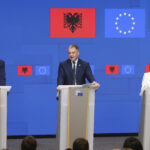
Albania closed three negotiating chapters for the first time: Chapter 25 on Science and Research, Chapter 26 on Education and Culture, and Chapter 30 on External Relations. Montenegro closed two negotiating chapters—Chapter 8 (Competition policy) and Chapter 29 (Customs Union). Ukraine and Moldova opened Cluster 6 for negotiations, covering external relations and the Common Foreign, Security and Defence Policy.
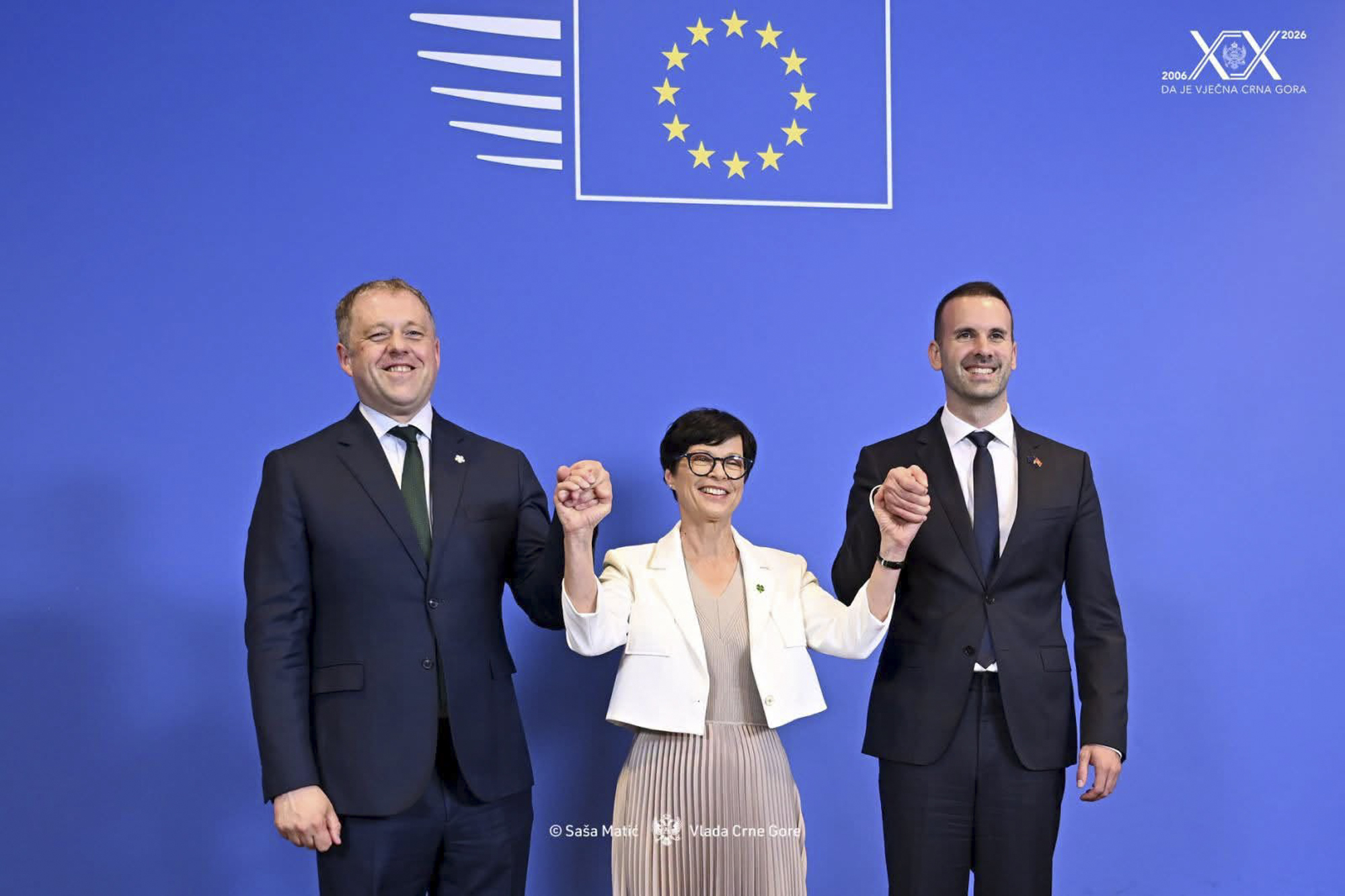
Commissioner for Enlargement Marta Kos welcomed the day as a demonstration that the EU can deliver on its promises when candidate countries demonstrate determination.
Montenegro remains the frontrunner in the accession process and has every chance of joining the EU in 2028, as it has made the greatest progress in the negotiations (having closed 18 of 33 chapters). Montenegrin Prime Minister Milojko Spajić stated that the country had reached the halfway point in the negotiating process, while Commissioner for Enlargement Marta Kos stressed that Montenegro is in the final phase of preparations for EU membership. The necessary financial resources for Montenegro have already been allocated in the European Union’s next long-term budget.
Serbia was not among the countries holding an Intergovernmental Conference on 14 July because, the day before, the EU Member States failed to reach a consensus on opening Cluster 3. Eight European countries opposed moving Belgrade to the next stage of negotiations due to concerns over democracy, the rule of law, and the lack of alignment of Serbia’s foreign policy with that of the EU, primarily because the Serbian authorities have not imposed sanctions on Russia over its war against Ukraine.
Thomas Byrne, Ireland’s Minister of State for European Affairs, whose country currently holds the Presidency of the Council of the European Union, stated that the Irish Presidency would continue consultations with the Member States and Serbia regarding the continuation of the accession process, but avoided answering whether a new attempt to reach an agreement was planned during July.
- North Macedonia Joins the Coalition of the Willing
The Coalition of the Willing was established at the beginning of 2025 under the co-chairmanship of the United Kingdom and France to strengthen security guarantees for Ukraine and prepare possible peacekeeping and deterrence forces in the event of a ceasefire agreement.
On 13 July, the 15th meeting of the Coalition was held in Paris, bringing together representatives of 40 countries. North Macedonia was represented by Bekim Sali, First Deputy Prime Minister and Minister for European Affairs.
North Macedonia has been providing assistance to Ukraine since the very beginning of Russia’s full-scale aggression. Even the change of government following the 2024 elections did not prevent Skopje from continuing its policy of supporting Kyiv.
- Croatia Participates in the Coalition of the Willing, but to a Limited Extent
Croatian Prime Minister Andrej Plenković took part in the meeting of the Coalition of the Willing in Paris.
In a post on Facebook, Prime Minister Plenković wrote: “In Paris, we are taking part in a meeting of the Coalition of the Willing, organised by President Emmanuel Macron at an important moment for Ukraine and European security.” According to Plenković, although Croatia is not participating in the military component of the Coalition of the Willing, it is providing comprehensive support to Ukraine: it has allocated €20 million to the NATO initiative, continues cooperation in the field of drone production, supports the adoption of the EU’s 21st package of sanctions against Russia, and supports Ukraine’s integration into the EU.
Croatian President Zoran Milanović opposes military support for Ukraine, including participation in the military component of the Coalition of the Willing. Because of the President’s position, Croatian military personnel did not participate in the parade held under the slogan “Europe’s Strategic Awakening” on 14 July on the Champs-Élysées. Croatia was represented by members of the Ministry of the Interior’s anti-terrorist unit. The relevant decision was adopted by the Government after President Milanović prohibited the participation of the Croatian Armed Forces in the parade, which he regarded as an event of the Coalition of the Willing.
- Serbian Minister Says She Would Have Ethnically Cleansed Kosovo
Serbia’s Minister of Public Administration and Local Self-Government, Snežana Paunović, stated that if she had been in the place of the then President of the Federal Republic of Yugoslavia, Slobodan Milošević, in 1998, she would have ethnically cleansed Kosovo. “If I had been Slobodan Milošević, I would have ethnically cleansed Kosovo in 1998,” Paunović said in an interview with Kurir TV station on 11 July.
Paunović added that she was not referring to “the liquidation of Albanians, as they themselves are trying to ethnically cleanse Kosovo to this day, but in such a way that everyone who felt less like a citizen of the Federal Republic of Yugoslavia would leave it and go to their homeland.”
Albanian politicians from various countries in the region strongly condemned the statements made by the member of the Serbian Government.
A number of Serbian opposition parties and civil society organisations demanded Paunović’s immediate dismissal from office.
The statement by Paunović was condemned by European Union spokesperson Anitta Hipper, who said that it “runs counter to the values of human dignity, reconciliation, accountability and good neighbourly relations on which the EU is founded.”
The Minister’s controversial statements were not condemned by the Serbian authorities.
Ivica Dačić, Serbia’s Minister of the Interior and Paunović’s party colleague, stated that her words had been taken out of context.
In a statement to the media, the Government of Kosovo stressed that “the problem is that the Serbian state has never distanced itself in any way from Milošević’s policies.” “It would be good if everyone, in addition to condemning such statements, remembered this when discussing integration, reforms and funding with Serbia, and understood that these are not merely statements but aspirations that the official Serbian state has never abandoned,” the Government of Kosovo stated.
- German Diplomat Appointed New EU Special Representative in Kosovo
The Council of the European Union has appointed a new EU Special Representative (EUSR) in Kosovo and extended the mandate of Luigi Soreca, the EU Special Representative in Bosnia and Herzegovina, for another two years, until 31 August 2028.
Dirk Schübel has been appointed the new EU Special Representative in Kosovo. He is a German national and a diplomat with extensive experience in a number of senior positions within the EU. He currently serves as Head of the Russia Division at the European External Action Service (EEAS).
From 2019 to 2022, Dirk Schübel headed the EU Delegation in Minsk. In October 2022, the Belarusian authorities refused to renew Schübel’s visa and accreditation after the German diplomat spoke of “flagrant violations of human rights and international law” following the 2020 presidential election in Belarus, “the results of which were falsified and accompanied by ongoing violence against innocent people.”
Dirk Schübel will take up his duties in Kosovo on 1 September 2026 with an initial two-year mandate. He will succeed the Estonian diplomat Aivo Orav, who left Kosovo in April last year.