- New Speaker of the Serbian Parliament Elected – a Student List Candidate
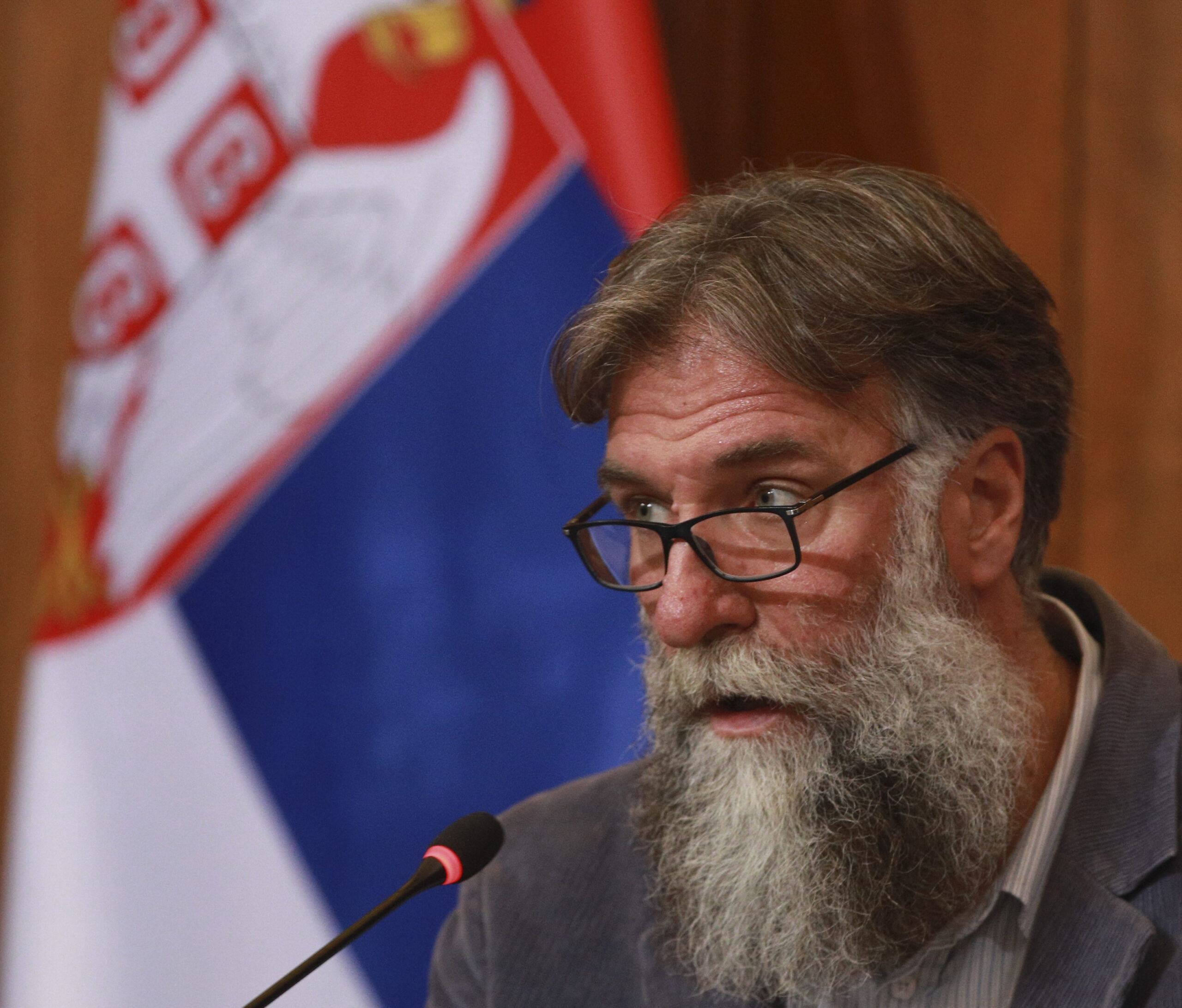
Aleksandar Čupić, a candidate of the “Student List” Parliamentary Group, was elected Speaker of the National Assembly of Serbia on 19 November. He received the votes of 140 of the 239 MPs present.
His rival Stojan Radenović, nominated by the “Aleksandar Vučić – Serbia Wins” Parliamentary Group, received 97 votes.
As parliament speaker, Čupić is also serving as Acting President of Serbia, since Aleksandar Vučić resigned as head of state in September when he decided to run in the parliamentary elections.
Aleksandar Čupić was born in 1978. He graduated from the Faculty of Transport and Traffic Engineering at the University of Belgrade, where he has worked at the Department of Postal Traffic and Networks since 2004. In 2014, he defended his doctoral dissertation.
Alongside his academic work, Čupić is engaged in agriculture. In 2012, he and his wife moved from Belgrade to the countryside, where the family grows organic fruit and vegetables. Čupić is the father of six children.
Čupić gained wider public recognition through his support for the student protests. In February 2025, his farm hosted students who were walking to Kragujevac.
In 2026, Čupić became one of the candidates of the “Student List – Students Win” in the parliamentary elections.
- Serbia’s New Parliament Speaker Will Not Attend the EU–Western Balkans Summit
Speaker of the National Assembly of Serbia and Acting President Aleksandar Čupić will not attend the European Union–Western Balkans Summit.
This was to have been the first opportunity for Serbia’s new authorities to take part in a European meeting at the highest political level.
During a telephone conversation with European Council President António Costa, Čupić said that he had made the decision because of “urgent developments” in the Assembly.
Čupić explained to Radio Television of Serbia (RTS) that it would be irresponsible to leave parliament while important decisions were being adopted. “At this stage, when we have not yet completed consideration of five technical agenda items, it would be irresponsible of me to attend this meeting,” he said.
As a second reason for his absence, Čupić cited the need for serious preparation for international meetings, noting that he had only taken office as parliament speaker the previous day. “These are very important international issues, and it would be frivolous of me to go immediately without serious preparation,” he said.
Čupić added that representatives of the EU had shown understanding for his position.
This is already the second EU–Western Balkans Summit without a representative of Serbia’s highest leadership. In December last year, then President Aleksandar Vučić boycotted the summit in response to the EU’s refusal to open Cluster 3 in the negotiations with Serbia.
- Border Dispute Could Hamper Montenegro’s EU Accession in 2028
Croatia is stepping up diplomatic pressure on Montenegro to resolve the territorial dispute over the Prevlaka Peninsula. Failure to resolve this issue threatens Podgorica’s ambitious plans to complete the negotiation process by the end of 2026 and become the 28th member of the European Union in 2028.
“Before Montenegro completes its EU accession negotiations, we want to reach an agreement on the land border,” Croatian Prime Minister Andrej Plenković told MPs at the beginning of this month.
Zagreb wants Podgorica to formally recognise the findings of the Badinter Commission, established by the European Economic Community in 1991 to provide legal opinions on the breakup of Yugoslavia. The Commission established the principle that the borders between the former Yugoslav republics should become international borders after the new states gained independence. “It is extremely important that we establish whether the current Government of Montenegro understands and recognises this fundamental principle, which is crucial to the post-1991 settlement,” Plenković stresses.
Because of the unresolved border issue, at a meeting of the Committee of Permanent Representatives of the EU Member States (COREPER) on 18 November, Zagreb made it impossible to close Chapter 15 (Energy) over the issue of oil and gas exploration on the offshore shelf and again prevented the closure of Chapter 14 (Transport Policy) by raising issues concerning cabotage operations and Montenegrin airspace maps. Since December 2024, Croatia has also been preventing Podgorica from closing Chapter 31 (Foreign, Security and Defence Policy).
Although Croatia has presented Montenegro with a whole list of grievances dating back to the Yugoslav wars of the 1990s, including the search for missing persons, compensation for prisoners of the Morinj camp, the return of the training ship Jadran and others, a European diplomatic source, speaking to Euronews, described these demands as merely a “smokescreen”. Zagreb’s real objective, according to diplomats, is to definitively establish the land border line on the peninsula and determine the maritime border, which directly depends on the border on land.
Since 2002, Zagreb and Podgorica have operated under the Protocol on the Provisional Regime: Croatia controls the land part of Prevlaka and only a half-kilometre strip of sea at the entrance to the bay, while part of the waters within the bay itself is considered “no-man’s sea”. In Podgorica, there are concerns that a new delimitation, which is expected to leave the land border virtually unchanged, would at the same time give Croatia rights to part of the internal waters of the Bay of Kotor and turn it into an international bay. This issue is crucial for control over navigation, rights to explore and exploit potential offshore oil and gas deposits, and the implementation of other underwater energy and infrastructure projects.
A source for the Montenegrin outlet Vijesti claims that it is “entirely acceptable” for the state that the land border at Prevlaka remain as it was defined by the 2002 Protocol, but that the issue of maritime delimitation should be the subject of bilateral agreements. According to the outlet’s source, there are “several points on the peninsula from which a line can be drawn so that Boka (the Bay of Kotor) does not become an international bay”.
According to Vijesti, Zagreb has provided Podgorica with its own border map, but the Montenegrin government has announced its intention to present its own proposal for the demarcation of land and sea.
- Igor Dodik Given Mandate to Form New Government of Republika Srpska
Igor Dodik, organisational secretary of the Alliance of Independent Social Democrats (SNSD), has been given the mandate to form a new government of Republika Srpska, as announced by RS President Savo Minić.
Igor Dodik heads the SNSD parliamentary group in the new composition of the National Assembly of Republika Srpska. He is the son of SNSD leader and former President of Republika Srpska Milorad Dodik. Over the past year, Igor has been side by side with his father at all important events.
The new government is expected to be formed by mid-December.
The SNSD programme envisages the continuation of Banja Luka’s previous policy regarding relations with Sarajevo, Brussels and Belgrade.
The programme presented ahead of the elections emphasised the protection of Republika Srpska’s constitutional position.
Support for Bosnia and Herzegovina’s European path, according to Igor Dodik, will depend on the extent to which the EU “respects Republika Srpska”.
At the same time, Igor Dodik stressed that “cooperation with brotherly Serbia will occupy a special place” in the future work of his government.
Analysts do not expect fundamental changes in Republika Srpska’s relations with the European Union, NATO and the state institutions of Bosnia and Herzegovina. At the same time, relations between Banja Luka and Belgrade may be affected by the change of government in Serbia.