Is there willingness in Serbia to turn a blind eye and swallow the frog of populism for the sake of defeating the autocratic and criminalized regime?
The students in blockade published a memorandum in which they explicitly stated that Kosovo and Metohija are an integral part of the Republic of Serbia. Among the rare political positions that the students publicly express on social media, the memorandum stated that “this fact is not only a constitutional category, but also a historical and moral imperative that is not subject to negotiations on its essence,” and that the “preservation of Serbia’s constitutional order in the territory of Kosovo and Metohija is the foundation of the survival of the Serbian state and a pledge of a just peace in the region.”
The students, who for a year and a half have been leading protests and a political struggle against President Aleksandar Vučić and his regime, presented this position one week before the large protest announced for May 23, which they are organizing in Belgrade after a longer pause.
The Students’ Memorandum on Kosovo and Metohija was also published ahead of the 40th anniversary of the Memorandum of the Serbian Academy of Sciences and Arts (SANU), which effectively mobilized Serbian nationalism in the region and was one of the triggers of the bloody breakup of the SFR Yugoslavia.
The students’ populist position provoked strong reactions in Serbia. President Vučić, feeling called out, immediately accused the students, calling them arrogant fools working against their own state. Those for whom the students’ right-wing and anti-European positions have been objectionable on principle from the very beginning also reacted sharply.
The students’ position on Kosovo may satisfy a significant majority in Serbia, which is necessary in order to defeat the former Serbian radicals who for years have presented themselves as having a monopoly on nationalism.
Should this student memorandum be understood as a tactical move important for future elections, or should we be concerned about stability in the region and the future of Serbia, since its youth is adopting documents that can only be realized through war and isolation? That is an image already known from the 1990s, when they had not even been born.
Both dilemmas are equally relevant. In Serbia, only Vučić can defeat Vučić. In other words, in the next parliamentary elections, the most votes will be earned by those who flirt with right-wing populism. The problem of the renewability of the right and its destructive potential in Serbia will soon mark half a century. The essential problem is that even those who consider themselves as leftists, such as the SPS and nationalist Yugonostalgics, essentially advocate ideas of Greater Serbia that promote authoritarianism and anti-Westernism.
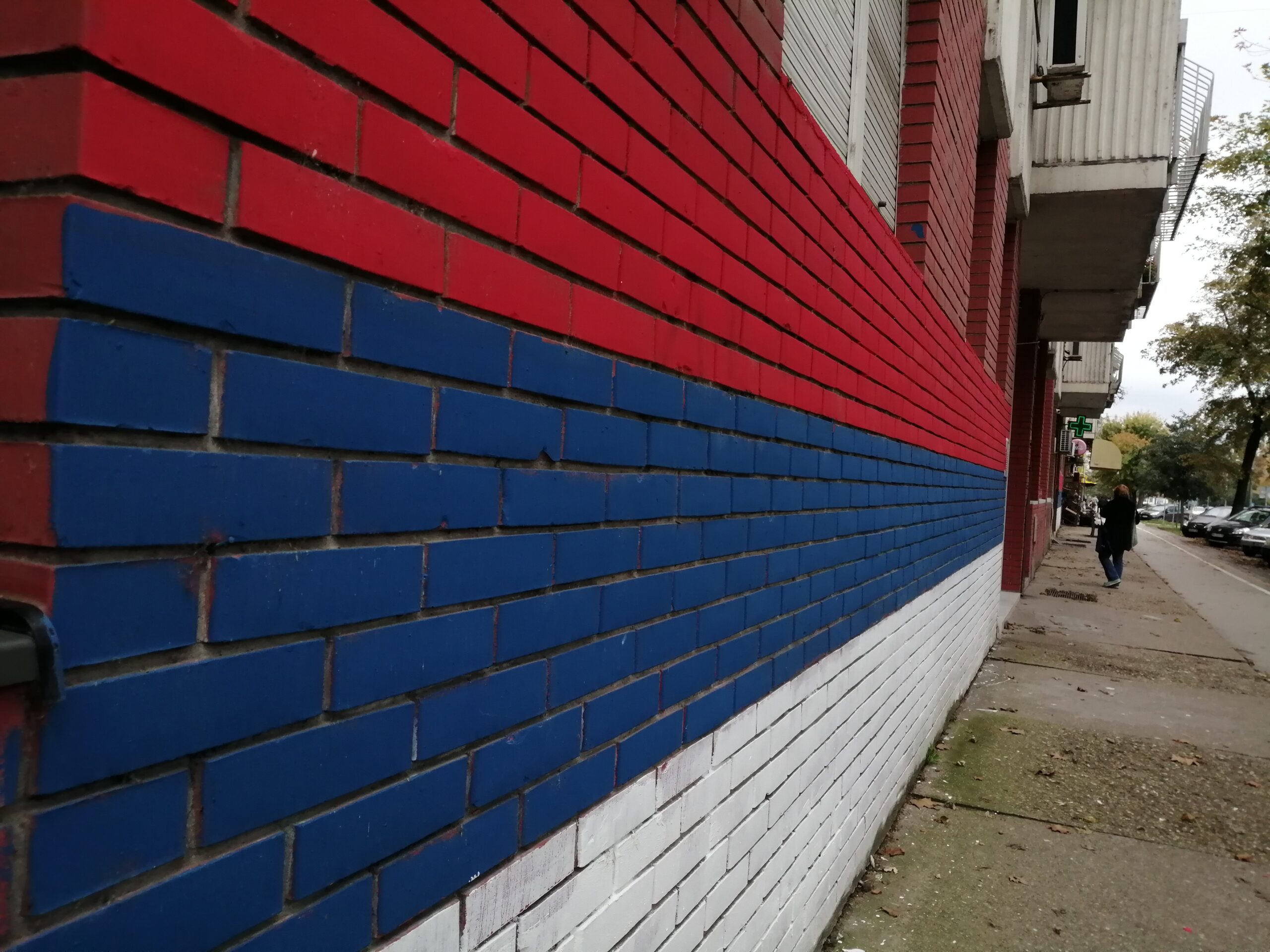
Is there a willingness in Serbia to turn a blind eye and swallow the Chetnik cockade for the sake of defeating the autocratic and criminalized regime of Aleksandar Vučić? That is the price of victory in elections, but at the same time also a potential entry into a new crisis.
All these fears are shared by the opposition electorate, and it is necessary to speak publicly about them and issue warnings because of changing international circumstances.
Kosovo cannot be returned to Serbia either peacefully or through war. The students’ “moral imperative” a priori becomes a civilizational defeat, because what is desired is territory without people — the Albanian majority.
Judging by the latest public opinion survey on the very high support for EU integration in Montenegro (75 percent), memorandums and programs of the “Serbian World” no longer function there either.
The problem is only discernible in Bosnia and Herzegovina, which with the return of Donald Trump lost the umbrella of protection of the United States of America, as did the whole of Western Europe, for that matter. Washington is trying to win over the secessionists through energy.
The undesirable scenario is that Greater Serbian ideas could spread among young nationalists. The right-wing avant-garde of the now popular “Gavrilo Princip” T-shirts could end up in some new memorandum on resolving the “Serbian question.”
There is a more optimistic scenario, in which only the frog of populism is being swallowed while eyes are being closed. This could be a political trick, because the students have become skilled through local elections and are saying what the majority of voters want to hear. After all, throughout the entire time they have formally adhered to what is written in the Constitution, namely that Kosovo and Metohija are part of the Republic of Serbia.
The EU will support changes in Serbia, because the students’ demands largely coincide with Brussels’ agenda. The restoration of democratic institutions in Serbia should restrain expansionist ideas in the region. As in the case of the Otpor movement in 2000, after the fall of Aleksandar Vučić the student movement will break apart into various factions that will produce future leaders and carriers of different ideologies. All Serbs in the Western Balkans will once again be able to gather under one roof, in one (supra)state — the European Union.
Boris Varga. Serbian political scientist and journalist.
The articles published in the “Opinions” column reflect the personal opinion of the author and may not coincide with the position of the Center