
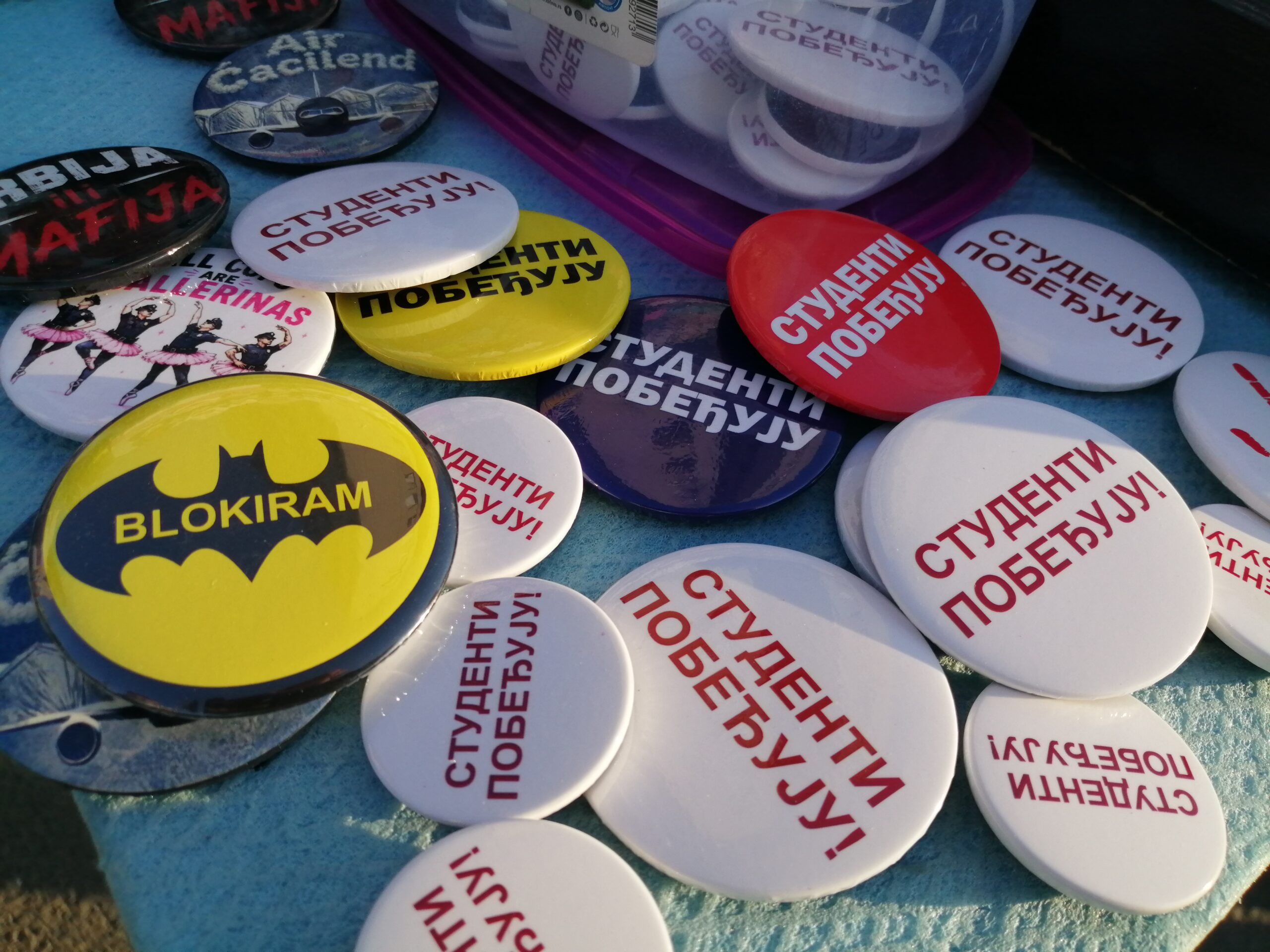
Only the populist appeal of the Student List can defeat Aleksandar Vučić’s populist coalition.
The snap parliamentary elections called by President Aleksandar Vučić for 25 October will not decide whether Serbia changes its foreign-policy course. Nor will they decide upon relations with its neighbours in the region. Nor will these elections decide whether Serbia changes its political-nationalist ideological framework.
From the statements made by the students and their candidates, and particularly from an interview with the first name on the “Student List – Students Win,” Novi Sad cardiologist Ilija Srdanović, we learn that Kosovo is an integral part of Serbia, that citizens will decide on EU membership, and that Russia is “a large and influential country in the world” and an important international partner of Serbia. The Student List’s lead candidate believes that the issue of war crimes committed in the former Yugoslavia and condemnation of the glorification of Ratko Mladić are not a priority for the citizens of Serbia.
Such political positions place the Student List among populist movements. However, it is an indisputable fact that only a student movement like that can mobilise enough voters in the elections to defeat Aleksandar Vučić’s own populist coalition.
Many pro-European and liberal voters in Serbia believe that the students’ sole mission is to bring down Vučić and are prepared in these elections to set aside their principles and support the catch-all Student List. Because, by all indications, only the student movement can bring an end not only to the autocracy of the Serbian Progressive Party, but also to the decades-long rule of political elites and criminalised structures dating from the period of war and the disintegration of the former Yugoslavia.
It is difficult to imagine that a single list composed of people without political experience, if it wins, will have sufficient capacity to fulfil its election promises and implement the necessary changes in a devastated society and ruined institutions. Although many new names from the Student List will undoubtedly be a breath of fresh air and certainly future ambassadors of change in Serbia.
A more realistic outcome is that, if the Serbian Progressive Party regime is defeated in the elections, conditions will be created for holding new free and fair elections and for once again beginning the construction of democratic institutions in Serbia.
The picture of the Student List is somewhat different for those who have read the Students’ 11-Point Plan, and this is where the key contrast lies with their right-wing statements in public appearances and the media. That 11-point plan is dominated by the themes of abolishing partitocracy and confiscating illegally acquired wealth, under the referendum-style slogan — “Serbia or the Mafia.”
At the same time, this is a potential revolutionary watershed between the “before” and “after” of the Serbian Progressive Party in power. The left-wing core of the students’ programme is fairly concrete: fighting the import lobby, abolishing institutions of cheap labour, protecting natural resources, and placing emphasis on education, healthcare and media freedom.
Public opinion polls, which are unreliable and differ considerably, generally indicate that the students and Vučić have similar levels of support, reflecting the deep division and polarisation of Serbian society. A division between those who want change and demand accountability from the criminalised regime, and those who are prepared to defend their position at any cost because otherwise they will be held accountable in court or directly “on the streets.”
It is well known that the elections are undemocratic from the outset, because key recommendations by international organisations (ODIHR) concerning changes to the legal framework governing elections have not been adequately implemented (abuse of state resources, protection of voters from pressure and intimidation, transparent oversight of campaign financing, balanced media coverage, as well as the voter register), while in some areas the situation has even deteriorated compared with the previous elections (signatures in support of “phantom lists”).
Whether a transfer of power will take place and whether it will happen peacefully depends to a large extent on two things. First, on whether the students and those who support them are prepared to physically defend the electoral will of the citizens in the streets. And second, whether the West, the EU and the US, are prepared once again to turn a blind eye to all irregularities, electoral fraud and violence if the Serbian Progressive Party wins.
These questions concern not only peace in Serbia, but also a possible international precedent among democratic states. In the coming years, Europe will face a number of electoral challenges involving anti-democratic forces, among which precedents in EU candidate countries are equally important.
The Serbian Progressive Party remaining in power through fraud and violence would cement Serbia’s authoritarian trajectory, in which case the country could quite freely be called a “Balkan Belarus.” A convincing victory by the students would amount to an “electoral revolution,” achieved under the electoral conditions of an autocratic regime, and would continue the trend of the recent peaceful change of government in Hungary.
A status quo in which both sides have an equal level of support and do not recognise the election results would be the riskiest scenario for Serbia’s security, one in which broader international mediation would be necessary to resolve the crisis.
Boris Varga. Serbian political scientist and journalist.

The articles published in the “Opinions” column reflect the personal opinion of the author and may not coincide with the position of the Center