- Vučić Resigned as President
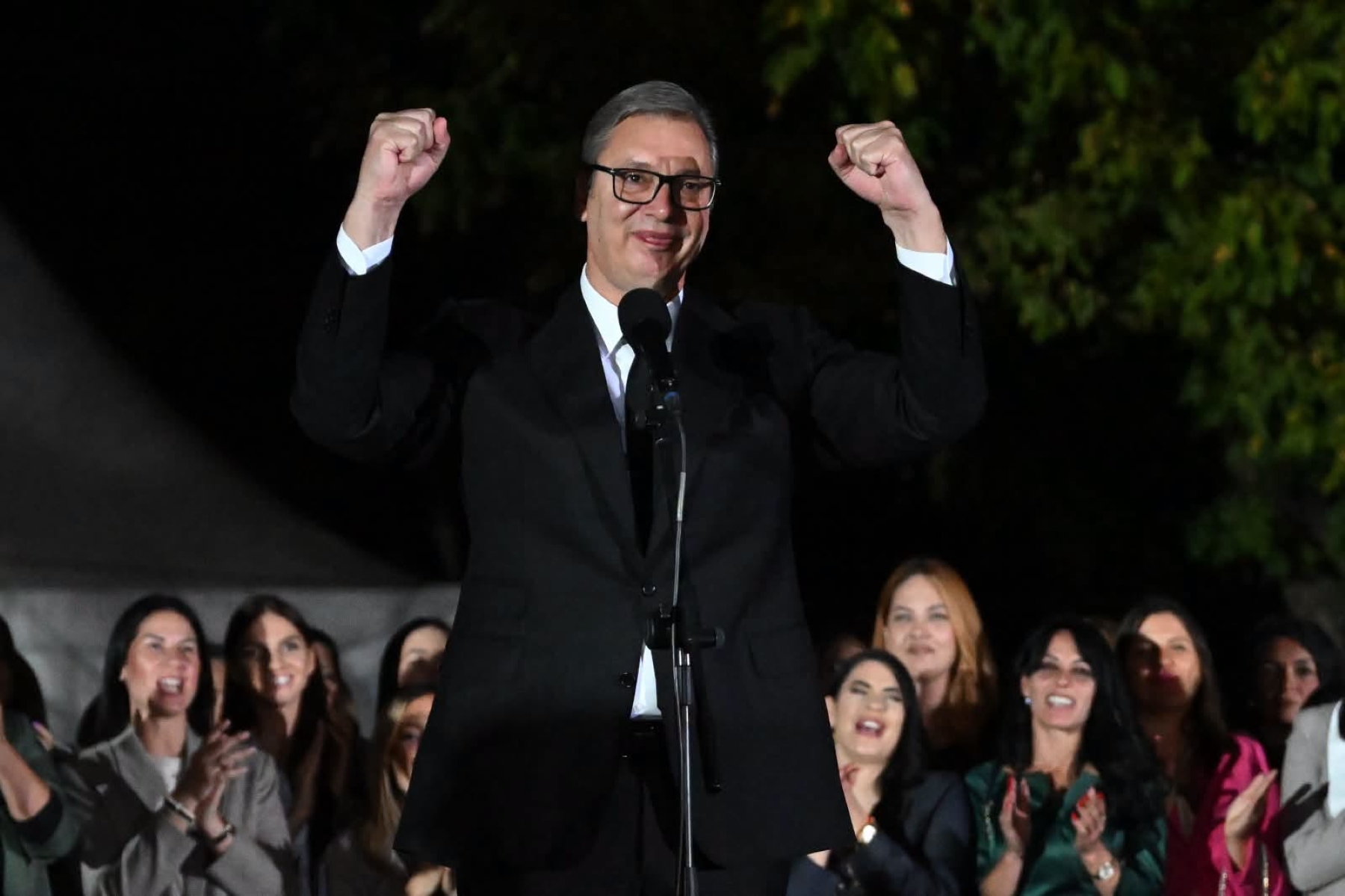
Aleksandar Vučić, who had served as President of Serbia since 2017, resigned on the evening of 27 September. Earlier this month, the ruling Serbian Progressive Party (SNS) officially nominated Vučić as its candidate for prime minister in the parliamentary elections scheduled for 25 October 2026.
Vučić previously served as Prime Minister of Serbia from 2014 to 2017. His party has been in power in Serbia since 2012.
Vučić resigned as president approximately eight months before the end of his second presidential term, which was due to expire on 31 May 2027. The Constitution barred him from running for president for a third term.
In June, Vučić had already announced his resignation as president, saying that he did not want to use the presidency to his advantage during the election campaign. “I want to compete as an ordinary person, as a man of the people, against those who are against the people,” Vučić said at his final press conference as president.
Vučić’s resignation means that an early presidential election must also be held in Serbia within the next three months, that is, by the end of the year.
Following Vučić’s resignation, President of the National Assembly (parliament) Ana Brnabić has been performing the duties of president since 28 September.
According to Vučić, the presidential election will be scheduled for late December.
- Vučić’s Conversation with Putin. Gas Agreement. NIS
On his penultimate working day as President of Serbia, Aleksandar Vučić held an hour-long telephone conversation with Russian President Vladimir Putin. “We talked about cooperation between Serbia and the Russian Federation, about our bilateral relations, about the conflict in Ukraine, about the situation in the Balkans,” Vučić said. According to him, the conversation was substantive and good. Among other things, the two sides discussed energy issues: the extension of the gas agreement on preferential terms and the “problem” of Naftna Industrija Srbije (NIS).
***
On 30 September, it became known that Serbia and Russia had extended their natural gas supply agreement for three months, until the end of this year. According to Dušan Bajatović, head of the state-owned company Srbijagas, gas supplies will continue under the previous preferential terms. Imports of Russian gas cover up to 90% of Serbia’s needs.
***
On 30 September, the Office of Foreign Assets Control (OFAC) of the U.S. Department of the Treasury extended the licence allowing Naftna Industrija Srbije (NIS) to operate for one month, until 30 October.
At the beginning of 2025, the U.S. administration imposed sanctions on NIS, whose majority owners are Russian companies, in order to prevent Russia from using energy revenues for the war in Ukraine. Russian owners control 56.15% of NIS shares, of which 44.85% are owned by the state-owned company Gazprom Neft.
After sanctions were imposed on NIS, Hungary’s MOL began negotiations to purchase the Russian stake. Against this backdrop, OFAC’s licence allowing NIS to operate has been repeatedly renewed, thus delaying the full implementation of the sanctions.
According to Serbian analysts, OFAC clearly does not want to complicate Serbia’s economic situation by imposing sanctions, proceeding from the view that the application of restrictive measures would harm Serbia much more than Gazprom.
- Serbian Opposition Student List Published Its Position on Kosovo and Russia
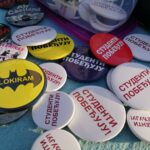
The opposition electoral list “Student List – Students Win” considers Kosovo part of Serbia and will not impose sanctions on Russia. This is stated in remarks by the list’s leader, Ilija Srdanović, and by the protest movement “Students in Blockade,” which supports the Student List.
“The Student List’s position on Kosovo is defined by the Constitution of the Republic of Serbia. Kosovo and Metohija are an integral part of our country,” Ilija Srdanović, the first candidate on the “Student List – Students Win,” stressed in an interview with BBC Serbian.
In the Memorandum on Kosovo and Metohija, which “Students in Blockade” published earlier this year, the fact that “Kosovo and Metohija are an integral part of the Republic of Serbia” is described as “not only a constitutional category, but also a historical and moral imperative, the essence of which is not open to debate.”
As for relations with Russia, after the start of the current election campaign, “Students in Blockade” published their official foreign-policy platform. In a statement entitled “Student Programme on Foreign Policy and Sanctions,” they said that Serbia should maintain a principled position and refrain from imposing restrictive measures against the Russian Federation. According to the statement, the student movement believes that imposing sanctions on any state, entity or individual is a purely political step that does not contribute to resolving global security and political crises. In their justification, they referred to Serbia’s own historical experience and the negative impact of such measures directly on the civilian population.
Responding to a BBC question about future relations with Russia, Ilija Srdanović said that Serbia must take care of its own strategic interests, particularly given its energy dependence and cooperation between the two countries. “The interests of Serbia’s citizens always come first,” he said.
Thus, the views of the electoral list “Student List – Students Win” on two key issues of Serbia’s domestic and foreign policy, the Kosovo issue and relations with Russia, do not fundamentally differ from the position of the ruling Serbian Progressive Party (SNS) of former President Aleksandar Vučić, although the Student List is the SNS’s main opponent in the parliamentary elections scheduled for 25 October.
- Dodik Met with Putin
Representatives of Republika Srpska (Bosnia and Herzegovina), Milorad Dodik, the head of the ruling party in Republika Srpska, the Alliance of Independent Social Democrats (SNSD), and Republika Srpska Prime Minister Savo Minić, who is the SNSD’s presidential candidate, met with Russian President Vladimir Putin in Moscow on 29 September.
Putin expressed his support for the ruling coalition in Republika Srpska ahead of the general elections in Bosnia and Herzegovina scheduled for 4 October and stated that the partnership between the Russian Federation and Republika Srpska would continue.
During the meeting, Dodik assured Putin that Republika Srpska would continue to block the introduction of sanctions by Bosnia and Herzegovina against Russia and would defend “military neutrality,” that is, keep Bosnia and Herzegovina from moving closer to NATO. The SNSD leader also expressed support for Russia’s “special military operation” against Ukraine.
Following the meeting, Dodik said that the gas price for Republika Srpska would remain at its previous level. In addition, according to him, Russia is interested in cooperation with the Orao aircraft factory in Bijeljina. As he noted, the Russian side promised to provide specific options for developing this cooperation.
This was Dodik’s 11th meeting with Putin since the beginning of Russia’s full-scale invasion of Ukraine.
- Kosovo Parliament Considers Verdict Against Former Kosovo Liberation Army Leaders Unacceptable. EU Calls for Respect for the Specialist Chambers
The Kosovo Parliament adopted a declaration regarding the decision of the Kosovo Specialist Chambers in The Hague concerning four former leaders of the Kosovo Liberation Army (KLA). The MPs deemed unacceptable the court’s finding that the four former KLA leaders had “common criminal purpose.”
The declaration was supported by MPs from the ruling Self-Determination Movement (LVV), the Democratic Party of Kosovo (PDK), the Democratic League of Kosovo (LDK), the Alliance for the Future of Kosovo (AAK), and the multi-ethnic parliamentary group. The document, dated 28 September, was adopted with 99 votes in favour; there were no votes against or abstentions. Representatives of the Serbian List did not participate in the vote.
In the declaration, parliament expresses “deep concern” over the first-instance verdict concerning Hashim Thaçi, Kadri Veseli, Rexhep Selimi and Jakup Krasniqi, who were convicted of war crimes.
Parliament stresses that no judicial decision “can change the historical truth of the war in Kosovo,” arguing that crimes against Kosovo Albanians were systematic and were committed by the Serbian state apparatus. The document calls on all state institutions to develop a common strategy — legal, institutional and diplomatic — to “protect the truth and purity of the liberation war.”
The MPs also called on the Specialist Chambers to act strictly within the limits of their mandate and not to allow interpretations that, in parliament’s view, “call the historical truth into question” or equate the actions of the KLA with Serbia’s repressive policies in the late 1990s.
The declaration is political in nature and is intended to record the position of official Pristina against the backdrop of ongoing protests against the court verdict. The main slogan of the protests is “Jo në Emrin Tim” (“Not in My Name”). This is a response to the phrase used by the judge of the Specialist Chambers, who read out the verdict “in the name of the people of Kosovo.”
On 1 October, a large protest march in Pristina coincided with a visit by European Commission President Ursula von der Leyen.
Speaking about the judgment of the Kosovo Specialist Chambers in The Hague, the President of the European Commission said that the court’s “mandate must be fully respected”. “But one thing is clear. This judgement is about the individual responsibility of the defendants. Kosovo’s resistance is not on trial,” she added.
- Athens Demands That Skopje Remove “Irredentist Content” from School Textbooks
The Greek government sent an official request to the authorities of North Macedonia demanding the removal from school textbooks of “revisionist and irredentist” wording that, in Athens’ view, violates the provisions of the 2018 Prespa Agreement. Deputy Minister of Foreign Affairs of Greece Alexandra Papadopoulou said this while speaking in the Greek parliament. According to the official, Athens continues to insist on the accurate presentation of historical events, terminology and figures of antiquity, including Alexander of Macedon (referred to as Alexander the Great in the Macedonian version). Another complaint by Greek politicians is that textbooks published in Skopje do not properly distinguish between the ancient Macedonians and the modern identity of the citizens of North Macedonia.
Under the Prespa Agreement, concluded in 2018 and which entered into force in February 2019, the parties committed themselves to ending the longstanding dispute over the country’s name and historical heritage. In addition to changing the country’s official name to the “Republic of North Macedonia,” the agreement provided for the establishment of a Joint Inter-Disciplinary Committee of Experts on historic, archaeological and educational matters. The main task of this committee is to review school textbooks, curricula and geographical maps in both countries and remove from educational materials any content containing territorial claims (irredentism) or distortions of history.
Greece assured that it would continue to raise the issue of textbook content both at meetings of the joint committee and in all international forums until the disputed wording is finally removed from North Macedonia’s curricula.