In the second half of April 2026, the issue of Kosovo — the former Serbian autonomous province that declared independence on 17 February 2008, and one of the potential flashpoints of the Western Balkans — returned once again to the focus of regional politics. This time not only as diplomatic déjà vu, but also as an instrument for several political tasks at once. Behind the new wave of escalation customarily stand Belgrade and Moscow, as well as their allies in several countries of the region.
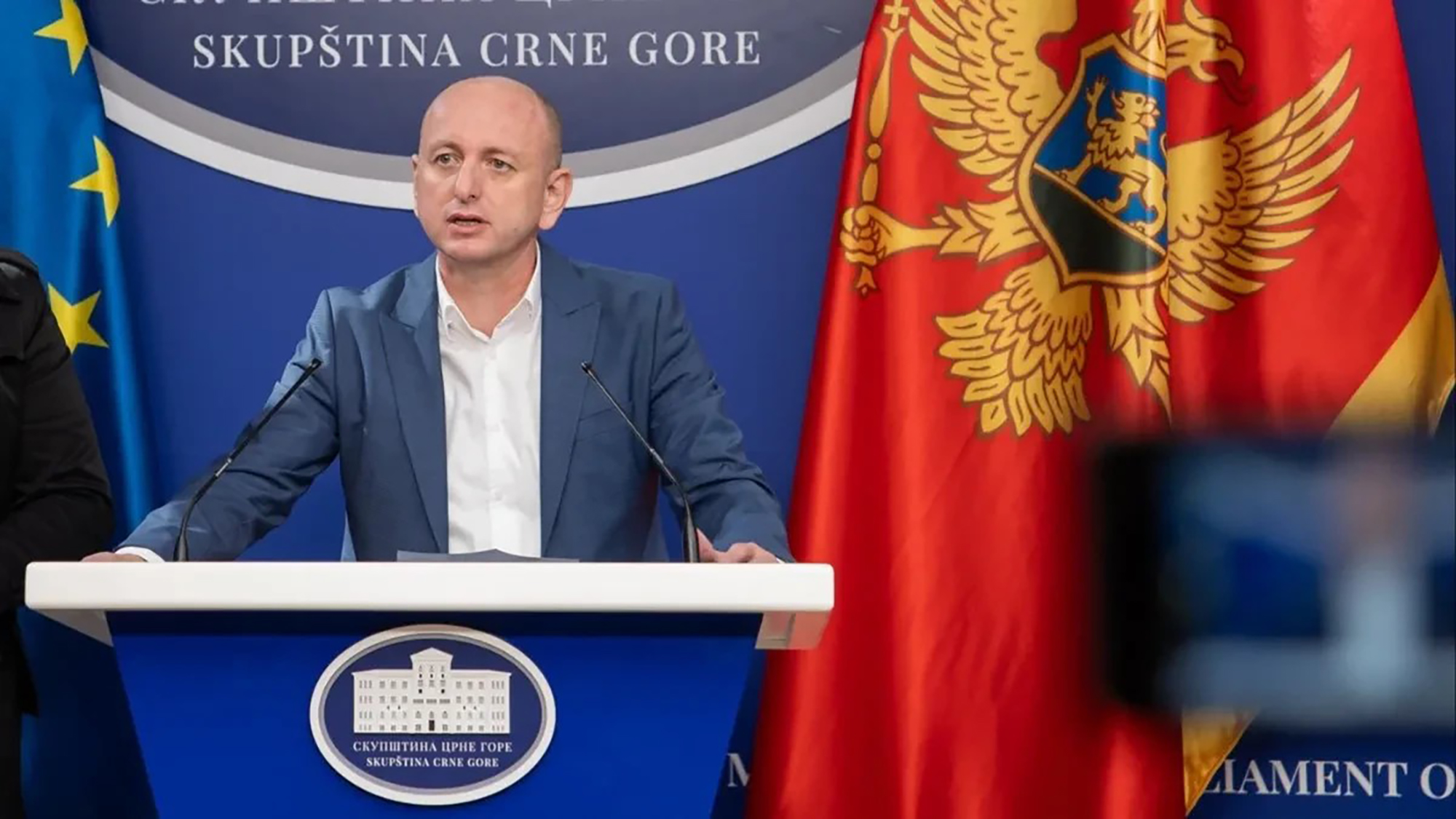
In particular, a statement by one of the leaders of the Serbs of Montenegro — the head of the Democratic People’s Party, Milan Knežević — caused noticeable resonance. The leader of the DNP is well known in Montenegrin politics for his fiery, sarcastic, and often outrageous statements in a Russophile and Serbophile spirit, as well as for his skeptical attitude toward the United States, the EU, NATO, and the “collective West.” At one time he was among the accused in the case concerning the attempted coup d’état in Montenegro in the autumn of 2016. This time, M. Knežević announced a campaign to revoke Montenegro’s decision recognizing Kosovo.
In parallel, the head of Russian diplomacy, Sergey Lavrov, once again embedded the Kosovo issue in a broader anti-Western discourse of pressure on Serbia. In Belgrade, President Aleksandar Vučić, who has spent the last several years in protracted domestic political strain, is speaking ever more actively both about “difficult times for the Serbian people” and about security challenges due to the rapprochement of Croatia, Albania, and Kosovo. This refers, in particular, to the formalization of a separate framework of military-technical cooperation between Zagreb, Tirana, and Pristina in 2025, which the Serbian side views as an anti-Serbian alliance. In the broader pro-Russian information space, meanwhile, a rather old thesis has once again become more active in recent weeks: Kosovo as evidence of Western double standards and as a convenient “precedent” for other revisionist narratives. Taken together, this appears like coordinated escalation intended simultaneously to pressure Serbia, destabilize Montenegro, and return the Western Balkans to the old conflictual agenda. All the more so under current geopolitical turbulence and general international uncertainty.
The most visible Balkan dimension of this wave is the Montenegrin one. It refers primarily to M. Knežević’s statement of 16 April about launching a campaign to revoke Montenegro’s recognition of Kosovo. At the same time, the Montenegrin politician stressed that the process would move “from Zeta to the Assembly”: first through local councils, then through a parliamentary resolution and a broader public campaign. He also stated directly that he would seek the support of the the Serbian Orthodox Church’s hierarchy — the country’s largest confession and, at the same time, an institution with a clearly pronounced pro-Russian segment of influence.
In Knežević’s own logic, this campaign is directly connected with the relatively recent withdrawal of the DNP from the ruling coalition. On 30 January 2026, the party withdrew support from the government of Milojko Spajić, and since then it has been systematically bringing back the agenda issues that had previously been frozen as too conflictual for society and damaging to the pace of European integration. This concerns the Serbian tricolor as a “national flag,” the state status of the Serbian language, the issue of dual citizenship, and now Kosovo as well. After the failure of attempts to actualize the aforementioned issues, the turn has now come precisely to the Kosovo topic. Therefore, this is not a situational idea, but a return to the old arsenal of identity-based and ethnoreligious mobilization of the corresponding electorate precisely at the moment when Podgorica is trying to present itself to Brussels as the region’s most advanced candidate. Montenegro has indeed significantly accelerated its negotiating pace over the last two years: at present, 14 out of 33 chapters have already been provisionally closed, and the government is declaring its intention to secure the country’s EU membership by the end of 2028.
That is precisely why Knežević’s initiative should not be read literally. Institutionally, its chances are minimal: Montenegro recognized Kosovo as early as 9 October 2008, and after the DNP’s exit from the governmental coalition, the party has neither the governmental instruments nor a parliamentary majority to change this course. However, the political meaning of the campaign lies precisely in the fact that it does not require quick success. Its task is to return conflictual issues to the Montenegrin space precisely at the moment when Brussels is asking Podgorica for maximum concentration on reforms, the rule of law, and the completion of negotiating chapters. In other words, even if the decision of 2008 is not revised, the campaign may achieve something else — weaken the country’s internal Euro-integration focus. This is where the main point begins: such a logic objectively coincides with the Russian interest — not necessarily to break Montenegro’s course, but to blur it as much as possible with conflictual issues. In effect, this is a new attempt to slow Podgorica’s European path by forces linked to Moscow and Belgrade.
The Russian dimension of this configuration is already hard not to notice. On 15 April in Beijing, S. Lavrov stated that the EU was allegedly trying to turn Serbia into a “buffer zone” against Russia, and that Belgrade was in effect being presented with two conditions: to recognise Kosovo and to fully join the sanctions regime against the Russian Federation. In Moscow, this is presented not as a separate dispute around Kosovo, but as part of broader Western pressure on Serbia. Even earlier, on 2 April, in a conversation with Ivica Dačić, the Russian side emphasized that it would support a “resolution of the Kosovo issue” only in accordance with Serbia’s interests. This is already a familiar line, but in April 2026 it sounded particularly distinctly against the background of new tension in the region and the Serbian domestic crisis. Moscow offers no settlement; it offers Belgrade a political framework in which Kosovo becomes proof of the West’s hostile nature.
Even more importantly, this line is not limited to official diplomacy. In the Russian media and commentator space, several related narratives are being simultaneously promoted. Over the past few weeks, there have been materials claiming that the recognition of Kosovo by the majority of EU countries allegedly already means an increasingly harsh European blockade for Serbia, where the issue of Kosovo becomes the central obstacle on the way to the EU. And in the March joint text by Dmitry Medvedev and Viktor Medvedchuk on the “self-determination” of the Ukrainian territories occupied by the Russian Federation, the thesis of the so-called “Kosovo precedent” is again developed: the authors directly cite the advisory opinion of the International Court of Justice on Kosovo in order to construct a legitimizing bridge to Russian claims on Crimea and the occupied territories in the east and south of Ukraine. This is important, because in the Russian information space Kosovo is used not only as a Balkan topic, but also as a universal political and legal argument against the “collective West.” That is precisely why the current escalation around the Kosovo issue has not only a regional, but also a broader revisionist function for the Kremlin.
Belgrade does not reject this framework — it merely adapts it to its own needs. After the aforementioned statements by the Russian minister, Vučić said that “nothing that Lavrov said is untrue,” and once again repeated his usual formula: Serbia wants to join the EU but will not go there at the expense of its own interests and will not build its European perspective at the cost of breaking with Russia. That is, Belgrade is still trying to preserve a multi-vector policy, but precisely on the Kosovo issue this balance is increasingly being framed in the language of geopolitical bargaining: the West allegedly pressures, Russia allegedly insures, and Serbia is forced to maneuver. For Vučić, such a position is also domestically politically advantageous. The country is entering the spring of 2026 against the background of a prolonged crisis, protests, and talk of more than possible early elections this year. A. Vučić is currently hesitating and does not wish to rush into announcing them until he has sufficient confidence in the result and in the controllability of the administrative resource. In such a situation, Kosovo gives the Serbian leader a very convenient resource: it allows him to shift the conversation from corruption, human rights, violence, and pressure on the media into the plane of “national interests” and to justify a harsher tone by an external threat.
Hence Vučić’s constant return to rhetoric about “difficult times for Serbia” and an “increasingly complicated regional security situation.” This style in itself is not new for him, but now it is operating in a mode particularly convenient for the regime. After consultations with the parties on 2 April, Vučić left the topic of early elections open, and the media recorded that his opponents perceived this process more as a maneuver than as a real dialogue. Against this background, any external issue — Kosovo in particular — becomes part of the internal pre-election framework. Vučić’s current statements that the security situation has become more complicated because of cooperation between Albania, Croatia, and Kosovo should be read precisely in this context: as a combination of a regional signal, mobilization of his own electorate, and preparation for a possible campaign in which Kosovo will be one of the central themes. Therefore, the question is no longer whether Belgrade will speculate on Kosovo, but how far it will go in this speculation if early elections indeed draw closer. Separately, it is also worth mentioning A. Vučić’s major television interview on 18 April on the occasion of the 13th anniversary of the signing of the Brussels Agreement, which was supposed to advance the normalization process between Belgrade and Pristina, in particular through creating the Association of Serbian Municipalities in northern Kosovo. The Serbian president now, in retrospect, assesses this episode skeptically and in effect accuses the EU of an anti-Serbian position and pressure on Belgrade so that it would “renounce its sovereign territory.”
The Slovak narrative against this background is less emotional, but also politically useful for Belgrade. This is not about a change in Bratislava’s position — it has not changed it. It is about something else: the Slovak leadership in 2026 as well consistently repeats that it does not recognize Kosovo because it considers it to have been created contrary to international law. Slovak Prime Minister Robert Fico again publicly confirmed this position in February 2026. For Belgrade, such signals are important because they make it possible to show that even within the EU the Kosovo issue remains disputed, and therefore the Serbian position does not look like complete diplomatic isolation. As is known, among EU countries Kosovo’s independence is not recognized by Slovakia, Spain, Romania, Greece, and Cyprus. In this sense, the Slovak factor is another element of the broader picture in which the Kosovo issue is used to fuel Serbian foreign-policy stubbornness and internal mobilization.
That is precisely why the current round of information escalation around Kosovo does not appear like a random accumulation of separate statements. For M. Knežević, it is a way to shake the Montenegrin agenda and strike at Podgorica’s Euro-integration framework. For Moscow, it is a chance once again to present Serbia as a state which the West is allegedly pushing toward geopolitical self-denial, while at the same time legitimizing its own revisionist narratives through the “Kosovo precedent.” For A. Vučić, it is a rather convenient card ahead of possible early elections: sufficiently mobilizing, sufficiently emotional, and sufficiently flexible that it can be combined with security, anti-Western rhetoric, and the image of a “leader under pressure.” All this adds up to a quite consistent picture.
In conclusion, the main question now is not whether a new major crisis around Kosovo will flare up tomorrow. The main question is who is using Kosovo today, and how. And the answer is quite alarming: Moscow is consistently reactivating the Kosovo issue as an element of broader pressure in the Western Balkans and destabilization in Europe overall, but it is not doing so alone. It is acting in unison with a broader environment in which Belgrade is interested in keeping this issue open, and Serbia’s allies in the region — from Podgorica to Banja Luka — are using it as a resource for their own political game. For the Balkans, this is a bad signal, because it means that Kosovo is once again returning not as a problem to be solved, but as a conflict that many find beneficial not to close. All the more so because grounds for anxiety are being added by the ever more tense global situation, as well as internal contradictions within NATO and the EU.
CWBS Analytical Group