The cancellation of this year’s Brdo–Brijuni Summit by the President of Croatia, Zoran Milanović, shocked many, first and foremost in the region. This is something more than just another diplomatic episode in the chronically tense Croatian–Serbian relations. The very fact itself is quite telling: one of the few stable regional formats, created precisely to maintain political dialogue even during periods of conflict, this time did not withstand the escalation.
On 30 March, the Office of the President of Croatia officially announced that the meeting of heads of state within the framework of the Brdo–Brijuni Process, planned for May in Croatia, had been cancelled, since under the current circumstances “there are no conditions” for the arrival of the President of Serbia, Aleksandar Vučić, to Croatia. In Zagreb, this was explained straightforwardly: the recent statements and actions of Vučić contradict the very logic of this process, worsen interstate relations, and threaten peace and stability in South-Eastern Europe.
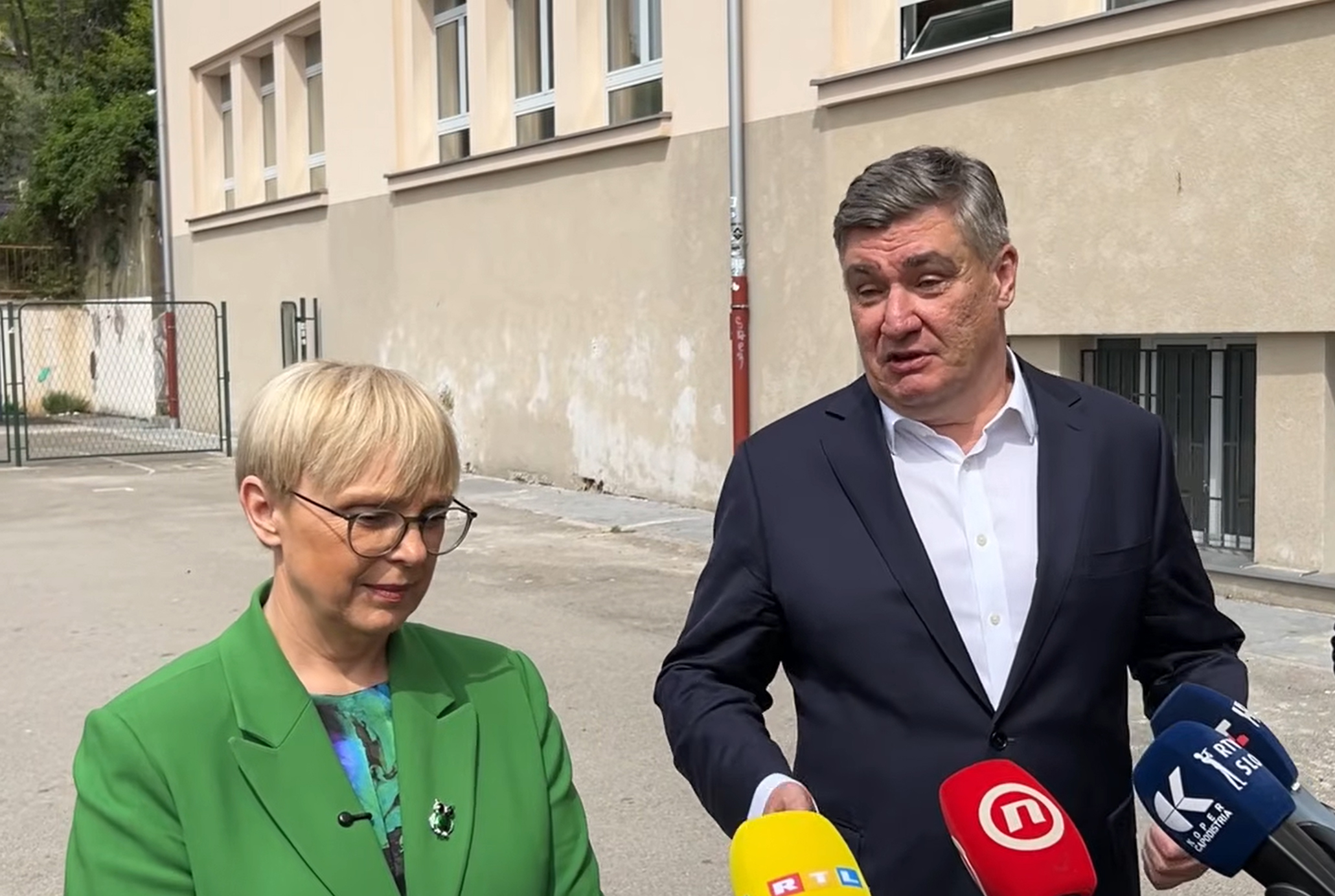
Later, on 13 April, during a meeting in Rijeka, the Presidents of Slovenia and Croatia confirmed this decision. Milanović emphasized that Vučić, by his statements, had put him, as the host, in a hopeless position. “I do not want to argue and explain that Croatia will not attack Serbia with tanks. He keeps repeating this. It is impossible to talk like this,” he said, adding that “therefore, unfortunately, nothing will come of Brijuni.”
The President of Slovenia, Nataša Pirc Musar, stressed that she understands the decision of her Croatian colleague not to host the summit.
To understand the scale of this decision, it is important to remember that Brdo–Brijuni is not a decorative diplomatic ritual: it is a joint Slovenian–Croatian initiative which, in its current format, has been operating since 2013 and is intended to maintain trust, regional cooperation, and the European perspective of the Western Balkans. This is precisely where the political weight of the cancellation lies: when it is not an incidental bilateral meeting that is halted, but a format conceived as a platform for keeping an open channel between all key leaders of the region, this is already a signal not of another quarrel, but of a more serious breakdown in regional communication. As early as the 2023 summit, participants emphasized the need for mutual trust, good neighbourly relations, and acceleration of the region’s European integration. Therefore, this year’s disruption of the event appears highly symptomatic. It strikes at the very idea that political dialogue in the Western Balkans can be kept afloat even under the pressure of conflicts and personal animosity.
The formal reason for Zoran Milanović’s decision was formulated quite firmly, but at the same time without unnecessary diplomatic veiling. The problem is that the Serbian leader Aleksandar Vučić, in the view of the Croatian side, by his recent statements of a rather bellicose and alarmist nature, has taken the situation beyond the limits within which such a meeting would still make sense. And it is important here that this is not about one isolated remark. In Zagreb, reference was made to the “statements and actions of recent days and weeks,” and this already points to a broader background: from the increasingly aggressive rhetoric of President Vučić toward Croatia to his renewed attacks on the topic of an alleged “anti-Serbian” coalition in the region (referring to the military alliance of Tirana, Pristina, and Zagreb — although Croatia and Albania have long been members of NATO). The reaction of the President of Serbia himself effectively only confirmed that it was beneficial for him to respond in the same manner. He stated that he “fully supports” Milanović’s decision, that he has “no place” at such a meeting, and that it is much more important for him to go to Jasenovac than to Brdo–Brijuni. In the same reaction, Vučić once again linked the situation to his previous accusations against Zagreb, Tirana, and Pristina.
This is precisely where the political center of gravity of this story lies. In recent weeks, Aleksandar Vučić has consistently been heating up the topic of the so-called hostile encirclement of Serbia. After the intensification of security cooperation between Croatia, Albania, and Kosovo, he repeatedly presented these contacts as a threat to Belgrade. As early as February, reacting to meetings of Croatian, Albanian, and Kosovo officials in the security sphere, President Vučić stated that if the goal had been “to worry Serbia,” it had been achieved. And already at the end of March, after local elections in Serbia, he added to this regional line the topic of alleged Croatian interference and “logistical support” for his opponents. That is, President Milanović did not cancel the summit out of the blue and not because of a single careless statement. The corresponding decision became a reaction to accumulated rhetoric, in which Vučić systematically portrays neighbouring countries as part of hostile external pressure on Serbia.
In this sense, the cancellation of the summit is also an indicator of a broader change in the atmosphere. For many years, Brdo–Brijuni existed precisely because it allowed conversation to be maintained even when grievances accumulated between individual capitals. But the format works only as long as the parties at least recognize its purpose — as a platform for reducing tension, rather than as a stage for transferring domestic political confrontation to the regional level. Vučić, over recent months, on the contrary, has been actively translating regional relations into the language of siege, conspiracy, and external attacks on Serbia. Within such a logic, a summit with the participation of the Presidents of Croatia, Slovenia, Albania, Kosovo, and other regional leaders ceased to be a diplomatic asset and turned into a risky public platform where any remark could trigger a new round of scandal. For Milanović, who himself is far from a model of restrained regional discourse, the decision to cancel looks not so much like a gesture of offense as a recognition that the format at this stage has simply ceased to function according to its purpose.
There is also another, no less important dimension — the domestic political one. The Serbian president found himself under noticeable pressure after the local elections of 29 March, which were accompanied by reports of violence, pressure on voters, and serious violations. International observers from the Council of Europe recorded a threatening atmosphere outside polling stations, while Serbian independent monitors spoke of organized manipulation and violations of ballot secrecy. Against this background, foreign policy escalation fits entirely into a long-familiar logic for Vučić: when the domestic situation becomes more complicated, regional tensions become an instrument of mobilization, consolidation of the electorate, and shifting attention from issues of the democratic quality of power to the narrative of “Serbia under attack.” It is precisely in this optic that his recent statements about Croatia, Kosovo, Albania, and the “unfavourable environment” appear not as an accidental emotional outburst, but as a politically functional discourse.
For Croatia, however, this meant the following: Aleksandar Vučić increasingly appears less as a partner even within the framework of a limited and at least symbolic regional format. Zoran Milanović effectively acknowledged that the very presence of the President of Serbia at the summit in Croatia under current conditions would not have stabilized the situation, but on the contrary would only have intensified tensions. And this is already a consequence that goes beyond a bilateral quarrel. The Brdo–Brijuni Process was valuable precisely because it allowed regional leaders to gather together without formal negotiating obligations, but with a political signal: even in conflict, the Western Balkans do not lose channels of communication. When one of the co-founders of this format cancels the meeting due to the impossibility of hosting the President of Serbia, this is read as a sign that the level of distrust between Zagreb and Belgrade has once again risen to a dangerous level.
The consequences of such a decision will not be merely symbolic. First, the cancellation of the summit strikes at the already fragile infrastructure of regional communication. Second, it reinforces the impression that in the Western Balkans even those platforms that were created for stabilization are becoming hostages of bilateral crises. Third, this is a bad signal for the EU itself, because Brdo–Brijuni was from the outset one of the formats intended to keep the region in the European orbit through dialogue about integration, good neighbourly relations, and shared political responsibility. If now this format is failing precisely because of the escalation rhetoric of one of the key regional leaders, this means that the problem lies not only in the slowness of enlargement, but also in the deterioration of the very political atmosphere in the region.
In the end, the cancellation of the Brdo–Brijuni Summit is not only another quarrel between Zagreb and Belgrade, it is also a story about how one of the few truly functioning Balkan formats turned out to be powerless in the face of a combination of domestic political pressure in Serbia, increasingly sharp rhetoric by Vučić, and growing distrust on the part of Croatia. For the President of Croatia, this decision became a form of political stop signal. In other words, if the summit ceases to reduce risks and begins to increase them, it is better not to hold it at all. For the region, however, this is a much less comfortable conclusion. Because if even Brdo–Brijuni is no longer able to withstand the current level of confrontation, this means that the region is entering a new phase — not of a major war, but of major nervousness, where diplomatic platforms increasingly do not extinguish conflicts, but become their continuation by other means. In the current geopolitically turbulent times, this only adds vulnerability to such a sensitive and contradiction-filled region as the Western Balkans.
CWBS Analytical Group