Urgent Dismantling of the Old Regime Must Begin
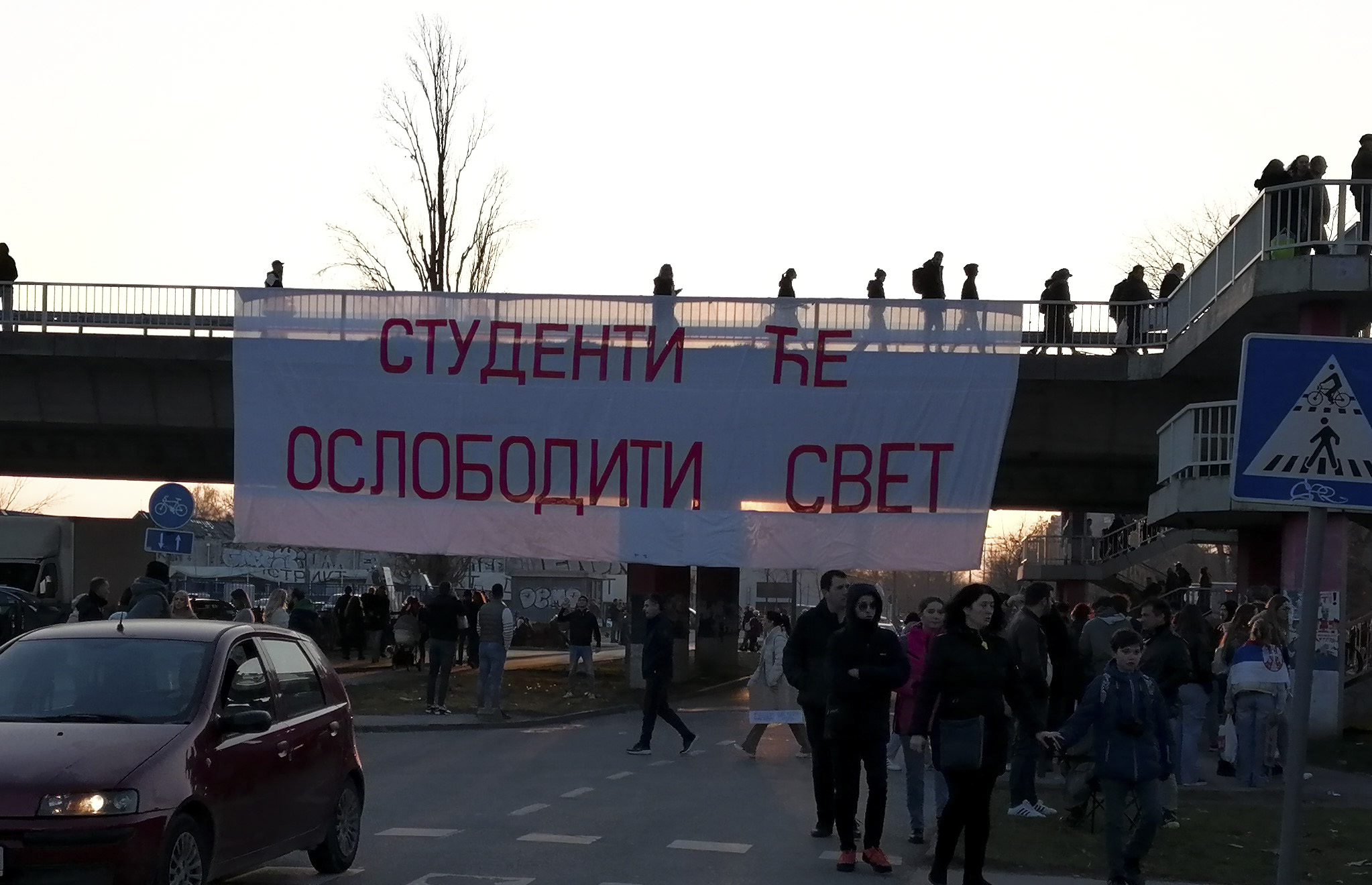
A carnival atmosphere throughout the country, from the capital to Serbia’s smallest towns. Cheerful young people celebrated the victory of the Student List. People danced the kolo, celebrated until morning and sang, “Vučić is gone, Vučić is gone!”…
“It all happened too quickly somehow” – those who had expected that Vučić would not leave power peacefully were shocked. After all the pressure, repression, beatings of dissenters and demonstrators, and corruption scandals – judicial consequences are inevitable.
The morning after the election, one dilemma was being considered – why did Aleksandar Vučić want to surprise everyone and be the first, before anyone else, to announce his own defeat? The formula for his defeat is simple: high voter turnout (around 70 percent) and a large margin, with the Student List (53 percent of the vote) winning nearly 15 percentage points more than the coalition around the Serbian Progressive Party (39 percent of the vote).
This is a classic example of a non-violent “electoral revolution”. The second in Serbia, after the “5 October” in 2000, in which then-leader Slobodan Milošević fell. At the same time, it is the second “electoral revolution” to have taken place in the region, just a few months after Prime Minister Viktor Orbán’s defeat in Hungary.
Perhaps one could speak of a domino effect or a trend, because the hybrid regimes of Orbán and Vučić were of a similar nature. The result is the same – victory over autocrats under completely unfavourable electoral conditions.
Protests against corruption and Prime Minister Edi Rama are also continuing in Albania, but regular parliamentary elections there are not due until mid-2029. Young people are raising their voices and protesting across Europe, demanding better conditions for education and life, but there are also key differences from the aforementioned fallen autocrats of Southeast Europe. Orbán, Vučić and Rama are long-term strongman leaders, having been in power for more than 13 years. In Hungary and Serbia, the change of government and the protests took place without radicalisation. What all three leaders have in common is that, through political and corrupt means, they tried to obtain the “protection” of the Trump family.
New Names – Opportunity and Risk
What next? Everyone who voted for the Student List, that is, against Aleksandar Vučić, is asking that. The Student List’s victory did not merely bring new names into the Serbian parliament, but also swept away familiar old ones from both sides of the political divide. For the first time, the Socialist Party of Serbia failed to enter parliament, a key actor in three and a half decades of Serbia’s failed transition, a cog in all the wars of the 1990s and the traditional pro-Russian pillar in the Western Balkans.
Not only did it fail to cross the electoral threshold, but the “European Serbia” coalition, led by the Party of Freedom and Justice, received very little support, less than one percent (0.3 percent of the vote). Voters mercilessly punished their leaders, among other things because of murky deals during previous elections.
When it comes to the replacement of political elites, the surprise situation in Serbia is somewhat similar to Volodymyr Zelenskyy and his Servant of the People party coming to power in Ukraine in 2019. A huge wave of citizens’ dissatisfaction with the traditional Ukrainian political elite and corruption brought completely new people, without political experience, who found their footing in the country quite well even before the war.
Among the first 140 candidates on the Student List who, according to election projections, should enter the National Assembly of Serbia, representatives of education and academia are the most numerous, while experts from healthcare, law, economics, culture and the arts also account for a significant share. A new government of professionals is expected.
The new names are both an opportunity and a risk. Because unlike Ukraine’s Servant of the People, the Student List has no leader (Ilija Srdanović says that he is merely first on the list), and has no party structure or hierarchy. It is, in general, a political science phenomenon that such an authentic decentralised movement has defeated the clientelist vertical of the Serbian Progressive Party regime. This is probably another reason why Vučić gave up on bloodshed and stepped back before the Student List’s cadres, believing that he has an advantage over their inexperience and openness.
According to analysts, after Vučić’s defeat the dismantling of the old regime must begin urgently, especially the secret services and the media. It could be said that this process has begun, because on Monday the regional public broadcaster Radio Television of Vojvodina apologised to its viewers for unprofessional reporting, and the editor-in-chief resigned.
Two days after the election, candidates from the Student List sent an open letter to the management of Radio Television of Serbia, in which they demand the resignations of its senior officials and an establishment of a temporary administration at the public broadcaster. The student movement said on social media that there is no place for clashes and violence and that it does not support incursions into media outlets and institutions, after a group of demonstrators stormed TV Informer, which had been the authorities’ most brutal instrument for smearing dissenters.
Things will be somewhat more difficult with the Security Information Agency and the military security services of the Republic of Serbia, where changes cannot be carried out without the constitution of parliament and the formation of a new government, which requires between two and four months. An even bigger problem is that those services have needed fundamental changes since the communist era.
A large part of the public believed that Vučić and his circle would not accept the election result and defeat. But the voluntary handover and rapid acceptance of the result may represent a shift to a new tactic in which the Serbian Progressive Party in opposition should not be underestimated, because a large number of its people who obtained positions or jobs through clientelist channels will retain their positions.
The judiciary is a topic that was not sufficiently brought to the fore during the student protests in Serbia. The new student government will be able to rely on the Public Prosecutor’s Office for Organised Crime, which may be the only institution to have remained free of the regime’s influence. In their plan, the students announce the liberation of the courts and the prosecution service, along with the establishment of a Special Prosecutorial Police. However, a more thorough reform of the judiciary will be needed, on the scale of those carried out in Romania and Ukraine, countries with endemic corruption.
Foreign Policy and Kosovo – a Point of Contention
Another thing Vučić is counting on is divisions over foreign and regional policy, which were also present during the breakup of the Democratic Opposition of Serbia soon after the victory over Milošević. In the remarks that followed his acknowledgement of electoral defeat, Vučić stated that by spring next year the Student List would impose sanctions on the Russian Federation.
Popular professor Jovo Bakić of the Student List told RT Balkan that Serbia’s future new government would not impose sanctions on Russia and that policy towards Moscow would not change. During the election campaign, representatives of the Student List also made populist statements about Serbia’s future foreign policy, a reserved stance towards the EU and openness towards Russia.
The issue of keeping Kosovo within Serbia’s borders dominated among representatives of the Student List. The issue is clearly important and frustrating for young people. During election-night celebrations, young people sang songs and carried symbols glorifying Kosovo, accompanied by chauvinistic and homophobic chants.
It is already clear that Kosovo will be the first point of contention for the Student List both regionally and internationally. If political changes occur in key EU states, some members of the new government could gravitate towards a popular European and global trend – the far right.
Breaking the continuity of the undemocratic Serbian Progressive Party regime is the first real step of change in Serbian society, which took place immediately after the election. Even if the new government does very little, because institutions in Serbia have been systematically ruined, every crisis will lead to a solution through new elections that can no longer be manipulated to the same extent as under the Serbian Progressive Party. The second step is already here – presidential elections by the end of the year.
Boris Varga. Serbian political scientist and journalist.
The articles published in the “Opinions” column reflect the personal opinion of the author and may not coincide with the position of the Center