- President of Ukraine Visits Serbia
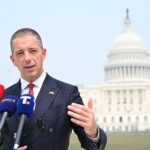
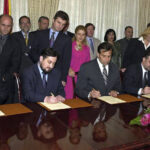
On 7–8 August, President of Ukraine Volodymyr Zelenskyy made his first visit to Serbia, where he met with President Aleksandar Vučić and Prime Minister Đuro Macut.
During the talks in Belgrade, the sides discussed the creation of a free trade area between the two countries. The relevant agreement could be concluded by the end of 2026.
The issues of supplying weapons or ammunition to Ukraine or launching joint military production were not discussed at the meetings. “We did not discuss any military cooperation today,” the Serbian President said at the concluding press conference.
Among the agreements reached in Belgrade was a package of humanitarian support from Serbia for Ukraine, including in the medical and energy sectors. Vučić said that Serbia had provided substantial assistance in the form of medicines and planned to support Ukraine with equipment needed for the energy sector ahead of winter. According to Zelenskyy, Serbia will allocate two million euros to support Ukraine’s energy sector.
In addition to the development of bilateral relations, the visit also had considerable geopolitical significance. Belgrade maintains close ties with Moscow and refuses to join the sanctions imposed by the European Union on Russia. At the same time, the Serbian President has repeatedly emphasised his support for Ukraine’s territorial integrity and has already visited Ukraine twice in recent years for the Ukraine–Southeast Europe Summits.
At the press conference, the Serbian President also expressed support for Ukraine’s territorial integrity: “We support the UN Charter and UN resolutions, and this means the territorial integrity of all UN members, which also means the territorial integrity of Ukraine. …We will continue to pursue this principled policy. There is no ‘but’ on this issue.”
In turn, the Ukrainian President supported Serbia’s territorial integrity. At the press conference, he stressed that Ukraine’s position on “Kosovo’s unilaterally declared independence remains unchanged.” “We have always emphasised this, and Ukraine’s policy has not changed,” Zelenskyy stressed.
- Albanian Prime Minister Calls for Support for Ukraine Despite Kyiv’s Position on Kosovo
President of Ukraine Volodymyr Zelenskyy’s statement during his visit to Belgrade regarding the non-recognition of Kosovo’s independence caused a strong reaction in the region. In Pristina and Tirana, disagreement was expressed with Kyiv’s official position on Kosovo, while public officials, politicians, and experts declared their support for Ukraine in its fight against Russian aggression.
Pristina Mayor Përparim Rama ordered the removal from the facade of a building in the city centre of a large banner featuring the Ukrainian flag, which had been displayed in support of Ukraine since the beginning of Russia’s full-scale invasion. He stated: “Our empathy and solidarity will always be with peoples facing war, violence, and persecution. …But no cause and no policy can be built on diminishing Kosovo’s statehood and the sacrifice of its people!” the Mayor of Pristina wrote on Facebook.
Kosovo Foreign Minister Glauk Konjufca stressed that “Kosovo remains unwavering in its support for Ukraine’s sovereignty, independence, and territorial integrity,” while “respectfully but firmly” rejecting “any interpretation of the Republic of Kosovo through the prism of Serbia’s territorial integrity.”
Albania’s Ministry for Europe and Foreign Affairs issued a statement in which it diplomatically expressed disagreement with the Ukrainian President’s statements in Belgrade regarding Kosovo and declared its clear support both for Kosovo’s independence and for Ukraine’s sovereignty, independence, territorial integrity, and European future.
Albanian Prime Minister Edi Rama, in a post on X, sharply criticised those who called for an end to support for Ukraine because of its position on Kosovo. “What a shame to lose sight of a simple truth: freedom does not work on a cashback basis,” he wrote. In his view, Ukraine is wrong on the issue of Kosovo, but its right to be free remains unquestionable. “Ukraine may be wrong — and yes, it is wrong about Kosovo — but its right to be free remains unquestionable. Fighting for that right means fighting for Europe and for ourselves,” Edi Rama stressed.
- KFOR Optimises Its Presence in Kosovo
After nearly three decades, the presence of KFOR, the NATO-led international force in Kosovo, is beginning to be reduced. The changes were announced at the beginning of the summer, when the Alliance announced a gradual “optimisation” of KFOR’s presence in Kosovo.
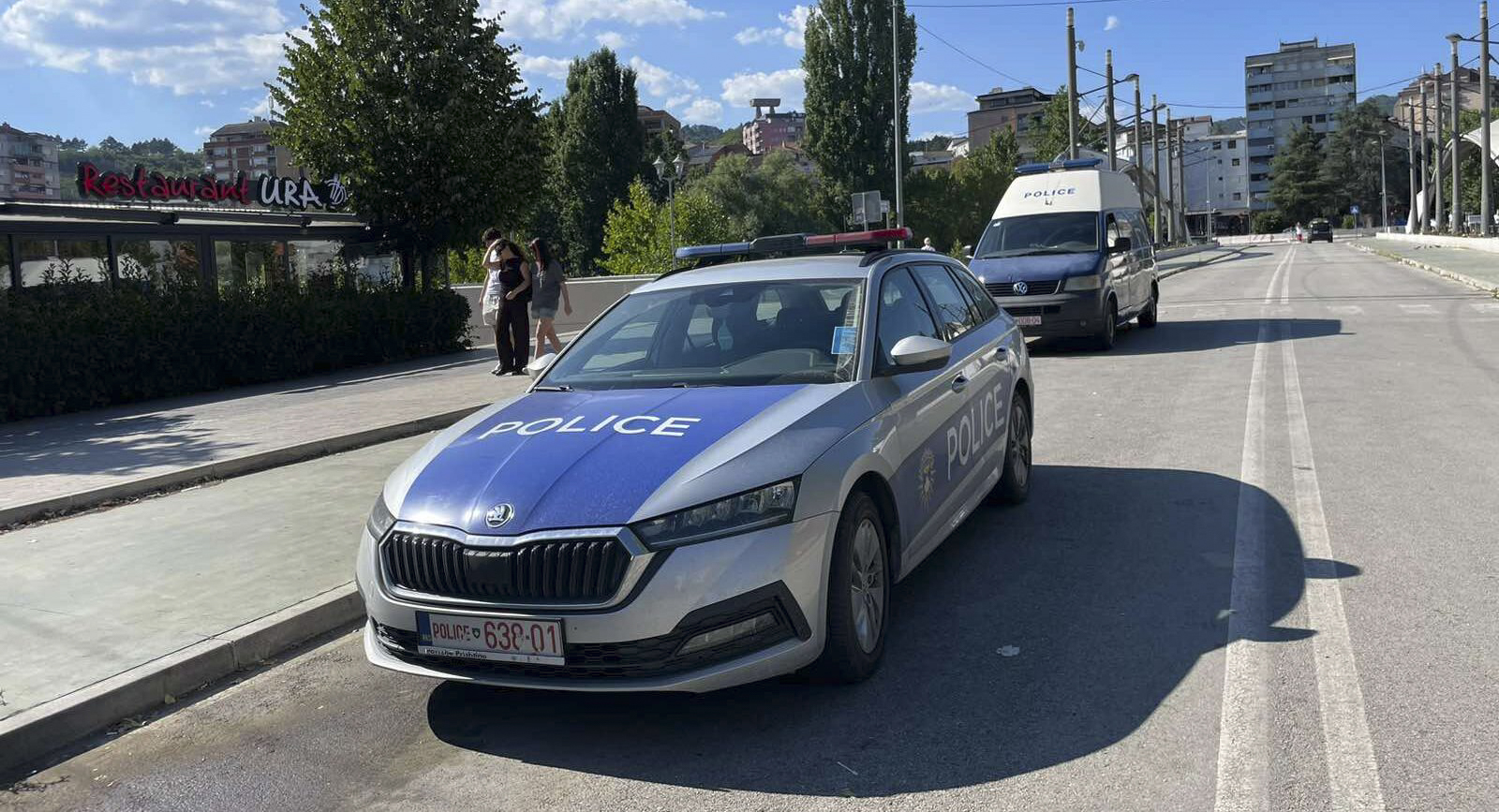
On 10 August, KFOR announced the gradual transfer to the Kosovo Police of security responsibilities at two locations of enormous political and symbolic importance: the Serbian Orthodox Visoki Dečani Monastery and the main bridge over the Ibar River in Mitrovica, which connects the northern part of the city, populated predominantly by Serbs, with the southern part, populated by Albanians.
KFOR stressed that this does not mean that it is leaving Mitrovica and northern Kosovo. The international force will continue to maintain a presence on both sides of the bridge and throughout northern Kosovo, while remaining ready to respond to any deterioration in the security situation.
The same gradual approach is also being applied to security at the monastery. On 10 August, KFOR officially confirmed that it had begun gradually integrating members of the Kosovo Police into the security structure around Visoki Dečani Monastery, stressing that the process would be gradual and depend on security conditions. “This process will be gradual and conditions-based, and will take place in close coordination with a range of stakeholders, including representatives of the Serbian Orthodox Church and institutions in Kosovo, as well as representatives of the Kosovo Police and the European Union Rule of Law Mission in Kosovo — EULEX,” KFOR stated.
The Serb List, the largest Serb political party in Kosovo, strongly opposed any reduction in KFOR’s presence, stressing that the Kosovo Police had not earned the trust of the Serb community and that KFOR’s presence provides an important sense of security and stability.
On 11 August, at the initiative of the Serb List, a meeting was held between the party’s leaders and KFOR Commander Özkan Ulutaş.
Özkan Ulutaş said that the process of changes to KFOR’s presence at the main bridge over the Ibar was only at an initial stage, but that even after its completion KFOR would retain a “strong presence” in North Mitrovica and northern Kosovo. Regarding Visoki Dečani Monastery, he stressed that KFOR would continue to be the first to respond to security threats.
The KFOR Commander confirmed that the “optimisation” process had been initiated because of the improved security situation in Kosovo, stressing that it was a gradual process dependent on conditions on the ground and that it could be reversed if developments threatened lasting security and regional stability.
- Vučić’s Proposals to Change the Course of the Ibar River Criticised in Pristina and Tirana
Serbian President Aleksandar Vučić stated on 9 August that the Serbian authorities were considering the possibility of changing the course of the Ibar River, which originates in Montenegro and flows through Serbia and Kosovo.
The Ibar feeds the Gazivode/Ujman reservoir and the Ibar–Lepenac system, which are crucial to Kosovo’s water supply, energy sector, industry, and agriculture.
The Serbian President’s latest statement came after the demolition of almost two dozen Serb-owned buildings on the shore of Lake Gazivode. The Kosovo authorities stated that the private houses and a hotel had been built without permits.
Vučić’s proposal to change the course of the river came in response to what Belgrade describes as the persecution of the Serb population in Kosovo. “Since they are abusing our people like this, we have various reasons to change the course of the Ibar, and then we will see what the Albanians do and how they behave,” the Serbian President stated. He said that “experts, people from the construction sector, engineers, and others” had already been invited to examine the issue and propose possible solutions.
The following day, Vučić reiterated his statement, adding that he was “considering the issue of waterways on the territory of the Republic of Serbia in accordance with domestic law.” “We have our own interests, and we take care of them,” he said.
Acting President of Kosovo Albulena Haxhiu described Vučić’s idea concerning the Ibar as “absurd,” “threatening,” and “chauvinistic.”
Albanian Prime Minister Edi Rama responded to the statements from Belgrade, stressing: “The territory of the Republic of Kosovo is not Serbian territory, and the natural resources located there are not resources of the Republic of Serbia.” In addition, according to him, the river will continue to flow according to geography, not folklore, and it is precisely for situations like this that international water law exists.