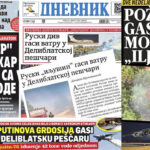
Although the Ukrainian President’s visit to Serbia was of symbolic value, reactions to Volodymyr Zelenskyy’s stay in Belgrade continued for a long time in the regional media
Even far more significant visits by world leaders to Serbia have not raised so many questions and sparked so much public debate, because the post-conflict region of the former Yugoslavia and the Western Balkans has been divided for more than three decades over its geopolitical course — the EU or Russia.
Hence all the debates, dissatisfaction, and political meandering, while the arrival of the Ukrainian President merely reopened old wounds. However, Zelenskyy’s very presence on “Russian terrain” created opportunities for possible changes.
Zelenskyy’s visit to Belgrade is a clear sign to Serbian revanchists that they are waiting in vain for the Russian boot and Russian tanks on the Danube. It is a clear message to Russophiles and Putin supporters that Russia is not winning the war in Ukraine and that there will be no “liberation” of Serbian lands in the Western Balkans any time soon.
Locally, almost everyone was somewhat dissatisfied with the visit to Serbia by the Supreme Commander-in-Chief of the Armed Forces of Ukraine. Representatives of the pro-Western opposition and independent intellectuals reproached Zelenskyy for supporting Aleksandar Vučić through his visit ahead of the announced early or regular elections in Serbia.
Serbian nationalists and voters of the Serbian Progressive Party remained silent, but were particularly dissatisfied. Although the party is regarded as a purely pragmatic corporation in which people are “rewarded” for votes, the core of its supporters consists of former members of Vojislav Šešelj’s Serbian Radical Party, who are predominantly Russophiles and Putin supporters. One day, when it suits them, they will declare their leader, Aleksandar Vučić, a traitor to Serbia and to Serbian-Russian brotherhood.
Albanians in the region, particularly in Pristina, were also disappointed with Zelenskyy, because the Ukrainian President, as expected, stressed in Belgrade that he supports Serbia’s territorial integrity, that is, that he does not recognise Kosovo’s independence. It was also expected that, in that case, the large banner of support bearing the Ukrainian flag in central Pristina would be taken down. Albanian Prime Minister Edi Rama called on his compatriots to restrain their emotions and show understanding towards Ukraine, which is defending itself in the war.
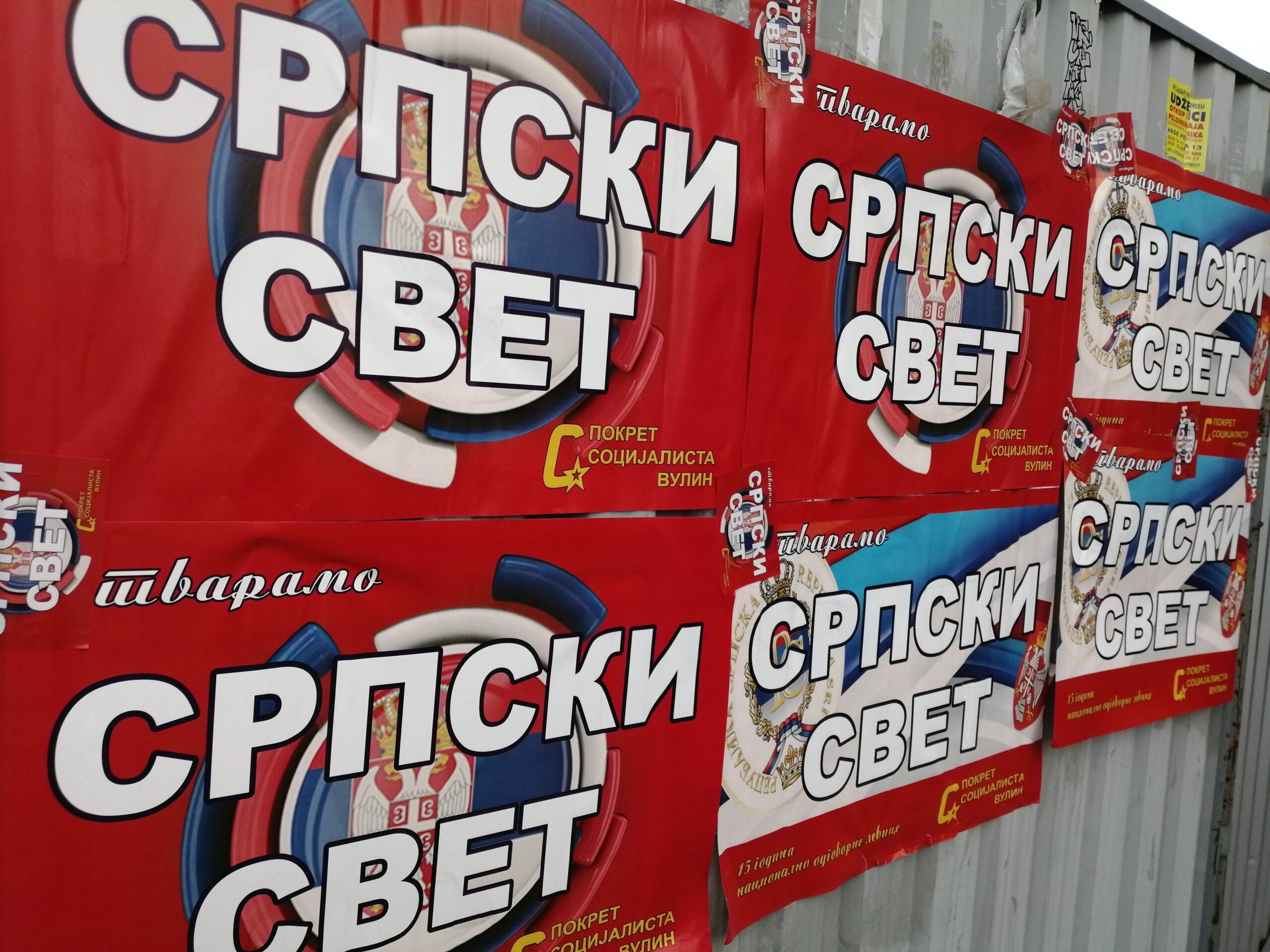
The West and Ukraine derive the greatest geopolitical benefit from Zelenskyy’s visit. As early as after Kosovo declared independence in 2008, Moscow dropped anchor in Serbia and exerted influence on the Western Balkans through its “soft power” (the church, energy resources, the economy, culture, politics). After the annexation of Crimea in 2014, Serbian revisionism began to awaken. Instead of the idea of a “Greater Serbia,” defeated in the wars of the 1990s, the idea of the “Serbian World” has been gaining strength, modelled on the “Russian World.” Launched from Belgrade, effectively from the government of the Serbian Progressive Party, the “Serbian World” began to frighten Serbia’s neighbours, particularly in Kosovo, Bosnia and Herzegovina, and Montenegro.
Surreal and morbid as it may be, political Russophilia and support for Putin at the height of the genocide in Ukraine in April 2022 brought Aleksandar Vučić victory in the first round of the presidential election. Symbols of Russian aggression, “Z,” were painted everywhere across Serbia, in cities and villages, by Moscow’s agents, but also by enthusiastic Serbian nationalists.
The EU’s popularity began to decline. To such an extent that, in a completely divided Serbia following the protests over the tragedy in Novi Sad in November 2024, Russian flags, Russian symbols, and the symbols under which Moscow is waging war in Ukraine could be seen both at student protests and at pro-government rallies.
In the atmosphere of the greatest aggression in Europe since the Second World War, among other things because of pro-Russian symbolism and anti-European sentiment, Brussels for a long time did not know how to position itself towards the political crisis in Serbia, which in 2025 was on the brink of civil war.
Had the West firmly condemned from outside the Serbian authorities’ violence against students and citizens, Vučić’s regime would have collapsed like a house of cards as early as March 2025. The Serbian President knows this very well and is therefore trying to win over the West, the EU, and the United States by siding with Ukraine. Vučić is also trying by every possible means to secure Trump’s support, who, until the fall of Hungarian Prime Minister Viktor Orbán, was regarded as a protector of convenient autocrats.
Orbán’s departure in Hungary’s “electoral revolution” is also a sign to Vučić that he must seek external support while perhaps sitting on more than four chairs. Early or regular parliamentary elections are approaching in Serbia, and Vučić expects the West to turn a blind eye to electoral fraud, as it did throughout the previous decade. This is why Vučić has suffered the greatest political damage from supplying ammunition to Ukraine and from Zelenskyy’s visit.
And for the people and voters in Serbia, the message is clear: Zelenskyy in Belgrade means that Russia and Putin are not winning in Ukraine. Serbia loves myths and winners. Although, as public opinion polls show, the Russian President remains popular in Serbia, the public impression is that Putin is no longer a winner. That is why passers-by wearing T-shirts bearing his image and the “Z” symbol can be seen less and less often on the streets.
However, the picture will most likely change substantially immediately before the announced elections in Serbia, when pro-Russian propaganda will be spread by supporters of the Serbian Progressive Party throughout the day once again. The regime will fight for every vote and will once again mobilise the right with the worst Russophile and pro-Putin propaganda, as it did in the spring of 2022, when the war in Ukraine began and everything looked as though Serbia was on the side of the Russian aggressor. The media will once again show images from Serbia of the Russian tsar’s hand being kissed. A strengthening of Serbia’s new brotherhood with China can also be expected.
Boris Varga. Serbian political scientist and journalist.
The articles published in the “Opinions” column reflect the personal opinion of the author and may not coincide with the position of the Center