- European Parliament Adopts Reports on Five Western Balkan Countries
On 17 June, the European Parliament adopted its annual reports on five Western Balkan countries: Montenegro, Albania, North Macedonia, Bosnia and Herzegovina, and Kosovo.
Montenegro
The report on Montenegro was supported by 486 Members of the European Parliament, while 101 voted against and 75 abstained. MEPs welcomed Montenegro’s steady progress in EU-related reforms, backed by its ambition to conclude accession negotiations by the end of 2026 and become the EU’s 28th member state by 2028.
The European Parliament’s rapporteur for Montenegro, Marjan Šarec, stated during the debate on 16 June that the goal of concluding negotiations by the end of 2026 is ambitious but achievable.
Albania
In the report adopted by 483 votes in favour, 103 against, and 70 abstentions, MEPs welcomed Albania’s rapid progress in recent years. At the same time, they noted that Albania still faces several challenges, such as overcoming domestic political polarisation and the need to improve the country’s political culture, strengthen the rule of law, and consolidate anti-corruption reforms. While acknowledging Albania’s ambition to complete membership negotiations by the end of 2027, the report warns that the country’s accession timetable will depend on the quality of its reforms.
During the debate, Andreas Schieder, the rapporteur for Albania, described the country as “the second frontrunner in the enlargement process” and assessed that the goal of concluding accession negotiations by the end of 2027 “no longer appears to be a dream but rather a realistic prospect”.
Bosnia and Herzegovina
The European Parliament reaffirmed its support for Bosnia and Herzegovina’s accession to the EU by 478 votes in favour, 116 against, and 54 abstentions. MEPs called for reforms to strengthen the country’s democratic institutions, uphold the rule of law, combat corruption and organised crime, and guarantee the fundamental rights of all citizens. Parliament called on the political leaders of Bosnia and Herzegovina to renew their commitment to EU membership and immediately implement long-overdue reforms. MEPs also called for an end to obstructionism and divisive rhetoric that hinder the country’s EU accession aspirations.
Kosovo
In the report adopted by 412 votes in favour, 174 against, and 58 abstentions, MEPs praised Kosovo’s continued commitment to its EU membership application, while expressing concern over the country’s failure to establish a functioning legislature and government for more than a year. MEPs called on the Kosovo government to accelerate EU-related reforms, particularly in the areas of the rule of law, fundamental freedoms, and the fight against corruption. The report stresses that the normalisation of relations with Serbia and the implementation of the Brussels and Ohrid Agreements remain essential for Kosovo’s EU ambitions.
North Macedonia
In the report adopted by 411 votes in favour, 120 against, and 120 abstentions, the European Parliament stressed that progress in accession negotiations continues to depend on sustained and in-depth reforms, particularly regarding the rule of law, judicial reform, and the fight against corruption. The report also emphasises the need to establish inter-party cooperation, primarily for the adoption of the necessary constitutional amendments that would allow the opening of the first negotiation cluster. (This refers to amendments to the Constitution of North Macedonia that would provide for the recognition of Bulgarians as a constituent people.)
Addressing the European Parliament, Commissioner for Enlargement Marta Kos praised the progress achieved by Montenegro and Albania and stated that similar momentum is expected from all Western Balkan countries. “There is today a window of opportunity to advance towards membership, and we are encouraging all Western Balkans countries to seize it,” Kos said. “The European Commission is eager to move forward with all of them, if they fulfil their reform commitments and show sufficient alignment on the EU’s Common Foreign and Security Policy and with visa policy,” the Commissioner stressed.
The European Parliament did not consider the report on Serbia. It is expected to be placed on the European Parliament’s agenda in July.
- European Parliament Calls on Albania to Refrain from Construction in Protected Areas
The European Parliament called on Albania to introduce a moratorium on construction in protected areas by adopting a corresponding amendment to its annual report on Albania’s progress towards EU membership. The amendment refers to (although it does not explicitly name) a large-scale $1 billion project involving Affinity Partners, the company of Jared Kushner, Donald Trump’s son-in-law.
The EP report expressed “deep regret and serious concern” over rushed amendments to Albania’s “Law on Protected Areas,” which the government adopted in order to attract investment. The document explicitly states that “ongoing developments within the Vjosa-Narta Protected Area demonstrate the practical consequences of these legislative changes” and calls for the immediate suspension of any construction permits in the area.
During the debate in the European Parliament, Andreas Schieder, the rapporteur for Albania, stressed that “tourism creates jobs and stimulates economic growth, but only in the long term if nature and the environment are not sacrificed in the process.” “The European Union has established clear standards in this area, which is yet another strong argument in favour of Albania’s accession to the EU. In this context, I am also confident that all these European legal instruments – from environmental impact assessments designed to protect natural habitats to legislation protecting birds and other wildlife – will be fully respected,” Schieder said.
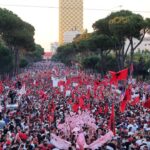
Meanwhile, anti-government protests continue in Albania, triggered by plans to develop protected areas, which, among other things, threaten flamingo nesting sites. Demonstrations under the slogan “Albania is not for sale!” have continued for three weeks, evolving into an anti-government movement, the so-called “Flamingo Revolution.” On 20 June, tens of thousands of people in Tirana, including members of the Albanian diaspora, mainly from neighbouring countries, took part in another protest, demanding the resignation of the government led by Edi Rama.
- Serbia Develops Relations with Georgia
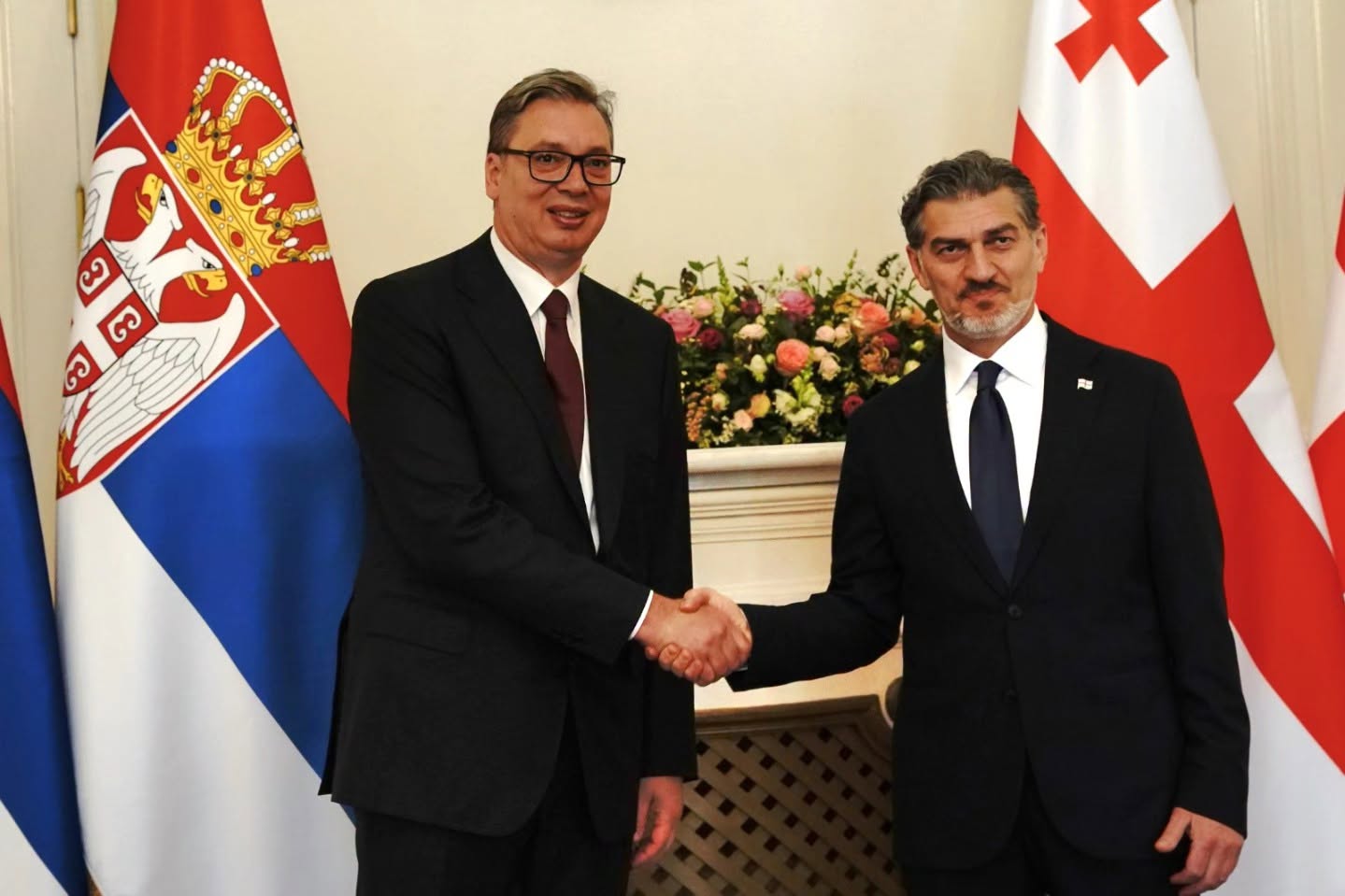
President of Serbia Aleksandar Vučić paid his first visit to Georgia. His Georgian counterpart, Mikheil Kavelashvili, visited Belgrade in December 2025, marking the first presidential-level visit to Serbia.
The focus of Vučić’s visit was economic cooperation between the two countries, which is developing actively: trade turnover increased by 36.4% in the first quarter of the current year. Following the talks, the sides announced the completion of preparations for a Free Trade Agreement. It is expected that, after legal review, the document will be signed this year.
As part of the development of bilateral relations, Serbia plans to open an embassy in Tbilisi. “We will open the Embassy of Serbia in Tbilisi. This will allow us to maintain regular political dialogue and work on concrete economic projects,” Vučić said. Georgian Prime Minister Irakli Kobakhidze stated that Tbilisi is, for its part, considering opening its own diplomatic mission in Belgrade.
The visit of the Serbian president and the rapprochement between Georgia and Serbia come against the backdrop of deteriorating relations between both countries and the European Union. Both countries are candidates for EU membership, and both received rather negative assessments in the European Commission’s 2025 Enlargement Report.
According to Vučić, issues related to the European path of Serbia and Georgia were discussed during meetings with Georgia’s leadership. He stated that he plans to invite the leaders of EU candidate countries for talks on their approach towards Brussels and closer cooperation in the EU accession process. “In the near future, I will invite candidate countries to come to Belgrade so that we can discuss how and in what way we should position ourselves towards Brussels, how we can help one another, and how we can define our common interests and common priorities,” Vučić said in Tbilisi.
- Washington and Pristina Fail to Reach Agreement on Kosovo’s Participation in US Gas Projects
The United States is strongly encouraging Kosovo to become part of a regional American gas project. On 5 June, the head of the US diplomatic mission in Pristina, Chargé d’Affaires Anu Prattipati, published an op-ed in Kosovo media entitled “The Path to Energy Security and a Long-Term Partnership with America,” in which she stressed that Kosovo should join the gas projects the United States is developing in the Balkans.
“Kosovo now faces an important strategic choice. The Trump Administration has made reducing Europe’s reliance on Russian energy a top priority. We urge Kosovo to join a long-term energy partnership with America through LNG to secure its energy future,” Anu Prattipati stressed.
“Kosovo’s energy supply is not keeping pace with rising demand. According to Customs data, Kosovo spent €735 million importing electricity from neighboring countries in the last four years, jumping from €142 million in 2024 to €259 million in 2025. As prices and demand continue to rise, Kosovo will be increasingly energy dependent on its neighbors for the foreseeable future.
To address these structural challenges, Kosovo should join U.S. natural gas projects planned across the Balkans. These projects can secure American energy resources for Kosovo. American liquified natural gas (LNG) would diversify Kosovo’s energy supply, complement Kosovo’s domestic energy sources, and add another link to the growing U.S-Kosovo economic partnership,” the article states.
“Kosovo must move quickly to pursue this partnership because building the necessary infrastructure will take time. U.S. LNG exports are expected to double by 2030 and will flow through regional projects such as the Vertical Gas Corridor and the floating natural gas terminal in Croatia. Kosovo could also connect to the natural gas pipeline being constructed to link the LNG terminal in Alexandroupolis, Greece to nearby Skopje, North Macedonia,” the diplomat stressed, adding: “The window for joining these projects is closing. Delaying this decision risks American LNG supplies being committed elsewhere and could leave Kosovo as the only Western Balkans country without access to American LNG.”
Kosovo currently has no gas infrastructure and relies on coal-fired power plants. Kosovo generates about 90 per cent of its electricity from two coal-fired power plants. However, the Kosovo government led by Albin Kurti has not shown eagerness to join the American gas project in the Balkans.
Kurti stated that he would prefer to convert Kosovo’s coal into gas rather than import gas. According to him, Kosovo is interested in American companies capable of gasifying coal. “We are very interested in American expertise and American corporations for lignite gasification because we have our own resources. I believe this is not inconsistent with the current policy of the U.S. administration, which does not distance itself from coal utilization to the same extent as the previous administration,” he said.
In April, Kosovo’s Minister of Economy, Artane Rizvanolli, sent a request to the US Embassy seeking support for coal gasification projects, citing large lignite reserves and President Donald Trump’s policy of supporting the coal industry. In her letter to Prattipati, Rizvanolli noted that Kosovo possesses the largest lignite reserves in Europe, estimated at approximately 12.44 billion tonnes. The letter also states that, in light of President Trump’s recent statements supporting new coal initiatives, Kosovo seeks cooperation in terms of US technical expertise and investment.
However, the Kosovo government did not receive support for its initiative from the American side.
Experts warn that refusing to join the American gas project will negatively affect relations between Pristina and Washington.
Opposition politicians sharply criticised the government’s position regarding the American-proposed gasification of Kosovo. Joining the regional American gas project may become one of the opposition’s conditions in the framework of forming a possible coalition with Albin Kurti’s Self-Determination Movement (LVV) to establish institutions following the recent elections.
- FATF Places Bosnia and Herzegovina on the “Grey List”
The Financial Action Task Force (FATF) has placed Bosnia and Herzegovina on the list of jurisdictions under increased monitoring (the so-called “grey list”). As announced by the Ministry of Security of Bosnia and Herzegovina, the country must now actively cooperate with FATF to address strategic deficiencies in its systems for combating money laundering, financing of terrorism, and the financing of the proliferation of weapons of mass destruction.
As Bosnian media note, inclusion on the increased monitoring list is a financial “yellow card” for Bosnia and Herzegovina, because international institutions consider that the country has too many loopholes in its legislation that enable money laundering.
Sending and receiving money from abroad, whether through banks, Western Union, or online platforms, will likely take longer and be subject to closer scrutiny by foreign banks. At the same time, domestic banks may also require more documentation and proof of the origin of funds from citizens and companies for routine transactions due to stricter regulations. Difficulties may manifest in detailed reviews of international transactions, increased requirements from foreign banks and correspondent banks, longer processing times for certain cross-border payments, as well as higher administrative and operational costs.