The verdict handed down by the Specialist Chambers in The Hague to the leaders of the Kosovo Liberation Army (KLA) was supposed to mark the conclusion of a years-long process that was not only legal but also political. The last de facto international trial of participants in the armed conflicts in the former Yugoslavia was seen as the epilogue to the region’s post-war history, after which the Western Balkans were expected finally to embark on the path towards building a peaceful and mutually supportive future together with the EU. However, after the verdict was announced, more questions arose than answers.
Court Verdicts and High Politics
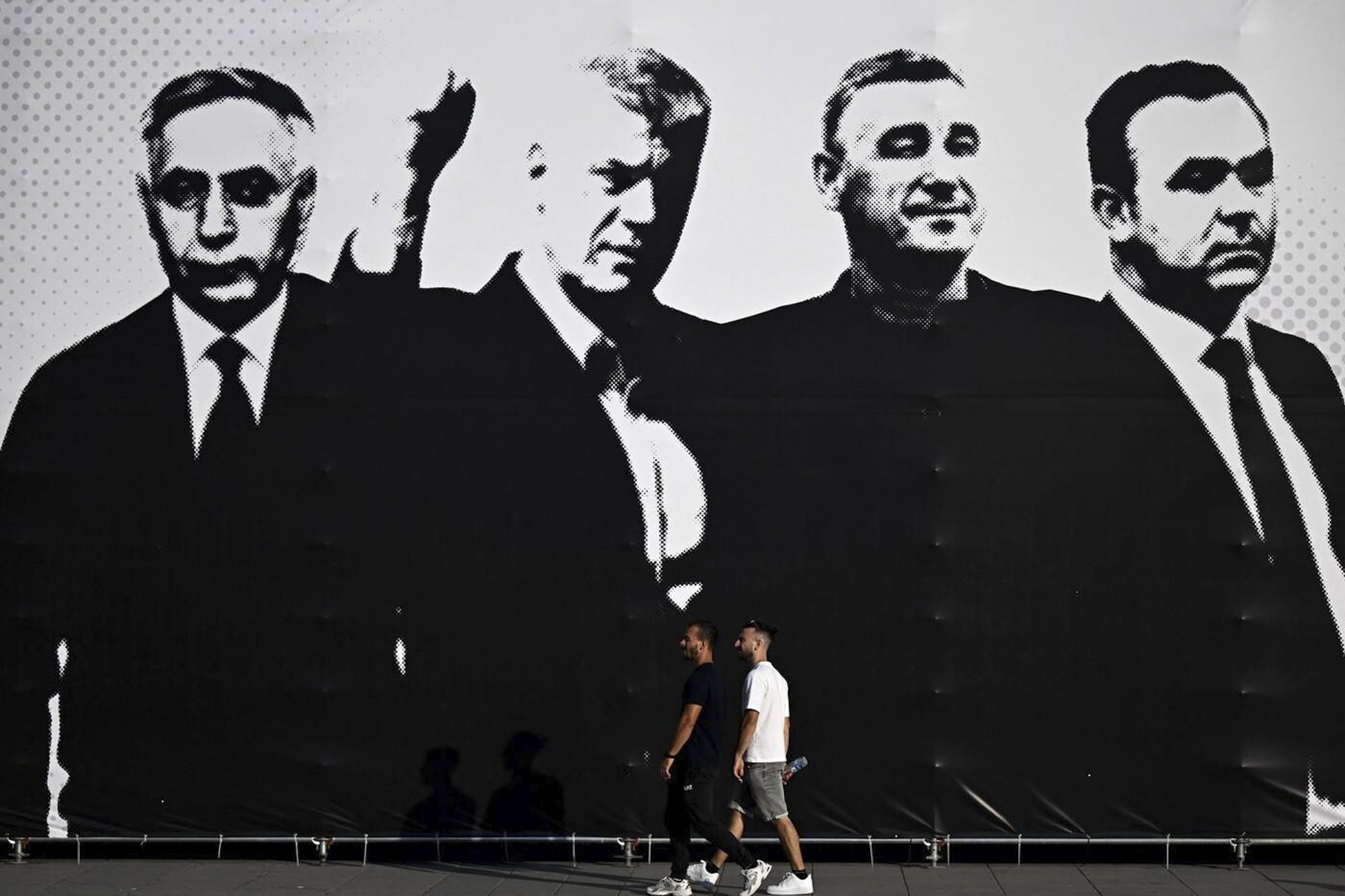
In its first-instance judgment, the Kosovo Specialist Chambers in The Hague sentenced former Kosovo Liberation Army (KLA) commander Rexhep Selimi to 13 years in prison, former head of the KLA intelligence service Kadri Veseli to 18 years, former KLA spokesperson Jakup Krasniqi to 25 years, and former member of the General Staff and Political Directorate of the Kosovo Liberation Army Hashim Thaçi to 25 years. All of them were found guilty of committing war crimes in 1998–1999 against Serbs and other non-Albanian communities, including Roma, as well as against Albanians accused of collaborating with the Belgrade regime. At the same time, the defendants were acquitted of charges of crimes against humanity.
All four convicted men held important positions in the leadership of post-war Kosovo. Selimi was an MP and leader of the parliamentary group of the Self-Determination Movement (Vetëvendosje, LVV) in parliament (LVV is now the ruling party in Kosovo), Veseli and Krasniqi served as speakers of parliament, while Thaçi held the offices of president, prime minister and foreign minister. This fact alone was bound to politicise the judicial process. But the political context of the verdict does not end there.
Thaçi, whom the judges in The Hague found to be a war criminal, was Pristina’s key negotiator in the process of reaching the 1999 peace arrangements, made a significant contribution to the conclusion of post-war agreements with Belgrade under Brussels’ mediation, and was involved in the beginning of Kosovo’s European integration.
Hashim Thaçi headed the Kosovo delegation at Rambouillet, France, in February–March 1999, when the peace talks ended in failure, but not because of the position of Kosovo’s representatives, who were willing to accept a compromise, but because Belgrade refused to make concessions. These events led to the start of NATO’s air campaign against Yugoslavia.
In April 2013, following another round of EU-mediated talks, the then prime ministers of Kosovo and Serbia, Hashim Thaçi and Ivica Dačić, initialled the “First Agreement of Principles Governing the Normalization of Relations.” Among other things, the agreement provided for the establishment of the Association of Serb Municipalities (ZSO) in northern Kosovo.
Several days after Pristina and Belgrade reached the agreements, the European Commission recommended that the European Council approve the opening of Serbia’s membership negotiations and negotiations on a Stabilisation and Association Agreement for Kosovo.
Kosovo signed the Agreement with the EU in October 2015. Hashim Thaçi, then Kosovo’s foreign minister and deputy prime minister, described the path to this event in an article for Euractiv as follows:
“Negotiations on the Stabilisation and Association Agreement began after the conclusion of the 2013 Brussels Agreement between Kosovo and Serbia, which launched the process of normalising relations between our two countries.
This August [2015], we signed four agreements with Belgrade that will strengthen cooperation in the energy and telecommunications sectors, as well as transfer powers to Serb communities in northern Kosovo.
Meanwhile, this summer our parliament also agreed to amend Kosovo’s constitution in order to establish a special court in The Hague to investigate alleged war crimes committed during the conflict.”
The “Yellow House”
The Kosovo parliament established the Specialist Court — the Kosovo Specialist Chambers and Specialist Prosecutor’s Office — 11 years ago amid strong domestic opposition and intense international pressure from the EU and the United States. Formally, the institution is part of Kosovo’s judicial system, but it is located in The Hague, the Netherlands, and staffed exclusively by international judges and prosecutors. From the outset, it was envisaged that the court would focus specifically on investigating the actions of the Kosovo Liberation Army. Kosovo’s opposition forces at the time, primarily the Self-Determination Movement, as well as KLA veterans’ organisations, strongly opposed the establishment of the institution. But the EU’s demands were unequivocal: no court – no European integration.
The return to cases against Kosovo Liberation Army leaders is explained primarily by the extensive international attention generated by allegations that the KLA was involved in organ trafficking. The direct official basis for establishing the Specialist Chambers — as stated on the institution’s official website — was the 7 January 2011 report of the Parliamentary Assembly of the Council of Europe, prepared by Swiss prosecutor Dick Marty. The report, which drew on previously published memoirs by former ICTY prosecutor Carla Del Ponte, contained allegations that the KLA had organised a network of secret camps in Albania, including the so-called “Yellow House,” where organs were forcibly removed from captured Serbs and Albanian civilians for subsequent sale on the black market.
Following the publication of this report, the European Union established the Special Investigative Task Force (SITF) in 2011, headed by U.S. prosecutor Clint Williamson, to conduct an independent investigation into the allegations contained in the report, as well as other crimes related to those allegations. In 2014, Williamson published the official findings: the allegations of human organ trafficking were not substantiated, but evidence was found to prosecute KLA leaders for other crimes.
Despite the absence of evidence regarding the most scandalous and high-profile allegation, the Specialist Chambers in The Hague were established and began their work. However, as can be seen, neither the official indictment against the KLA leaders nor the first-instance judgment of 16 September 2026 contains charges related to organ trafficking.
The Russian Trace
In Albania, there is a belief that the allegations that the Kosovo Liberation Army was involved in organ trafficking were fabricated from the outset by the Kremlin. Speaking at a session of the Parliamentary Assembly of the Council of Europe in October 2022, Albanian Prime Minister Edi Rama recalled that the person who initiated the active promotion of this issue was the then head of the Russian delegation to PACE, Konstantin Kosachev, who in 2008 submitted a motion entitled “Inhuman Treatment of People and Illicit Trafficking in Human Organs in Kosovo.” The Russian representative’s intervention at the time launched the entire process, which began with Dick Marty’s report and led in 2026 to the verdict against the KLA leaders.
However significant Russian involvement may have been, one cannot overlook the West’s active involvement in launching the mechanisms that led to the prosecution of Kosovo’s leaders. The EU supported the process from the very beginning and, together with other donor countries — Canada, Norway, Switzerland, Türkiye and the United States — provides financial support for the court’s work in The Hague.
The reason for this European and broader Western policy is probably indeed the humanitarian desire to ensure justice for the victims of crimes committed by any side in the conflict. However, one cannot rule out an attempt by Brussels, Washington and other capitals to gain the trust of the Serbian political establishment and society, thereby “compensating” for their policies on the Kosovo issue in previous years, which Serbs regard as hostile.
This concerns not only NATO’s 1999 air campaign against Yugoslavia, which is regarded in Belgrade as aggression, but also the rulings of the International Criminal Tribunal for the former Yugoslavia, particularly in cases relating to the conflict in Kosovo.
In proceedings before the ICTY, several Serbian political figures and military commanders were convicted, while representatives of the Kosovo Liberation Army were acquitted, including Ramush Haradinaj, a former KLA commander who served for some time as prime minister of Kosovo after the war. Whatever evidence those judgments were based on, Serbs do not regard them as fair.
Challenges Arising from the Court Ruling
The combination of a number of different factors ultimately led to the current situation, in which figures regarded in Kosovo as national heroes, who interacted with the West for years and enjoyed its support, have now been declared criminals.
Belgrade remains dissatisfied because the judgment against the KLA leaders did not include crimes against humanity, while the organ-trafficking allegations have been forgotten.
Brussels, Washington and other Western capitals now expect Kosovars to come to terms with their past, abandon the glorification of Kosovo Liberation Army leaders and begin building their lives “from a new chapter.”
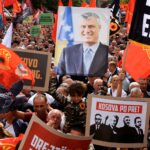
Albanians in Kosovo and beyond are holding protests and preparing for the appeal with hope.
Experts are raising questions about the future of the EU-mediated dialogue between Pristina and Belgrade and expressing concern about the impact of the Specialist Chambers’ ruling on the overall situation in the Western Balkans.
CWBS Analytical Group