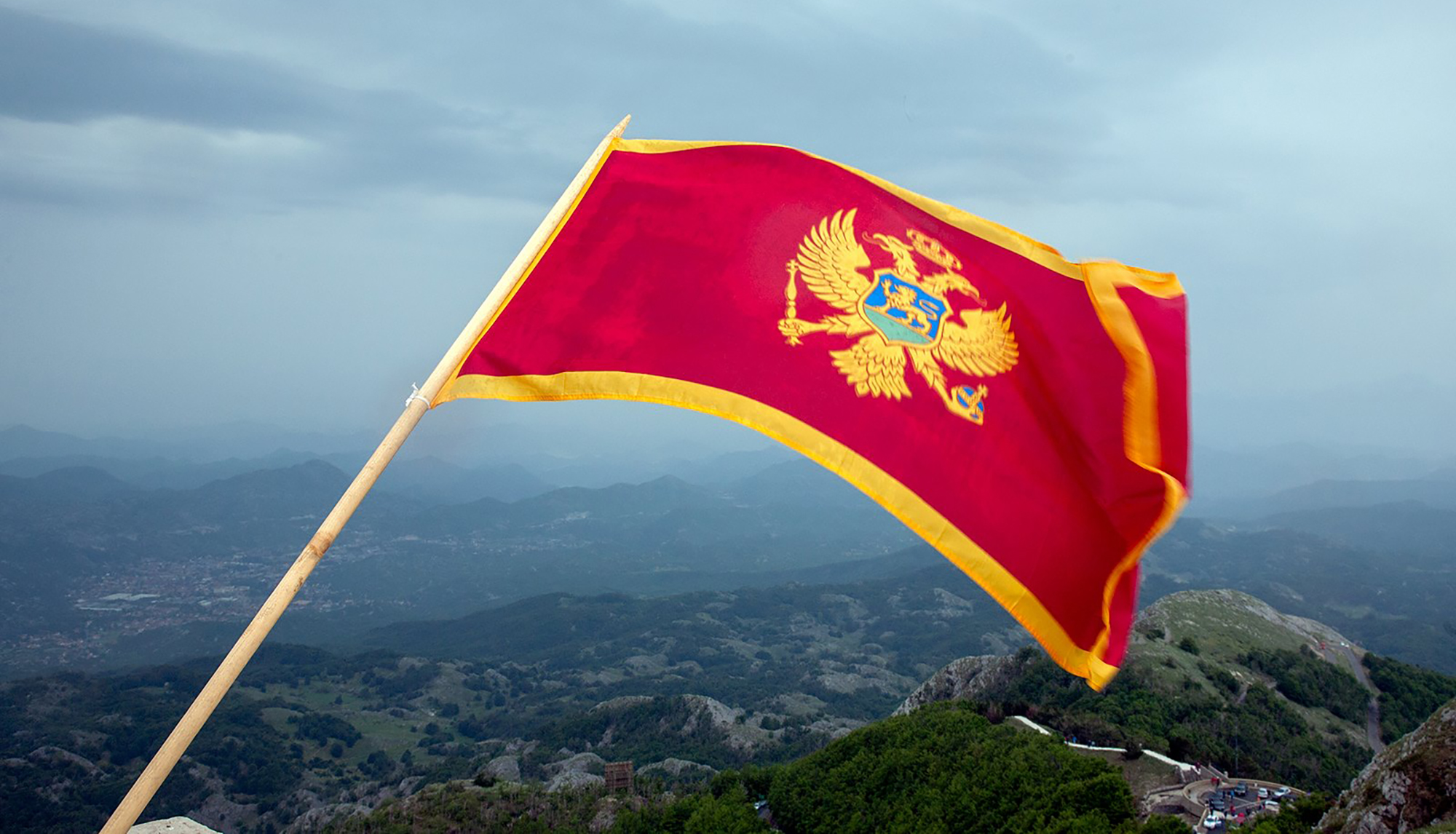
On May 21st, Montenegro will celebrate twenty years of independence. There will be flags, speeches, and Ricky Martin in concert. Yes, the nationalist decor will dominate, but there is also a touch of civic pride that comes naturally to a country that has spent two chaotic decades building institutions, joining NATO, and emerging as a potential newest member of the EU. It will be, by most measures, an ordinary anniversary for just another sovereign state.
Serbian President Aleksandar Vučić made sure it did not stay ordinary for long.
Vučić declined his invitation to attend. He called the celebration a commemoration of separation from Serbia. He said he would spit in his people’s face if he were to go. The Montenegrin Foreign Ministry responded with the patience of a country that has heard all of this a thousand times before: Montenegro restored its independence, it was never part of Serbia, and, in a gesture that was surprisingly generous, ended its statement with Serbian and Montenegrin national salutes: da je vječna Crna Gora and živjela Srbija.
Then the Serbian Foreign Ministry jumped in to defend Vučić, only to clarify that his comments were “personal.” Then Vučić responded again in an op-ed in Borba — a Montenegro-based outlet that is part of the large ecosystem of Serbian government-affiliated media in the country — with a lower voice and warmer style.
What makes this episode revealing is not the diplomatic back-and-forth, which is fairly routine by regional standards. What is more interesting is the structure of Vučić’s argument — and what it tells us about where Serbian political culture actually stands, twenty years after the separation it still cannot process.
If we listen to Vučić carefully, we can hear two distinct registers operating simultaneously. The first is realist, and legitimate: Serbia lost access to the Adriatic, a strategic asset with genuine geopolitical value. The second register, a toxic one, is primordial. It is about one people, one soul, historical betrayal, and the post-Milošević democratic elites who — in this telling — gave Montenegro away too easily. And when his associates and Serbian Orthodox Church allies speak, the realist argument immediately falls into the background. What remains is grievance dressed as theology.
Ethnic metaphysics is the engine of Serbian claims on Montenegro. It is the operating system of Serbian nationalist politics. But the Montenegro case exposes the contradiction with unusual clarity, because Montenegro’s independence is not a live territorial dispute. We have a settled legal fact, endorsed by the international community, confirmed by referendum, and ratified by twenty years of state practice, which now, by the way, enjoys support from more than 75% of Montenegrin citizens according to the most recent polls. There is no plausible path to reversal, but the effects on Montenegro’s polarized society remain substantial.
Vučić resembles a person who cannot accept that a relationship ended, who reacts to every anniversary of the breakup by explaining why it should not have happened, who monitors the ex-partner’s social media and finds injury in every celebration. The toxicity lies in the refusal to acknowledge that the other party has moved on, built a life, and is not, in fact, organizing its existence around the wound.
Montenegro has moved on. The celebration on May 21st was evidence of exactly that. Serbia has not.
Serbian society appears more ambivalent about this than Vučić’s rhetoric suggests. When the Montenegrin Foreign Ministry posted its response on X, it received roughly ten times the engagement of the Serbian government’s post on the same platform. Serbian citizens, including many who would not describe themselves as advocates of Montenegro, evidently found the official Serbian position embarrassing. This suggests that the resentment Vučić performs for his base is not universally shared even within Serbia.
Running parallel to the diplomatic episode, almost cinematically, was the saga of Miloš Medenica — a Montenegrin fugitive widely believed to be operating from Serbian territory, whose videos challenging the Montenegrin government have become a fixture of the information war. Within days of the independence anniversary, Medenica published allegations implicating a high-ranking Serbian police official while criticizing Vučić. That official, allegedly connected to an organized crime murder case, was subsequently arrested.
Whatever one makes of the underlying facts, the episode illustrated something about how Serbia’s relationship with Montenegro has come to function in practice: a territory used for sanctuary, a media ecosystem weaponized for destabilization, and a political class that hosts these operations while publicly lamenting Montenegro’s disloyalty.
This is the real Serbia-Montenegro problem. It is not a simple border dispute, or a language dispute, as some in Serbia and Montenegro want to present it. It is not even, at its core, a dispute about the 2006 referendum. It is whether Serbia’s intellectual elites and broader public are willing to accept the principle that neighbors are not lost provinces. That other countries’ sovereignty is not an act of hostility. That celebrating independence is not the same as insulting the country you once shared a federation with.
Twenty years is a long time. It is long enough to build a state, join an alliance, negotiate EU membership chapters, and hold multiple free elections. It is long enough, one might reasonably hope, to accept the outcome of a democratic vote. Montenegro did not leave Serbia. It left a union it had entered when it was ready, through a process that satisfied international standards and avoided the bloodshed so common to such processes in the Balkans. We could have made it an example of a velvet divorce comparable to the Czech-Slovak one. But we failed — because of the dominance of toxic politics in Serbia.
Ljubomir Filipović. Montenegrin political scientist
The articles published in the “Opinions” column reflect the personal opinion of the author and may not coincide with the position of the Center