- Verdict Delivered in the “Banjska” Case
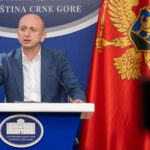
The Basic Court in Pristina delivered a first instance verdict in the “Banjska” case, sentencing two defendants — Blagoje Spasojević and Vladimir Tolić — to life imprisonment, and Dušan Maksimović to 30 years of imprisonment. Spasojević, Tolić, and Maksimović are accused of a crime against the constitutional order and security of the Republic of Kosovo. “With the help of a well-organized plan, they attempted to separate the northern part of the territory of Kosovo and annex it to Serbia,” the judge stated while announcing the verdict.
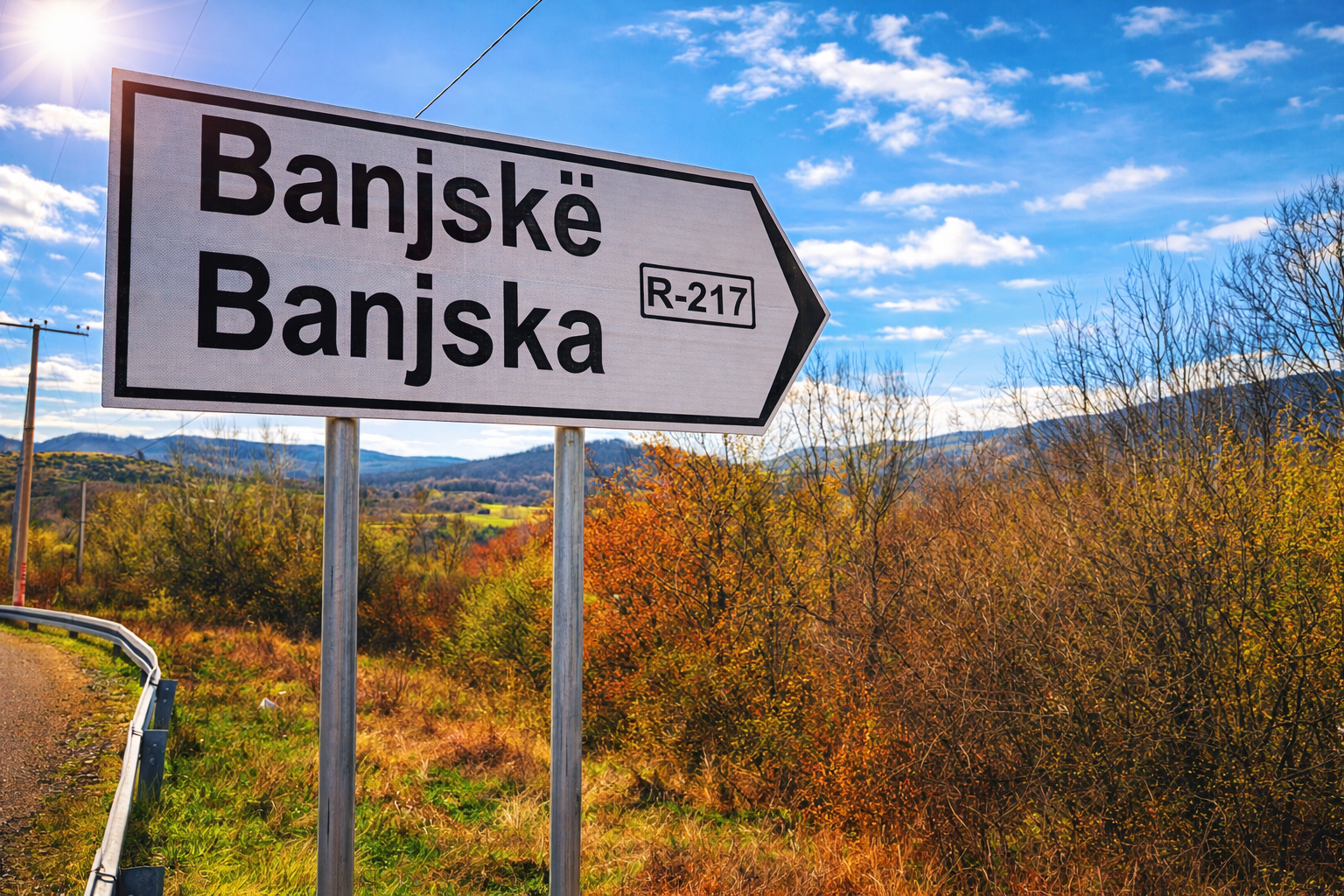
The “Banjska” case concerns an armed clash between a group of Serbs and the Kosovo police near the village of Banjska in the municipality of Zvečan in northern Kosovo on 24 September 2023, as a result of which a Kosovo police officer and three Serbian attackers were killed. During the operation in Banjska, the police arrested Dušan Maksimović, Blagoje Spasojević, and Vladimir Tolić, and since then they have been held in custody.
The three defendants are part of a group of 45 persons, including Milan Radoičić, then vice president of “Srpska Lista,” the largest Serb party in Kosovo, who is named in the indictment as the “head of the terrorist group.” Radoičić is currently in Serbia.
After the verdict was announced, the Special Prosecutor of Kosovo stated that the decision is imperfect, as it does not cover the remaining defendants, including Milan Radoičić, but added that the prosecution is making every effort to bring them to justice.
“Srpska Lista” described the decision of the Pristina court as one adopted without providing substantial evidence and as “revenge,” “which further threatens the security and rights of the Serbian people.”
The Office for Kosovo and Metohija of the Government of Serbia described the verdict in the “Banjska” case as “draconian” and adopted under “direct political pressure from Albin Kurti and the anti-Serb regime in Pristina.”
The lawyers of the convicted have already announced the preparation of an appeal.
- The EU Begins Work on Montenegro’s Accession Treaty
Ambassadors of the Member States of the European Union on 22 April approved the establishment of a special working group to draft the Accession Treaty with Montenegro. This will be the first Accession Treaty after 13 years since the last enlargement of the European Union, when Croatia joined the EU.
Montenegro’s Minister of European Affairs, Maida Gorčević, stated that this is a “historic moment and the final step toward Montenegro’s full membership in the EU.” “The establishment of the working group for the preparation of the Treaty on Montenegro’s accession to the EU is further confirmation that we are on the right path for Montenegro to become the 28th member of the European Union by 2028,” Gorčević stated.
The task of the working group will be to coordinate the final legal and technical preparation of the Treaty, including the determination of transitional periods and safeguard mechanisms, with the aim of ensuring the gradual and sustainable integration of Montenegro into the legal and institutional framework of the European Union.
The Accession Treaty is prepared technically in parallel with the final stage of the negotiation process, but its final adjustment is carried out only after the closure of all negotiating chapters.
Montenegro has currently closed 14 out of 33 negotiating chapters with the EU.
- The Delphi Declaration on the European Integration of the Western Balkans
On the margins of the Delphi Economic Forum on 22 April, the Delphi Declaration on the European integration of the Western Balkans was adopted. The document emphasizes the determination of the countries of the region to move toward EU membership and to achieve concrete results during Greece’s upcoming presidency of the Council of the EU.
The Delphi Declaration was signed by Greek Minister of Foreign Affairs Giorgos Gerapetritis, Deputy Minister of Foreign Affairs and Foreign Trade of North Macedonia Zoran Dimitrovski, Minister for Europe and Foreign Affairs of Albania Ferrit Hoxha, Minister of Diaspora of Kosovo Glauk Konjufca, Minister of European Integration of Serbia Nemanja Starović, Deputy Minister for EU Affairs of Montenegro Ivan Ivanišević, and Ambassador of Bosnia and Herzegovina to Greece Dragan Vuković.
The Declaration refers to the “Thessaloniki Agenda,” adopted in 2003 at the EU–Western Balkans Summit in Thessaloniki, “which laid the foundation for the European perspective of the Western Balkans,” and emphasizes that the future of the Western Balkans lies in the European Union. The signatories of the Declaration welcome the “renewed attention of the EU to the process of enlargement and integration of the Western Balkans into the EU” and call for a “renewal of commitment” to European integration based on the candidates’ own merits in fulfilling the accession criteria.
Analysts assess the Declaration as an attempt by Greece, once again, as 23 years ago in Thessaloniki, to demonstrate leadership in promoting the accession of the Western Balkans countries to the EU. The Declaration emphasized that EU enlargement to the Western Balkans will be a priority for Athens during the Greek presidency of the Council of the EU in the second half of next year.
- Delegation of the Ministry of Foreign Affairs of Russia Visited Banja Luka and Belgrade
Deputy Minister of Foreign Affairs of the Russian Federation Alexander Grushko paid a several-day visit to Republika Srpska (Bosnia and Herzegovina) and Serbia, which aimed to emphasize the importance of the Balkan direction of foreign policy for the Russian authorities and once again confirm Moscow’s intention to develop ties with Banja Luka and Belgrade, to strengthen its presence in the economic, energy, security, and humanitarian spheres, while preventing the strengthening of Western influence in this region.
***
In Banja Luka, negotiations took place between the Russian delegation and the leadership of Republika Srpska, as well as a forum dedicated to current geopolitical events in Europe. The Russian delegation, led by the deputy minister, also visited the Serbian-Russian Church of the Transfiguration of the Lord in Banja Luka.
On the part of Republika Srpska, the negotiations were attended by President of Republika Srpska Siniša Karan, Prime Minister of Republika Srpska Savo Minić, Speaker of the National Assembly of Republika Srpska Nenad Stevandić, and leader of SNSD Milorad Dodik.
***
In Belgrade, Deputy Minister of Foreign Affairs of Russia Grushko took part in the 21st session of the Intergovernmental Russian-Serbian Committee on Trade, Economic, and Scientific-Technical Cooperation, met with Deputy Prime Minister and Minister of Internal Affairs Ivica Dačić, and Minister without Portfolio responsible for international economic cooperation and the social position of the Church in the country and abroad Nenad Popović.
Among the topics discussed at the meetings were the “development of comprehensive cooperation between Russia and Serbia” on the basis of Serbia’s “principled and consistent” refusal to join the European Union’s sanctions regime, as well as the further use of the potential of the Russian-Serbian Humanitarian Center in the city of Niš.
The Deputy Head of the Ministry of Foreign Affairs of the Russian Federation also took part in the ceremony of opening the Honorary Consulate of the Russian Federation in the city of Novi Sad. The General Director of the company Srbijagas, Dušan Bajatović, was appointed Honorary Consul of Russia. According to Bajatović, within the framework of the consulate’s activities it is planned to open a Russian school and expand educational and cultural exchanges between the two countries.
- Republika Srpska Increases Bosnia and Herzegovina’s Dependence on Russian Gas
On 1 April, the Government of Republika Srpska (Bosnia and Herzegovina) approved the allocation of slightly more than one billion marks for the construction of a gas pipeline through Republika Srpska. On 17 April in Banja Luka, a contract was signed with a consortium from Serbia for the design and construction of the main gas pipeline Šepak–Novi Grad worth one billion 29 million convertible marks (approximately 530 million euros).
Nedeljko Elek, director of the company “Sarajevo-gas” from East Sarajevo, stated that this is the largest energy project in the history of Republika Srpska. With the construction of the new gas pipeline, more than 65 percent of the territory of Republika Srpska will be gasified, he emphasized.
The new gas pipeline will have a length of 500 kilometers with 18 pumping stations. It is to be connected to the gas interconnection of Bosnia and Herzegovina with Serbia, through which Russian gas is supplied to Bosnia and Herzegovina.
Earlier, the European Commission warned that the planned gas pipeline would not contribute to reducing Bosnia and Herzegovina’s dependence on Russian gas but would further deepen it.
Bosnia and Herzegovina is currently fully dependent on Russian gas, which is supplied via the “TurkStream / Balkan Stream” to Serbia and then transported to Bosnia and Herzegovina.
- A New Hungarian Organization Has Been Created in Serbia
On 18 April, a new organization was created in Serbia — “Vojvodina Hungarian Relaunch,” which brought together several existing Hungarian associations in Serbia, including “Tisza Islands” — a network of civic cells created by supporters of the Hungarian TISZA party led by Péter Magyar.
Participants of the “Vojvodina Hungarian Relaunch” movement also published a manifesto in which they sharply criticize the current leading party of the Hungarian minority in Serbia, the “Alliance of Vojvodina Hungarians” (VMSZ), which is an ally of Viktor Orbán’s Fidesz and Aleksandar Vučić’s Serbian Progressive Party. It is noted that the leadership of VMSZ “manipulated Hungarian voters in Vojvodina, misled them, and served authoritarian policies over the past two decades both in Budapest and in Belgrade.”
Certain points of the document concern demands to ensure the independence of Hungarian media in Serbia, the depoliticization of cultural, educational, and academic institutions, and the conduct of an audit of the Prosperitati Foundation, which for years has been a key channel for financing Hungarian projects in Serbia.
The authors of the manifesto also demand the resignation of the leadership of the “Alliance of Vojvodina Hungarians.”
VMSZ, led by Bálint Pásztor, has for years maintained a monopoly on the political representation of Hungarians in Serbia thanks to the support of Orbán’s government, in particular through the Prosperitati programs and the financing of media through the Bethlen Gábor Fund. Now, after the change of power in Budapest, Hungarian activists in Vojvodina hope to put an end to the politically motivated, non-transparent distribution of Hungarian government funds intended for the diaspora.