The Polish–Ukrainian historical dispute, which has lasted for decades, has gone beyond the bounds of a disagreement between neighbours. Since the launch of Ukraine’s EU accession process, the events of the mid-twentieth century have become part of a broader discussion about Ukraine’s path to the European Union, with Polish officials citing Croatia as an example that Ukrainians should follow.
In effect, the Polish authorities are attempting to make the Croatian case of the “rejection of controversial heroes” exemplary and promote it to Ukrainians as a model to emulate. But is such an approach relevant and acceptable at all?
Advice from Warsaw
At the beginning of July, Poland’s Deputy Prime Minister and Minister of National Defence, Władysław Kosiniak-Kamysz, stated that the European Union should make the same categorical request of Ukraine as it did of Croatia regarding the choice of its heroes. “When the Croats were joining the EU, they received a clear message. They had their heroes from the Balkan War who could not be included in the pantheon of the European community. They also had their heroes from the Second World War, and they are not glorified either,” Kosiniak-Kamysz said in an interview.
Another Polish media outlet quoted the country’s Deputy Minister of Foreign Affairs, Marcin Bosacki, who, in the context of Ukraine’s need to fulfil all the EU membership criteria, also cited Croatia as an example: “The Croats had to understand that they would not join the European Union under the banner of those who killed women and children. That simply will not happen.”
The statements by Polish officials were widely quoted by the Balkan media, primarily Serbian outlets, some of which focused specifically on the references to their neighbours.
The hardening of Polish rhetoric towards Ukraine came after the opening of accession negotiations with Kyiv because Poland wants to make historical issues part of the negotiating framework (essentially following Bulgaria’s approach towards North Macedonia). The Polish side demands that Kyiv abandon the glorification of the Ukrainian Insurgent Army (UPA), as well as the glorification of the leader of the Ukrainian nationalists, Stepan Bandera, because of the UPA’s anti-Polish actions in the middle of the last century (during the Second World War). Poland accuses the Ukrainian Insurgent Army of crimes against the Polish civilian population, whereas Ukraine’s position is that a broader Polish–Ukrainian conflict was taking place, for which both sides bear responsibility.
It should be mentioned that this historical discussion is taking place against the backdrop of Russia’s war against Ukraine. A significant part of Ukrainian society primarily regards UPA fighters as people who fought for the idea of an independent Ukraine. In the context of resisting Russian aggression, such motivation is of crucial importance. It is precisely for this reason that one of the units of the Special Operations Forces of the Armed Forces of Ukraine was given the designation named in honour of “the Heroes of the UPA.” It was this decision that triggered a whole series of harsh statements from Warsaw, including advice to turn to the Croatian experience.
But is such a comparison really relevant?
A Historical Overview
The Ukrainian Insurgent Army (UPA) was a military formation that operated primarily on the territory of present-day Ukraine between 1942 and 1960. It is considered the military wing of one of the factions of the Organization of Ukrainian Nationalists (OUN-B). The official date of the UPA’s establishment is recognised as 14 October 1942, although the name “Ukrainian Insurgent Army” itself began to be used regularly in May 1943.
From the very beginning of its existence, the UPA fought for the idea of an independent Ukrainian state—against the forces of the Third Reich, Soviet partisans, as well as the Polish Home Army (Armia Krajowa) and People’s Army (Armia Ludowa). After Soviet power returned to western Ukrainian lands, the UPA continued to resist Soviet forces for several more years.
Stepan Bandera was the leader of one faction of the Organization of Ukrainian Nationalists (OUN-B). He was one of the authors of the Act of Restoration of the Ukrainian State of 30 June 1941. However, an independent Ukrainian state was never established at that time. For proclaiming the Act of Restoration of Ukrainian Statehood, the German authorities arrested Stepan Bandera on 5 July 1941 and later sent him to Sachsenhausen concentration camp, where he remained for almost three years, including during the period when the UPA was established.
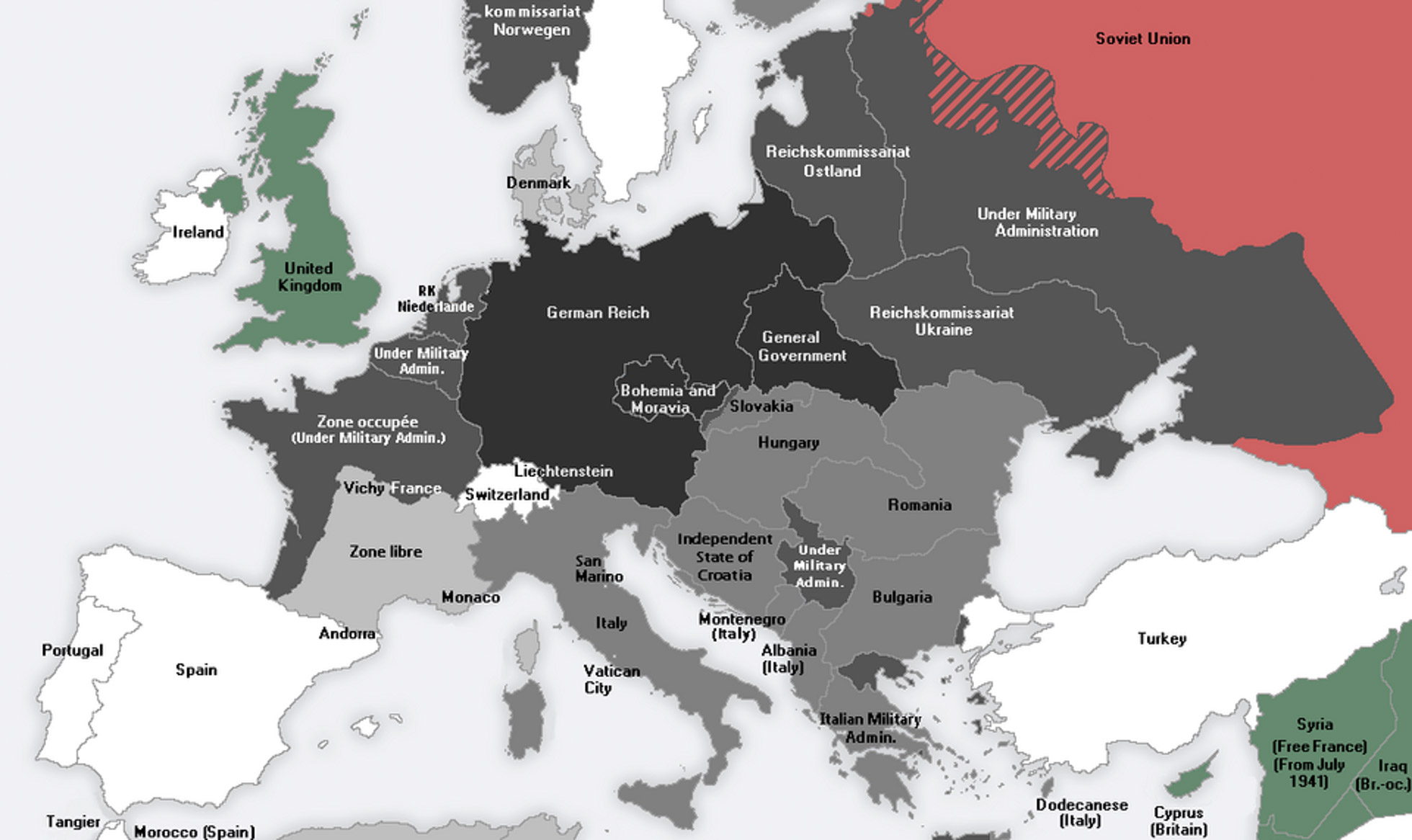
Thus, this episode in Ukraine’s history is not relevant to the Croatian experience during the Second World War. At that time, no “Independent State of Ukraine” was established, some Ukrainian nationalists fought against German forces, and the political leader of the Ukrainian insurgent movement was himself sent to a concentration camp by the Third Reich.
Heroes, Not Criminals
However, the advice of Polish officials that Kyiv should follow the “Croatian experience of rejecting controversial heroes” cannot be applied not only because the histories of Croatia and Ukraine during the Second World War are fundamentally different.
An even greater problem is the controversial—or even inaccurate—understanding of Croatia’s European integration process demonstrated by representatives of the Polish authorities.
According to their statements, it was supposedly during the EU accession negotiations—and indeed thanks to them—that official Zagreb abandoned the glorification of “Ustaše criminals,” and now Ukraine is expected to follow Croatia’s example. The truth, however, is that during Croatia’s accession to the European Union in the early 2010s, historical issues relating to the Second World War were not at all in the focus of the European integration process—there was simply no need for it. The modern Republic of Croatia was portrayed as an “Ustaše state” only by Greater Serbian propaganda, and it was precisely this propaganda cliché that formed the basis of wartime propaganda in the early 1990s.
The statement by Polish officials about the heroes of the “Balkan War,” whose glorification Croatia allegedly abandoned for the sake of joining the EU, also raises many questions.
It is well known that, shortly before Croatia’s accession to the European Union, the International Criminal Tribunal for the former Yugoslavia (ICTY) was hearing the case of General Ante Gotovina. The proceedings triggered mass protests throughout Croatia. Hundreds of thousands of Croats were prepared to abandon European integration if doing so required betraying those who had led the country to victory in the war. However, such radical steps proved unnecessary. In 2012, Gotovina was fully acquitted by the ICTY Appeals Chamber, after which he was ceremonially welcomed home as a national hero. In 2013 Croatia became a member of the European Union.
Of course, for official Belgrade and for the Serbs, General Gotovina remains a criminal to this day, while Operation Storm—the military operation through which Croatia won the war—remains a war crime. Serbia, however, is not a member of the European Union.
Conclusions
The unfortunate conclusion that can be drawn from the statements of Polish officials is that, in order to promote narratives about Ukraine that suit the Polish authorities, Warsaw may resort to manipulation, spread propaganda, and disseminate false or distorted information, even if some of it may offend a partner and ally within the European Union, NATO, and the Three Seas Initiative (3SI). Relations between Warsaw and Zagreb have always been close and friendly, but if the Polish side continues to speculate on sensitive issues, this alliance may weaken.
Another problem with the statements made by representatives of the Polish government is that the advice based on their controversial comparisons and examples turns out to be irrelevant and of a kind that Ukrainians—even if they wished to—would not be able to follow.
If Poland genuinely wishes to draw upon Croatia’s experience of European integration, and more broadly the experience of the former Yugoslavia, in its Eastern European neighbourhood, it would probably be appropriate to establish a dedicated platform through which Croats, as well as Slovenes, could provide Ukrainians with advice on European integration directly, without intermediaries.
CWBS Analytical Group